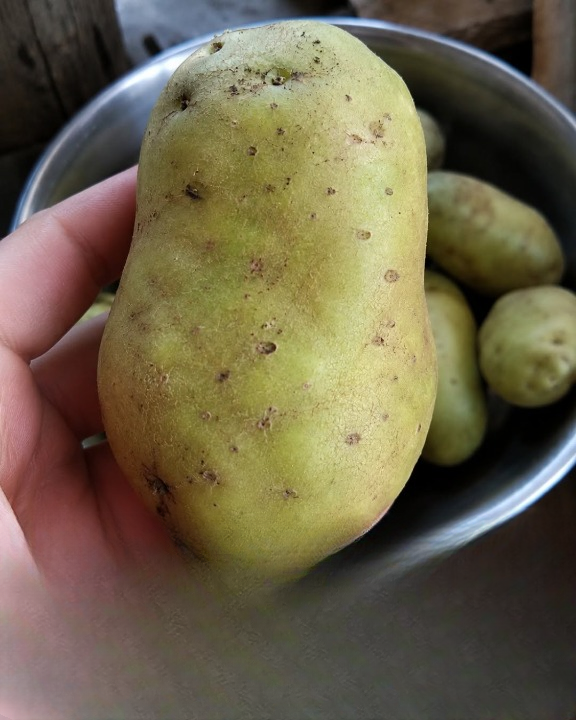
le in kitchens around the world. They can be mashed, roasted, baked, fried, or transformed into countless dishes. But every once in a while, you might reach into your pantry and spot a potato with a green tint. Suddenly, the question hits: “Is this potato safe to eat?”
Let’s dive into the science, safety, and simple tips for keeping your potatoes fresh and delicious.
Why Do Potatoes Turn Green?
When you see a green potato, it’s not just a cosmetic quirk—it’s a sign of a biological response. The green color comes from chlorophyll, the same pigment that gives plants their green color. Chlorophyll is responsible for capturing sunlight and converting it into energy through photosynthesis.
So why do potatoes, which grow underground, suddenly turn green? The answer is sunlight—or more accurately, exposure to light. When a potato sees the light, it starts producing chlorophyll as part of its natural defense and growth processes. In a way, it’s like the potato is getting a sun tan.
This is completely natural and harmless in itself. The problem isn’t the chlorophyll, it’s what comes along with it.
The Hidden Danger: Solanine
Along with the green pigment, potatoes exposed to light may also increase levels of solanine, a naturally occurring toxic compound. Solanine is a chemical defense mechanism for the potato, protecting it from insects, fungi, and other threats.
Unfortunately for us, solanine can be harmful if ingested in large amounts. Eating potatoes with high solanine levels can result in:
- Bitter taste
- Nausea
- Stomach cramps
- Vomiting
- Diarrhea
Fortunately, solanine is usually concentrated in the green skin and just beneath it. That means the non-green portions of the potato are typically safe to eat after proper trimming.
How to Handle Green Potatoes Safely
If you notice a potato with only a small green patch, it’s often safe to salvage. Here’s how:
- Trim the Green Parts: Use a sharp knife to cut away all green areas, going slightly beyond the visible green to ensure you remove any solanine-rich tissue.
- Check for Sprouts or Soft Spots: Sprouted or soft potatoes may contain higher solanine levels. Trim sprouts completely or discard if the potato is overly soft.
- Cook Thoroughly: Cooking does not remove solanine, but properly trimming and cooking the remaining potato ensures you’re consuming a safe portion.
When to throw it out: If the potato is extensively green, bitter, or has numerous sprouts, it’s safer to discard it entirely.
Tips to Prevent Potatoes from Turning Green
Prevention is always better than remediation. Here are some easy strategies to keep your potatoes healthy:
- Store in a Cool, Dark Place: Potatoes prefer low light, cool temperatures (ideally 45–50°F / 7–10°C), and good ventilation. Avoid leaving them on kitchen counters where sunlight can reach them.
- Keep Away from Onions: While it might seem convenient to store potatoes and onions together, onions release gases that can cause potatoes to spoil faster.
- Avoid Refrigeration: Cold storage can convert potato starches into sugars, altering flavor and cooking properties. Instead, use a dark pantry or cupboard.
- Check Your Stock Regularly: Inspect your potatoes weekly and remove any that show signs of greening or sprouting to prevent contamination of nearby potatoes.
Fun Potato Facts
While green potatoes might seem like a nuisance, they’re also a window into the fascinating biology of tubers:
- Chlorophyll is Harmless: The green pigment itself is non-toxic and even plays a critical role in plant health.
- Solanine is a Natural Pesticide: The potato evolved to protect itself from predators and environmental stress.
- Potatoes are Not Sun-Loving: Despite their occasional green patches, potatoes naturally grow underground and are adapted to darkness.
Knowing these details can help you appreciate your potato not just as food, but as a tiny, sun-sensitive organism.
The Bottom Line
Green potatoes are a common issue in kitchens, but with a little knowledge, they don’t have to go to waste. Here’s a quick summary:
- Green color = chlorophyll, a harmless plant pigment.
- Green areas may indicate solanine, which can be toxic if eaten in high amounts.
- Small green patches can be trimmed safely; extensive greening means discard.
- Proper storage in a cool, dark, ventilated place reduces greening.
Next time you reach for a green potato, remember: a careful trim can save it, and you’ve gained a little potato wisdom along the way. Treat them well, and they’ll reward you with perfect fries, mash, or roasted goodness.
Uncategorized