The Black Access Card
PART 1 — THE BOY ON THE DOCK
By five-thirty in the afternoon, the Miami marina looked almost unreal.
The sun hung low over the Atlantic, turning the windows of the waterfront towers into sheets of gold.
White superyachts sat motionless in the blue water, their polished rails reflecting the sky.
Sports cars rolled slowly past the valet area.
Men in linen shirts laughed near the marina bar.
Women in designer sunglasses drifted between boutiques carrying small shopping bags that cost more than most people’s monthly rent.
Everything in the place seemed designed to communicate the same message.
Money lived here.
Power lived here.
And anyone who didn’t belong could usually feel it within seconds.
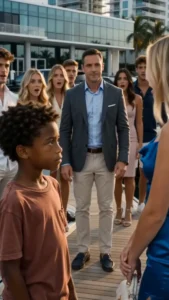
That was why people noticed the boy.
He was eleven years old.
Small for his age.
Short black curls.
Faded rust-red T-shirt.
Washed gray shorts.
Old black-and-white sneakers with scuffed toes.
He walked alone down one of the floating docks with both hands in his pockets.
No yacht club polo.
No expensive watch.
No adult beside him.
No visible reason to be there.
A few people looked at him.
Most looked away.
One person didn’t.
Sloane Whitmore was twenty years old and had spent nearly her entire life in places where no one questioned whether she belonged.
Her father developed luxury condominiums.
Her mother sat on charity boards.
Her family had homes in Palm Beach, Aspen, and the Bahamas.
Sloane had grown up around private terminals, yacht clubs, and dinners where people discussed seven-figure investments between appetizers.
That afternoon, she wore a royal-blue satin dress and silver heels.
Three of her friends stood nearby, waiting for someone named Preston to finish a phone call.
Sloane noticed the boy as he approached a yacht at the end of Pier Seven.
Not just any yacht.
The Aurelia.
One hundred and eighty feet of pearl-white steel and glass.
Six guest suites.
Helipad.
Infinity pool.
A crew of fourteen.
Everyone at the marina knew the yacht.
Everyone also knew who owned it.
The Carter family.
Old money on one side.
New technology money on the other.
Their holding company had interests in shipping, software, real estate, sports, and renewable energy.
Sloane had never met the Carters.
But she knew enough about them to know the boy in the rust-red shirt couldn’t possibly be one of them.
At least, that was what she decided.
She nudged her friend Madison.
“Watch this.”
Madison looked up.
“Watch what?”
Sloane raised her phone.
The boy had reached the yacht.
He stopped beside the boarding gate.
For a moment, he simply stared.
Then he placed one hand on the polished stainless-steel rail.
Sloane started recording.
Madison frowned.
“What are you doing?”
Sloane smiled.
“Just wait.”
She walked toward him.
The boy heard her heels before he saw her.
He turned.
Sloane looked him over.
Slowly.
Deliberately.
The shirt.
The shorts.
The shoes.
Then she looked at his hand on the railing.
“Hey,” she said.
The boy immediately pulled his hand back.
Sloane smiled.
“Don’t touch that.”
He said nothing.
“That yacht costs more than everything your family owns.”
Behind her, one of the young men laughed.
Not loudly.
But loud enough.
The boy lowered his eyes.
For a second, Sloane seemed satisfied.
Then he looked back up.
“I just wanted to look at it.”
Sloane crossed her arms.
“Kids like you will never set foot on a yacht like this.”
One of her friends shifted uncomfortably.
Another looked at his phone.
Madison whispered:
“Sloane, come on.”
But Sloane wasn’t finished.
She had an audience now.
That mattered.
“What are you even doing here?” she asked.
The boy glanced toward the marina offices.
“Waiting for my dad.”
Sloane laughed.
“At the marina?”
“Yes.”
“What does he do? Clean boats?”
Madison’s expression changed.
“That’s enough.”
Sloane ignored her.
The boy looked down at his sneakers.
His face was calm.
But the embarrassment was there.
He had experienced it before.
Different places.
Different people.
Same expression.
People looked at his skin.
His clothes.
His age.
Then they decided what his story had to be.
His father had spoken to him about it many times.
“You don’t have to win every moment,” his father always said.
“You just have to know who you are before somebody else tries to tell you.”
The boy reached into his pocket.
Sloane smirked.
“What, you got a yacht key in there?”
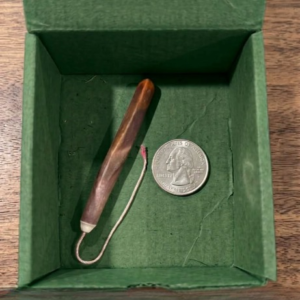
He pulled out a matte black card.
No logo.
No name.
Just a small silver chip.
Sloane laughed again.
“That’s cute.”
The boy turned toward the electronic panel beside the boarding gate.
He held the card against it.
A soft beep sounded.
Then a mechanical click.
The gate unlocked.
Lights came on along the boarding stairs.
Soft white strips illuminated the teak.
The yacht’s exterior systems activated one by one.
Sloane stopped smiling.
Her friends stopped moving.
The boy returned the card to his pocket.
Then he looked at her.
“This yacht belongs to my family.”
There was no triumph in his voice.
No anger.
Just a statement.
Sloane stared at him.
Then forced a laugh.
“Sure.”
The boy didn’t respond.
Sloane lifted her chin.
“And I guess you own the whole marina too?”
A voice came from behind them.
“Mr. Carter.”
Everyone turned.
The harbor manager was walking quickly down the dock.
Michael Reynolds.
Forty-five.
Charcoal blazer.
Cream trousers.
A man who had spent twenty years dealing with people who expected perfection.
He walked directly past Sloane.
He didn’t even look at her.
He stopped in front of the boy and gave a respectful nod.
“Sir, your father is waiting for you on board.”
The laughter died instantly.
Sloane’s face lost all color.
The boy nodded.
“Thanks, Mr. Reynolds.”
“Of course.”
The harbor manager stepped aside.
The boy moved toward the gate.
Then stopped.
He turned back.
Sloane still held her phone.
Still recording.
The boy looked at the screen.
Then at her.
“You can stop filming me now.”
Sloane lowered the phone.
Nobody laughed.
The boy walked onto the yacht.
The gate closed behind him.
Michael Reynolds remained where he was.
Sloane swallowed.
“Who exactly is he?”
The harbor manager looked at her.
“Ethan Carter.”
Madison whispered:
“Carter?”
Michael nodded.
“Jonathan Carter’s son.”
One of the young men muttered:
“Oh, man.”
Sloane looked toward the yacht.
“What’s Jonathan Carter doing here?”
Michael’s expression was neutral.
“He owns the marina.”
Silence.
Sloane’s joke came back to her.
And I guess you own the whole marina too?
Nobody needed to repeat it.
Her friends had heard.
Michael had heard.
Several nearby visitors had heard.
She looked at her phone.
The recording was still running.
She stopped it.
Then deleted it.
Or thought she did.
What she didn’t know was that Madison had recorded almost the entire interaction from a second phone.
Not to embarrass Sloane.
At first, she had just been filming the sunset.
But after the first insult, she had kept recording.
And six hours later, that video would be online.
By midnight, millions of people would see it.
But the video was only the beginning.
Because the boy on the dock was not there for a vacation.
His family had gathered on the Aurelia because Jonathan Carter was about to make an announcement.
An announcement worth nearly four billion dollars.
And one of the families most exposed to the decision was the Whitmore family.
Sloane’s family.
She had no idea.
Inside the yacht, Ethan found his father in the main salon.
Jonathan Carter stood near the window.
Forty-six years old.
Tall.
Dark suit trousers.
White shirt with the sleeves rolled up.
No tie.
He turned.
“There you are.”
Ethan dropped his backpack on a sofa.
“Yeah.”
Jonathan studied his face.
“What happened?”
“Nothing.”
His father frowned.
Ethan walked toward the refrigerator.
“Can I get a soda?”
“Ethan.”
The boy stopped.
Jonathan knew him too well.
“Something happened.”
Ethan opened the refrigerator.
“Some girl thought I wasn’t supposed to be here.”
Jonathan said nothing.
Ethan took a soda.
“She told me not to touch the yacht.”
Still nothing.
“She said I’d never get on one.”
Jonathan’s jaw tightened.
“Who?”
Ethan sighed.
“Dad.”
“Who?”
“Some girl.”
“Did she touch you?”
“No.”
“Threaten you?”
“No.”
“Then what?”
“She was just being rude.”
Jonathan leaned against the table.
“Because of your clothes?”
Ethan shrugged.
Jonathan asked more quietly:
“Or because you’re Black?”
Ethan didn’t answer.
That was the answer.
Jonathan looked out toward the dock.
He had spent half his life learning how to survive rooms where people underestimated him.
He had believed money would eventually erase certain experiences.
It hadn’t.
It only changed the rooms.
“Did you respond?”
Ethan nodded.
“What did you say?”
“That it was our yacht.”
Jonathan almost smiled.
“And?”
“She didn’t believe me.”
That did make him smile.
“Then what?”
“Mr. Reynolds came out.”
Jonathan nodded.
“That probably helped.”
Ethan laughed softly.
Then his expression changed.
“Dad?”
“Yeah?”
“Why do people do that?”
Jonathan knew what he meant.
Not this one girl.
Not this one marina.
All of it.
He walked over and sat beside his son.
“Because some people feel safer when they think they can rank everybody.”
Ethan listened.
“They look at clothes, names, skin, cars, schools, neighborhoods. Anything that helps them decide who matters more.”
“Why?”
“Because if they can put somebody below them, they don’t have to ask themselves who they really are.”
Ethan looked down.
Jonathan continued.
“But you know what the dangerous part is?”
“What?”
“Sometimes people with power actually believe that ranking system.”
Ethan nodded slowly.
Jonathan put a hand on his shoulder.
“You never use what we have to humiliate somebody back.”
Ethan looked at him.
“Even if they deserve it?”
Jonathan smiled.
“Especially then.”
A woman entered the room.
Ethan’s mother.
Naomi Carter.
She looked between them.
“What happened?”
Ethan groaned.
“Dad.”
Jonathan raised both hands.
“I didn’t say anything.”
Naomi stared at her husband.
Then at her son.
“Somebody messed with my baby?”
Ethan closed his eyes.
“This is why I don’t tell you guys stuff.”
Jonathan laughed.
Naomi sat beside him.
“Tell me.”
Ethan eventually did.
Her expression stayed calm.
Too calm.
Jonathan recognized it.
“Naomi.”
“What?”
“Don’t.”
“I’m not doing anything.”
“That voice means you’re doing something.”
She smiled.
“Maybe I just want a name.”
“No.”
“Fine.”
Jonathan kissed Ethan’s forehead.
“We have bigger things tonight.”
The boy looked up.
“The meeting?”
Jonathan nodded.
At seven, the Carter family would meet with attorneys, trustees, and executives from Carter Atlantic Holdings.
Ethan knew it involved his grandfather’s estate.
But not much more.
What he didn’t know was that Jonathan was about to transfer a major ownership stake into a new family trust.
A trust that included Ethan.
And with it came direct control over the marina, the Aurelia, several waterfront properties, and a group of hospitality companies.
One of those companies had recently entered negotiations to acquire the Whitmore family’s struggling luxury resort business.
Sloane’s father had spent six months trying to secure the deal.
And tomorrow morning, he was supposed to meet Jonathan Carter personally.
He had no idea his daughter had just publicly humiliated Jonathan’s son.
By eight-thirty that evening, the video was online.
The caption read:
Rich girl mocks kid at Miami yacht — then finds out who he is.
Within twenty minutes, fifty thousand views.
An hour later, three hundred thousand.
By midnight, two million.
Sloane found out because her phone started vibrating nonstop.
Texts.
Calls.
Tags.
Messages from strangers.
Then from friends.
Then from her mother.
Finally, from her father.
COME HOME. NOW.
For the first time that day, Sloane felt genuinely afraid.
And the worst part was that the video ended before anything really happened.
To the internet, it was a story about arrogance and embarrassment.
To her father, it could destroy the most important business deal of his life.
And to Jonathan Carter, it would raise a question much larger than Sloane.
What kind of family was he about to entrust with hundreds of employees?
PART 2 — THE VIDEO
Robert Whitmore watched the video three times.
Not because he couldn’t understand it.
Because he hoped something would change.
It didn’t.
His daughter’s voice was clear.
That yacht costs more than everything your family owns.
Then:
Kids like you will never set foot on a yacht like this.
And finally the worst moment.
Ethan Carter’s black access card.
The gate opening.
Sloane laughing.
Then Michael Reynolds saying:
Sir, your father is waiting for you on board.
Robert paused the video.
He stared at the screen.
His wife, Caroline, stood across the kitchen island.
Neither spoke.
Their Miami Beach home was silent except for the hum of the air-conditioning.
Sloane entered.
Still wearing the blue dress.
She stopped when she saw her father.
“Dad.”
Robert turned the laptop around.
“What is this?”
She looked at the frozen image.
“I can explain.”
“Good.”
He folded his arms.
“Explain.”
“I thought he was messing around.”
Robert stared.
“That’s your explanation?”
“No, I mean, he was touching the yacht and—”
“So?”
Sloane stopped.
Robert pointed at the screen.
“Why did you care?”
“He didn’t look like—”
She stopped.
Her father’s expression hardened.
“Finish the sentence.”
Sloane looked away.
“He didn’t look like he belonged there.”
Caroline closed her eyes.
Robert nodded slowly.
“And what does that look like?”
“Dad.”
“No. Tell me.”
“I don’t know.”
“You knew six hours ago.”
Sloane’s face reddened.
“I made a stupid comment.”
“You made several.”
“I said I’m sorry.”
“You haven’t.”
“I’m saying it now.”
Robert stepped closer.
“To me?”
Sloane went quiet.
He lowered his voice.
“You’re not sorry to me.”
“I know.”
“You’re scared.”
She said nothing.
“You’re scared because that boy is Jonathan Carter’s son.”
“That’s not fair.”
“It’s exactly fair.”
Robert walked away from the island.
“You’ve been rude to people before.”
“Dad—”
“I’ve seen it.”
Sloane looked stunned.
Caroline glanced at him.
Robert continued.
“Waiters. Drivers. Assistants. People at hotels. You think I don’t notice?”
“I’m not like that.”
“You are in that video.”
She flinched.
“And now it matters because you picked the wrong person?”
Sloane’s eyes filled with tears.
“I didn’t know who he was.”
Robert replied:
“That’s the problem.”
Silence.
Caroline finally spoke.
“Robert.”
He took a breath.
Then sat down.
The anger faded.
Something worse replaced it.
Exhaustion.
“The Carter meeting is tomorrow.”
Sloane looked at him.
“What meeting?”
Robert stared.
She genuinely didn’t know.
“Our resort group is in trouble.”
Caroline looked away.
Sloane frowned.
“What do you mean?”
“We’ve been negotiating with Carter Atlantic.”
“For what?”
“Capital.”
“How much?”
“Two hundred and eighty million dollars.”
Sloane froze.
Robert continued.
“Without it, we may have to sell three properties.”
Her face changed.
“And if we sell those properties?”
“We lose control of the company.”
“Because of me?”
Robert shook his head.
“No.”
That surprised her.
“This company was in trouble before today. You didn’t create that.”
She exhaled.
Then he added:
“But you may have made Jonathan Carter question whether he wants to do business with this family.”
Sloane began crying.
“I didn’t know.”
Robert looked at her.
“No. You didn’t.”
He paused.
“And now you’re going to learn.”
The next morning, the meeting took place in a glass conference room overlooking Biscayne Bay.
Jonathan Carter sat at one end.
Robert Whitmore at the other.
Six executives and attorneys filled the sides.
Sloane was not invited.
Robert expected the meeting to begin with the video.
It didn’t.
Jonathan opened a folder.
“We’ve completed the operational review.”
Robert nodded.
Jonathan’s CFO continued.
“Your Miami and Key West properties are stronger than expected. The Bahamas operation is the main concern.”
For twenty minutes, they discussed debt.
Occupancy.
Insurance.
Labor.
Renovation costs.
Not one word about Sloane.
Robert grew more uncomfortable with every minute.
Finally, Jonathan closed the folder.
“Operationally, I still think the business can work.”
Robert exhaled.
“Thank you.”
Jonathan looked at him.
“But I have a governance concern.”
There it was.
Robert nodded.
“My daughter.”
Jonathan remained calm.
“Yes.”
Robert leaned forward.
“I won’t defend what she did.”
“I appreciate that.”
“She was wrong.”
“Yes.”
Robert waited.
Jonathan continued.
“But the question isn’t whether your daughter made a bad decision.”
“Then what is it?”
“It’s what your company rewards.”
Robert frowned.
Jonathan slid another document across the table.
Complaints.
Employee turnover.
Lawsuits.
Internal HR reports.
Robert stared.
Jonathan said:
“Your group has had twenty-eight complaints involving class discrimination, racial comments, and mistreatment of service staff in three years.”
Robert looked up.
“I’ve never seen these.”
“That’s another concern.”
His COO shifted.
Jonathan continued.
“Your executives did.”
Robert turned.
Nobody met his eyes.
“What the hell is this?”
One executive said:
“Most were minor.”
Jonathan’s expression changed.
“Minor to who?”
Silence.
Robert looked at the documents again.
The video had not created the problem.
It had revealed something.
The family culture.
The company culture.
The same instincts.
Who mattered.
Who didn’t.
Robert understood.
“You think we’re rotten.”
Jonathan shook his head.
“I think you’re at a decision point.”
Robert looked at him.
“What do you want?”
Jonathan replied:
“Independent management review. New employee protections. Compensation adjustments. Leadership changes.”
Robert listened.
“And my daughter?”
“Nothing.”
Robert frowned.
“Nothing?”
“I’m not investing based on punishing a twenty-year-old.”
Robert sat back.
Jonathan added:
“But I won’t put money into a company that teaches people like her that status protects them from consequences.”
Robert absorbed that.
Then asked:
“If I agree?”
“We continue.”
“And if I don’t?”
“We walk.”
Robert looked around the table.
He had spent thirty years building the company.
His father had started with one hotel in Fort Lauderdale.
Robert had expanded aggressively.
Maybe too aggressively.
Maybe in the process, he had created something that looked successful from the outside and unhealthy from within.
He picked up the pen.
“What timeline?”
Jonathan answered:
“Ninety days.”
Robert nodded.
“Done.”
One of his executives whispered:
“Robert.”
He turned.
“No.”
Then to Jonathan:
“Done.”
The meeting ended forty minutes later.
As Robert gathered his papers, Jonathan said:
“One more thing.”
Robert looked up.
“My son doesn’t want an apology for the business deal.”
Robert nodded.
“I understand.”
“He doesn’t want to be used as part of it.”
Robert stood still.
“So if Sloane apologizes, it needs to be because she understands what she did.”
Robert replied:
“That may take longer than ninety days.”
Jonathan almost smiled.
“Probably.”
At home, Sloane was furious when her father told her she would be volunteering three days a week at one of the family’s older hotels.
“Absolutely not.”
Robert continued eating.
“You start Monday.”
“I have school.”
“You have summer.”
“I have an internship.”
“Canceled.”
“Dad!”
Caroline watched quietly.
Robert said:
“You’ll work with housekeeping, front desk, kitchen, valet, and maintenance.”
Sloane stared at him.
“You’re humiliating me.”
He set down his fork.
“No.”
She shook her head.
“This is punishment.”
“Yes.”
“You just said it wasn’t about punishing me.”
“That was Jonathan Carter.”
He pointed at himself.
“I’m your father.”
Sloane looked at her mother.
“Are you serious?”
Caroline nodded.
“You need this.”
Sloane stood.
“This is insane.”
Robert replied:
“What’s insane is that you’ve spent twenty years benefiting from a business built by people whose names you don’t know.”
She stopped.
“We’re going to fix that.”
The hotel was not one of the glamorous ones.
It was an aging beachfront property north of Miami.
Sloane arrived Monday morning at seven.
No dress.
No heels.
Black polo.
Khaki pants.
Name tag.
She hated every second.
Her supervisor was a woman named Rosa Martinez.
Fifty-eight.
Housekeeping director.
Worked for Whitmore Hospitality for twenty-six years.
Rosa looked at Sloane.
“You late.”
Sloane checked her phone.
“It’s seven-oh-two.”
Rosa nodded.
“Late.”
The first day destroyed her.
Beds.
Laundry.
Bathroom supplies.
Guest complaints.
A man yelled because his room wasn’t ready.
A woman snapped her fingers at Sloane in the lobby.
At lunch, Sloane sat alone.
Rosa joined her.
“Hard?”
Sloane sighed.
“Yes.”
Rosa opened a yogurt.
“Good.”
Sloane looked at her.
“You hate me?”
Rosa shrugged.
“I don’t know you.”
“You saw the video.”
“Everybody saw.”
Sloane looked down.
“I’m sorry.”
Rosa ate quietly.
After a moment:
“Why?”
Sloane frowned.
“Why what?”
“Why sorry?”
“Because I was horrible.”
“To that boy?”
“Yes.”
Rosa nodded.
“And?”
Sloane waited.
Rosa looked at her.
“What about everybody before the boy?”
Sloane went quiet.
Rosa continued:
“People don’t become cruel in one video.”
That sentence stayed with her.
Three weeks passed.
Something changed.
Slowly.
Sloane learned names.
Luis at valet.
Tasha at the front desk.
Jorge in maintenance.
Angela in laundry.
She discovered that Rosa had put two children through college working at Whitmore hotels.
She learned that one kitchen worker slept four hours a night because he worked a second job.
She learned how guests spoke to staff when they thought the staff couldn’t answer back.
One afternoon, a wealthy guest shouted at a young housekeeper.
“Do you even speak English?”
The girl froze.
Sloane heard it from the hall.
She walked in.
“Ma’am, she speaks English.”
The guest turned.
“Excuse me?”
Sloane’s heart raced.
Three weeks earlier, she might have been the person on the other side.
Now she said:
“If there’s a problem with the room, I can call the manager. But you can’t speak to her like that.”
The woman stared.
“Who are you?”
Sloane almost laughed.
That question.
Again.
Who are you?
As if status decided truth.
She replied:
“I work here.”
And for the first time in her life, she was proud to say it.
One month after the marina incident, Ethan Carter came to the hotel.
Not for Sloane.
His father was touring the property with Robert.
Ethan had asked to come.
Sloane saw him near the lobby.
Her stomach tightened.
She could have avoided him.
Instead, she walked over.
“Ethan?”
He turned.
He recognized her immediately.
“Oh.”
Sloane stopped several feet away.
“I wanted to say something.”
He waited.
“No excuses.”
Still nothing.
“I was cruel to you.”
Ethan looked at her.
“I judged you because of how you looked.”
She swallowed.
“And because you were Black.”
The honesty surprised even her.
“I wanted to embarrass you because I thought I could.”
Ethan remained quiet.
“I’m sorry.”
He asked:
“Would you be sorry if you never found out whose yacht it was?”
Sloane felt the question.
A month ago, she would have lied.
Now she said:
“I don’t know.”
Ethan watched her.
She continued:
“I want to say yes. But I don’t know.”
He nodded.
“That’s more honest.”
Sloane looked down.
“I’m trying to be different.”
Ethan shrugged.
“Okay.”
She almost smiled.
“That’s it?”
“What do you want me to do?”
“I don’t know.”
He smiled slightly.
“You’re an adult.”
“I’m twenty.”
“That’s adult.”
“Barely.”
Ethan laughed.
The tension broke.
Then he asked:
“Do you still think I’ll never get on a yacht?”
Sloane covered her face.
“Oh my God.”
Ethan grinned.
“I’m never letting that go.”
“You shouldn’t.”
He looked toward the beach.
Then back.
“My dad says people show who they are by what they do after they’re embarrassed.”
Sloane nodded.
“Your dad says a lot of things.”
“Yes.”
“Is it annoying?”
“Very.”
They both laughed.
And for the first time, Ethan saw her not as the girl on the dock.
Just as someone trying.
That mattered.
But while Sloane was changing, a much larger problem was approaching the Whitmore company.
One that had nothing to do with a viral video.
And this time, Ethan’s family would be the only reason the Whitmores survived.
PART 3 — THE STORM
Hurricane Celeste formed east of the Bahamas in late September.
At first, nobody panicked.
Storms were part of life in South Florida.
Then the forecast changed.
Category Two.
Then Three.
Then Four.
The projected path shifted directly toward the northern Bahamas.
The Whitmore family’s largest resort sat almost exactly in the storm corridor.
Robert watched the forecast from the company command center.
His CFO said:
“We need to evacuate by tomorrow morning.”
“How many guests?”
“Six hundred and twelve.”
“Employees?”
“Four hundred and seven on-site.”
Robert looked at the map.
“What transportation?”
“Commercial flights are almost full.”
“Charters?”
“Unavailable.”
“Boats?”
The executive hesitated.
“Sea conditions will deteriorate.”
Robert’s stomach tightened.
The resort island had an airstrip.
But not enough capacity.
The storm accelerated.
They had less time than expected.
Robert called government contacts.
Airlines.
Private aviation groups.
Everyone was overwhelmed.
Then he called Jonathan Carter.
Jonathan answered immediately.
“What do you need?”
Robert didn’t waste time.
“Transportation.”
“How many?”
“Potentially a thousand.”
Jonathan was silent for two seconds.
Then:
“I’ll call you back in ten.”
He called back in eight.
“We can move three hundred by air tonight.”
Robert exhaled.
“And the rest?”
“I’m sending vessels.”
Robert frowned.
“What vessels?”
“Two Carter Atlantic ships are south of Nassau.”
“They can’t dock at the resort.”
“Not those.”
Jonathan looked through another line.
“We have four large yachts in the region and two fast ferries under charter.”
Robert stared.
“You’d send your yachts into a hurricane evacuation?”
“Before the hurricane.”
Robert closed his eyes.
“Thank you.”
“Don’t thank me. Get people moving.”
The evacuation became a massive operation.
Guests first.
Children.
Older people.
Then employees.
For sixteen hours, buses ran from the resort to the small airport and harbor.
Jonathan flew to Nassau.
Naomi coordinated medical evacuation.
Ethan stayed in Miami with his grandmother.
Sloane refused to remain home.
She went with her father to the company emergency center.
At three in the morning, Robert was told that one ferry could not make the final trip.
Eighty-three employees remained.
Mostly housekeeping.
Kitchen.
Maintenance.
The same kind of people Sloane had spent the summer working beside.
Robert looked at the storm tracker.
They had hours.
A Carter executive said:
“The Aurelia can make the run.”
Robert looked at him.
“The superyacht?”
“Yes.”
“Absolutely not.”
Sloane turned.
“Why?”
Robert looked at her.
“It’s Jonathan’s family yacht.”
“So?”
“It’s not an evacuation vessel.”
The executive replied:
“It can take the remaining staff safely.”
Robert shook his head.
“That boat is worth more than the entire resort.”
Sloane stared at him.
Then quietly said:
“Dad.”
He looked at her.
She repeated the sentence he had once forced her to confront.
“Who matters more?”
Silence.
Robert closed his eyes.
Then turned to the executive.
“Call Jonathan.”
The Aurelia left Nassau before dawn.
Not glamorous now.
Deck furniture secured.
Crew in weather gear.
Medical kits prepared.
Cabins converted into sleeping areas.
By sunrise, the last Whitmore employees were boarding.
One woman began crying when she stepped onto the yacht.
She had worked at the resort for nineteen years.
She looked around.
“I’m going to ruin something.”
A crew member smiled.
“Ma’am, just sit down.”
Another employee whispered:
“I’ve never been on a yacht.”
The first woman laughed through tears.
“Me neither.”
Hours later, all eighty-three were safely in Nassau.
The storm hit that night.
The Whitmore resort suffered catastrophic damage.
Roofs ripped away.
Windows shattered.
Flooding.
One wing nearly destroyed.
But no guests died.
No employees died.
Not one.
Robert watched the damage footage in silence.
Then walked outside.
Sloane found him sitting behind the emergency center.
“Dad?”
He wiped his face.
She realized he had been crying.
“Everybody’s okay,” she said.
He nodded.
“Yeah.”
She sat beside him.
After a while, Robert said:
“You know what I kept thinking?”
“What?”
“That I almost said no to using that yacht because it was too valuable.”
Sloane looked at him.
He laughed bitterly.
“A boat.”
She understood.
He looked at his daughter.
“I’ve spent my whole life telling myself I built this company for people.”
He shook his head.
“Sometimes I think I forgot the people.”
Sloane put her head on his shoulder.
“So did I.”
Robert kissed her hair.
“We can do better.”
The storm changed everything.
Insurance disputes followed.
Rebuilding costs exploded.
The Whitmore group was suddenly weaker than ever.
Several investors withdrew.
The Carter deal became essential.
Yet Jonathan surprised everyone.
He didn’t reduce the offer.
He increased it.
But under a condition.
Employees would receive an ownership trust.
Ten percent of the company over seven years.
Robert stared at the proposal.
“You’re giving employees equity?”
Jonathan replied:
“No.”
He leaned back.
“You are.”
Robert smiled.
“Right.”
Jonathan continued:
“Your company survives because those people stayed long enough to build it.”
Robert nodded.
“Agreed.”
Jonathan looked surprised.
“That easy?”
Robert said:
“The hurricane made some decisions easier.”
The deal closed two months later.
Whitmore Hospitality survived.
The damaged resort would be rebuilt.
And for the first time in its history, employees would own part of the company.
Sloane remained at the hotel after her required summer ended.
Not full-time.
She returned to college.
But she worked weekends when she was in Miami.
Rosa told her:
“You don’t have to keep proving.”
Sloane smiled.
“I know.”
“Then why you here?”
“Because I like it.”
Rosa laughed.
“Now I know you crazy.”
A year after the original marina incident, Sloane received an invitation.
Not from Jonathan.
From Ethan.
Come to Pier Seven Saturday. 4 PM. Wear normal shoes.
She stared at the message.
Then laughed.
She arrived in jeans.
White shirt.
Sneakers.
No designer bag.
Ethan stood beside the Aurelia.
Now twelve.
Slightly taller.
Same calm expression.
Sloane walked over.
“You’re enjoying this already, aren’t you?”
“Yes.”
“What am I doing here?”
Ethan held out a matte black access card.
She stared.
“No.”
“Take it.”
“Absolutely not.”
“It’s a guest card.”
“I don’t deserve that.”
Ethan rolled his eyes.
“You’re making this weird.”
“I made fun of you on this exact dock.”
“Yes.”
“I said you’d never get on the yacht.”
“Yes.”
“You remember every word?”
“Probably forever.”
Sloane groaned.
Then Ethan said:
“My family’s taking out some kids from a youth sailing program.”
She looked toward the yacht.
A group of children were arriving.
Different ages.
Different neighborhoods.
Some staring at the vessel with the same expression Ethan had worn one year earlier.
Curiosity.
Wonder.
Uncertainty.
Ethan continued:
“My dad wants volunteers.”
Sloane looked at him.
“You want me to help?”
“Yes.”
“Why?”
Ethan shrugged.
“Because you know what not to say.”
She burst out laughing.
“Fair.”
He gave her the card.
She took it.
“Thank you.”
Then a boy approached the railing.
Maybe ten.
He wore an oversized T-shirt and old sneakers.
He stopped short of touching the yacht.
Sloane noticed.
For a moment, the whole scene repeated itself.
Different child.
Same dock.
Same yacht.
Same question in his eyes.
Do I belong here?
Sloane walked over.
The boy immediately pulled his hand away.
“Sorry.”
She stopped.
“For what?”
“I wasn’t touching anything.”
Sloane looked at the railing.
Then at him.
“You can.”
He blinked.
“What?”
“You can touch it.”
He carefully placed one hand on the polished metal.
Sloane smiled.
“Pretty cool, right?”
He nodded.
“Is this yours?”
Sloane laughed.
“No.”
She pointed toward Ethan.
“His family’s.”
The boy looked at Ethan.
Then back at her.
“Are they rich?”
Sloane smiled.
“Very.”
Ethan shouted from behind her:
“I can hear you!”
She laughed.
The boy asked:
“Why are we allowed on it?”
Sloane’s smile faded slightly.
Then she answered:
“Because somebody invited you.”
He looked confused.
“That’s it?”
“That’s it.”
The answer was simple.
But it would have been impossible for the Sloane of one year earlier to understand.
PART 4 — WHO BELONGS
Five years later, Pier Seven looked almost the same.
The yachts were newer.
The condos taller.
The cars more expensive.
But the Atlantic still moved softly beneath the docks.
And the late-afternoon sun still turned everything gold.
Ethan Carter was sixteen now.
Tall.
Quiet.
More confident.
He had grown into the kind of young man people noticed before they knew his last name.
But he still wore inexpensive sneakers when he could get away with it.
Jonathan complained occasionally.
Naomi encouraged it.
The Aurelia remained in the family.
But it had changed too.
It still hosted family vacations.
Business events.
Friends.
Yet several times each month, it served another purpose.
The Carter-Whitmore Maritime Initiative.
A program created after the hurricane.
It offered sailing, marine science, engineering, and hospitality training to teenagers from Miami-Dade public schools.
Sloane helped create it.
At twenty-five, she was no longer the young woman from the viral video.
The internet, however, never completely forgot.
Every few months, the clip resurfaced.
Someone would tag her.
Remember this girl?
At first, she hated it.
Then she stopped trying to escape it.
During speeches, she sometimes played the clip herself.
Not the whole thing.
Just enough.
Then she would say:
“That was me.”
No excuses.
No claim that she had been misunderstood.
“That was me when I thought money told you who belonged somewhere.”
Then she told them what happened after.
Not as redemption theater.
As evidence that shame can either become a hiding place or a doorway.
She chose the second.
Whitmore Hospitality became stronger.
The employee ownership trust changed the culture.
Turnover dropped.
Promotion from within increased.
The rebuilt Bahamas resort reopened with a training center named after the eighty-three employees evacuated on the Aurelia.
Robert insisted.
Rosa Martinez became a board member.
The first time she entered the Whitmore boardroom, she looked at Robert and said:
“You sure this right room?”
He laughed.
“Unfortunately.”
She sat down.
“Good. I have complaints.”
Sloane nearly choked laughing.
Robert had changed too.
Slower than Sloane.
But deeply.
He began visiting properties without advance notice.
Eating in employee cafeterias.
Meeting housekeeping teams.
Listening.
Sometimes badly.
But listening.
When managers complained that he was disrupting operations, he replied:
“Then operations need disruption.”
Caroline teased that Jonathan Carter had turned her husband into a social reformer.
Jonathan denied responsibility.
Ethan, meanwhile, had never cared much about the viral story.
What mattered to him was the first afternoon.
The embarrassment.
Not because Sloane had been wrong about the yacht.
Because for several seconds, she had made him question whether he should have touched something that already belonged to his family.
That bothered him.
Years later, he told his father:
“I hate that I pulled my hand away.”
Jonathan understood immediately.
“You were eleven.”
“I know.”
“You don’t have to be ashamed of being hurt.”
“I’m not.”
Ethan looked toward the water.
“I just don’t want other kids to feel that.”
That conversation helped shape the maritime program.
On opening day, Ethan stood at the boarding gate.
Twenty children arrived.
Some confident.
Some afraid to breathe.
Ethan welcomed every one personally.
No suits.
No speeches.
He simply said:
“Come on.”
One Saturday, a girl named Maya arrived with her grandmother.
Maya was twelve.
Black.
From Liberty City.
Her mother worked nights at a hospital.
Her father was incarcerated.
Maya had nearly refused the program because she thought a yacht club sounded “for rich kids.”
Her grandmother made her go.
When they reached the marina, Maya stopped.
“I’m not going.”
Her grandmother sighed.
“Maya.”
“Look at this place.”
“So?”
“Everybody’s looking.”
“They’re not.”
“They are.”
A man in a polo shirt did look.
Then away.
Maya folded her arms.
“I don’t belong here.”
A voice behind her:
“Who told you?”
She turned.
Ethan.
He was wearing shorts and a plain gray T-shirt.
Maya looked at him.
“Nobody.”
“Then why say it?”
She glanced around.
“Look.”
Ethan did.
“What?”
“All this.”
He smiled.
“Boats?”
She rolled her eyes.
“You know what I mean.”
Ethan nodded.
He did.
He reached into his pocket.
Pulled out a matte black access card.
The original card.
The same one from five years earlier.
He handed it to her.
Maya frowned.
“What’s this?”
“Try it.”
She walked toward the gate.
Held the card near the reader.
Beep.
Click.
The gate opened.
Her eyes widened.
Ethan said:
“Looks like you belong.”
She stared at him.
“You own this?”
“My family does.”
Maya immediately tried to hand the card back.
He shook his head.
“Keep it for today.”
Her grandmother watched.
Then quietly wiped her eye.
Ethan pretended not to notice.
Sloane arrived twenty minutes later.
She recognized the card immediately.
“You still have that thing?”
Ethan grinned.
“Of course.”
“You know that card ruined my life for like six months.”
“No.”
“It definitely did.”
“It improved your life.”
She sighed.
“You sound like your dad.”
“Worst insult possible.”
Jonathan walked past them.
“I heard that.”
Ethan laughed.
Sloane watched Maya board.
“You remember the first day?”
“Unfortunately.”
“I do too.”
“Obviously.”
Sloane looked at him.
“I used to think the worst thing that happened that day was getting exposed.”
Ethan listened.
“It wasn’t.”
“What was?”
She looked toward the dock.
“The worst thing was realizing I had been that person before the camera ever turned on.”
Ethan nodded.
“And the best thing?”
She smiled.
“That someone gave me enough time to become somebody else.”
Later that afternoon, Robert arrived.
He was older now.
Gray at the temples.
Still working too much.
He stood beside Jonathan.
They watched the kids learn basic navigation.
Robert said:
“You almost walked away from my company because of that video.”
Jonathan shook his head.
“No.”
Robert looked at him.
“No?”
“I almost walked because of what the video showed me about your company.”
Robert laughed.
“Still brutal.”
“You asked.”
They watched Sloane help Maya with a life jacket.
Robert smiled.
“She’s good with them.”
Jonathan nodded.
“She is.”
Robert looked down.
“I used to think you saved my company.”
Jonathan replied:
“The hurricane did more than I did.”
Robert smiled.
“You sent a hundred-million-dollar yacht to evacuate housekeepers.”
Jonathan shrugged.
“It floats.”
Robert laughed.
“Still crazy.”
Then Jonathan became serious.
“I had the yacht because people worked for companies my family owns.”
He looked toward the kids.
“If that thing matters more than people, I shouldn’t own it.”
Robert nodded.
That sentence would stay with him.
That evening, the program ended with dinner on the aft deck.
Nothing fancy.
Burgers.
Fruit.
French fries.
Kids laughing.
Parents arriving.
Maya sat beside Ethan.
She asked:
“Do you get to sleep here?”
“Sometimes.”
“Is there a movie room?”
“Yes.”
“A pool?”
“Yes.”
“Helicopter?”
“Sometimes.”
Maya stared.
“Rich people are ridiculous.”
Ethan burst out laughing.
Sloane nearly dropped her drink.
Jonathan covered his mouth.
Naomi laughed openly.
Ethan nodded.
“You’re not wrong.”
Maya smiled.
Then asked:
“Can I come back?”
Ethan replied:
“That’s the idea.”
Her expression changed.
She had expected a one-day miracle.
Not an invitation.
“Really?”
“Really.”
Maya looked toward her grandmother.
Then back.
“Okay.”
It was a small word.
But Ethan understood its weight.
Years later, people still told the story of the boy at the marina.
Usually badly.
They made it about money.
A poor-looking child humiliated by a rich girl.
Then surprise:
He was richer.
The end.
But that was never the real story.
The real story was what happened after everyone learned who owned the yacht.
Because power could have ended the story there.
Jonathan Carter could have destroyed the Whitmore deal.
Robert could have protected his daughter.
Sloane could have hidden behind attorneys and publicists.
Ethan could have learned to use money as a weapon.
None of them did.
Not perfectly.
Not immediately.
But they chose something else.
Responsibility.
On the tenth anniversary of the marina program, Pier Seven hosted more than three hundred former students.
Some had become marine engineers.
Two were captains.
Several worked in hospitality.
One studied oceanography.
Maya, now twenty-two, was among them.
She had become a naval architecture student.
She found Ethan near the same boarding gate.
He was twenty-six.
Working in the family’s maritime investment division.
Maya smiled.
“You remember me?”
Ethan laughed.
“You insulted rich people on my yacht.”
“You agreed.”
“I did.”
She held up a matte black card.
He stared.
“You kept it?”
“Obviously.”
“That card is ancient.”
“It still works.”
“Probably shouldn’t.”
She smiled.
“You told me I belonged.”
Ethan went quiet.
Maya continued:
“I didn’t believe you.”
“And now?”
She looked around.
“I design boats.”
Ethan smiled.
“Fair.”
Across the dock, Sloane was talking with students.
Now an executive in employee development at Whitmore-Carter Hospitality.
She caught Ethan looking.
“What?”
He pointed to Maya’s card.
Sloane laughed.
“Oh no.”
Maya asked:
“What?”
Sloane walked over.
“That card has caused enough trouble.”
Maya frowned.
“What did it do?”
Ethan and Sloane looked at each other.
Then both laughed.
“Long story,” Ethan said.
As sunset fell over Miami, the Aurelia’s deck lights came on.
Just like they had years earlier.
Soft white lines against polished teak.
Water moving below.
City lights beginning to appear.
Ethan stood near the railing.
Sloane joined him.
“You know,” she said, “I never properly answered your question.”
“What question?”
“The one you asked me when I apologized.”
He thought.
Then remembered.
“Would you have been sorry if I wasn’t a Carter?”
She nodded.
“And?”
She looked across the marina.
“Yes.”
Ethan waited.
She smiled.
“But it took me a long time to become someone who could say that truthfully.”
He nodded.
“I believe you.”
For some reason, that mattered more than forgiveness.
Sloane looked toward the groups of young people filling the dock.
“Kind of funny.”
“What?”
“I told you kids like you would never set foot on a yacht like this.”
Ethan smiled.
“Still terrible.”
“I know.”
She pointed toward the Aurelia.
“Now we spend millions making sure kids do.”
Ethan laughed.
“That is pretty funny.”
They stood quietly.
No cameras.
No crowd waiting for a reversal.
No need to prove who owned anything.
A boy approached the rail nearby.
He hesitated before touching it.
Sloane noticed.
So did Ethan.
Neither said anything immediately.
Then Sloane walked over.
“You can touch it.”
The boy looked at her.
“Really?”
She smiled.
“Really.”
He placed his hand on the polished metal.
The same way Ethan once had.
Only this time, nobody laughed.
Nobody told him what his family could or couldn’t afford.
Nobody asked who he was supposed to be.
Behind him, the yacht lights glowed.
Ahead of him, the Atlantic stretched toward the horizon.