“Tourist Faces Bull — What Happens Next Will Shock You”

Sofia Martinez, a 26-year-old traveler from Mexico, had always dreamed of exploring the cultural festivals of Spain.

That summer, she found herself in a small historic town in the Andalusian region, drawn by the promise of vibrant music, traditional dances, and centuries-old celebrations that transformed the narrow cobblestone streets into a kaleidoscope of color and sound.

She had carefully planned her trip to experience the essence of Spanish culture, eager to observe the festival rituals and capture photographs of dancers in elaborate costumes and musicians playing lively folk tunes.

As she wandered through the bustling streets, Sofia’s excitement grew. Locals were setting up stalls with handcrafted goods, children chased each other while waving small flags, and the smell of roasted almonds and sizzling chorizo filled the air.

Yet, despite the festive atmosphere, Sofia remained cautious. She had read that some festivals included events with animals, including bulls, and she knew to keep a safe distance.

She chose a quiet corner beside an ancient stone wall to observe the crowd and watch the activities unfold from a safer perspective.

The festival was loud and chaotic, with music reverberating off the stone buildings, laughter echoing through the alleyways, and spectators jostling for position to get the best view.

Sofia’s attention was absorbed by a troupe of musicians playing traditional drums and guitars when she suddenly felt the ground tremble beneath her feet.

A low, deep rumble rolled through the street, and the sound was accompanied by a strange, heavy shuffling.

Sofia’s heart skipped a beat. She turned and saw a massive black bull, part of a herd that had broken free from its handlers, charging around a corner. Panic surged through her.

The bull’s muscular body was enormous, its glossy coat reflecting the sunlight, and its horns curved ominously. People nearby screamed, ducked, and scrambled out of the alley, but Sofia had nowhere to run.

She tried to move backward, pressing herself against the stone wall, her hands trembling as they gripped the rough surface.

The bull advanced, its nostrils flaring, its breath hot in the warm air. Sofia could feel each thunderous step reverberating through the cobblestones. Her mind raced: This is it. I’m done.

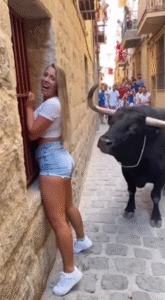
She squeezed herself into the narrow space between a doorway and an iron-barred window, hoping to create enough of a barrier to deter the animal. Her limbs shook uncontrollably, and tears blurred her vision.

For several long, terrifying seconds, she was frozen in place. The bull stopped just inches behind her. Its massive head hovered over her back, the tips of its sharp horns glinting dangerously.

The alley fell completely silent, except for Sofia’s ragged breathing and the distant murmur of frightened onlookers. People whispered prayers, others turned away in fear, and a few held their phones frozen, capturing the incredible moment.

And then… something remarkable happened.

Instead of charging, the bull paused. Its ears flicked, its nostrils quivered, and it lowered its head slightly—but not in attack. Its posture was tense but cautious, almost curious.

The bull leaned forward gently, pressing its nose to Sofia’s back. She shuddered violently, tears streaming down her face, and whispered, “Please… please don’t hurt me.”

For reasons she couldn’t understand in that moment, the animal didn’t move aggressively. It remained there, breathing softly, its eyes wide but calm, as if it could sense her fear and chose not to act on instinct.

The crowd watching the scene erupted into murmurs of disbelief. “Why isn’t it attacking?” one spectator asked. “Is it protecting her?” another wondered. Even the most experienced festival-goers were stunned.

The powerful bull, capable of immense destruction, had not harmed the terrified girl trapped against the wall. Instead, it seemed to freeze, assessing the situation, observing the human presence as carefully as they were observing it.

Minutes felt like hours. Local animal handlers cautiously approached, ropes and poles in hand, trying not to startle the animal. The bull lifted its massive head one last time, turned toward Sofia, and allowed itself to be gently guided away.

Relief washed over her as she collapsed to her knees, shaking, crying, and hyperventilating from the adrenaline coursing through her body.

Later, veterinarians and animal behavior experts explained the phenomenon to onlookers and the media. Bulls, like many animals, do not always respond aggressively when cornered.

In many cases, loud noises, bright clothing, and the chaos of crowded streets can overwhelm them, causing confusion rather than hostility.

Experts described the behavior as a “freeze response,” where the animal observes its environment to make sense of the threat rather than immediately react with violence. In this case, the bull’s hesitation and gentle curiosity had saved Sofia’s life.

The incident became a lesson in both caution and compassion. Sofia later recounted the experience in interviews and on social media, sharing both her terror and the strange sense of connection she felt in that moment.

She wrote about the fear that gripped her, the strength of the animal before her, and the surreal sensation of life and death suspended in an alley in historic Spain.

“I will never forget the warmth of its breath, the strength of its body so close, and the miracle that it didn’t harm me,” she said.

“It was terrifying, yes—but it also reminded me that sometimes, even in the most frightening circumstances, creatures can choose curiosity over aggression. That choice saved me.”

The story of Sofia and the bull quickly spread around the world, sparking conversations about human-animal interactions, the behavior of livestock in urban environments, and the importance of careful festival management to ensure public safety.

Local authorities reviewed their safety protocols for events involving animals, while animal behaviorists emphasized the need to respect and understand these creatures rather than fear them blindly.

For Sofia, the encounter left a lasting impression. She returned home changed—not only grateful for her life, but inspired by the lesson she had learned:

that courage, respect, and a moment of mutual understanding can exist even in the most dangerous circumstances.

And while her hands would forever shake at the memory, she would also carry the wonder of that day in her heart for the rest of her life—a day when fear, trust, and the inexplicable gentleness of a powerful animal intersected in the narrow streets of historic Spain.
Sofia Martinez, a 26-year-old traveler from Mexico, had always dreamed of exploring the cultural festivals of Spain.

That summer, she found herself in a small historic town in the Andalusian region, drawn by the promise of vibrant music, traditional dances, and centuries-old celebrations that transformed the narrow cobblestone streets into a kaleidoscope of color and sound.

She had carefully planned her trip to experience the essence of Spanish culture, eager to observe the festival rituals and capture photographs of dancers in elaborate costumes and musicians playing lively folk tunes.

As she wandered through the bustling streets, Sofia’s excitement grew. Locals were setting up stalls with handcrafted goods, children chased each other while waving small flags, and the smell of roasted almonds and sizzling chorizo filled the air.

Yet, despite the festive atmosphere, Sofia remained cautious. She had read that some festivals included events with animals, including bulls, and she knew to keep a safe distance.

She chose a quiet corner beside an ancient stone wall to observe the crowd and watch the activities unfold from a safer perspective.

The festival was loud and chaotic, with music reverberating off the stone buildings, laughter echoing through the alleyways, and spectators jostling for position to get the best view.

Sofia’s attention was absorbed by a troupe of musicians playing traditional drums and guitars when she suddenly felt the ground tremble beneath her feet.

A low, deep rumble rolled through the street, and the sound was accompanied by a strange, heavy shuffling.

Sofia’s heart skipped a beat. She turned and saw a massive black bull, part of a herd that had broken free from its handlers, charging around a corner. Panic surged through her.

The bull’s muscular body was enormous, its glossy coat reflecting the sunlight, and its horns curved ominously. People nearby screamed, ducked, and scrambled out of the alley, but Sofia had nowhere to run.

She tried to move backward, pressing herself against the stone wall, her hands trembling as they gripped the rough surface.

The bull advanced, its nostrils flaring, its breath hot in the warm air. Sofia could feel each thunderous step reverberating through the cobblestones. Her mind raced: This is it. I’m done.

She squeezed herself into the narrow space between a doorway and an iron-barred window, hoping to create enough of a barrier to deter the animal. Her limbs shook uncontrollably, and tears blurred her vision.

For several long, terrifying seconds, she was frozen in place. The bull stopped just inches behind her. Its massive head hovered over her back, the tips of its sharp horns glinting dangerously.

The alley fell completely silent, except for Sofia’s ragged breathing and the distant murmur of frightened onlookers. People whispered prayers, others turned away in fear, and a few held their phones frozen, capturing the incredible moment.

And then… something remarkable happened.

Instead of charging, the bull paused. Its ears flicked, its nostrils quivered, and it lowered its head slightly—but not in attack. Its posture was tense but cautious, almost curious.

The bull leaned forward gently, pressing its nose to Sofia’s back. She shuddered violently, tears streaming down her face, and whispered, “Please… please don’t hurt me.”

For reasons she couldn’t understand in that moment, the animal didn’t move aggressively. It remained there, breathing softly, its eyes wide but calm, as if it could sense her fear and chose not to act on instinct.

The crowd watching the scene erupted into murmurs of disbelief. “Why isn’t it attacking?” one spectator asked. “Is it protecting her?” another wondered. Even the most experienced festival-goers were stunned.

The powerful bull, capable of immense destruction, had not harmed the terrified girl trapped against the wall. Instead, it seemed to freeze, assessing the situation, observing the human presence as carefully as they were observing it.

Minutes felt like hours. Local animal handlers cautiously approached, ropes and poles in hand, trying not to startle the animal. The bull lifted its massive head one last time, turned toward Sofia, and allowed itself to be gently guided away.

Relief washed over her as she collapsed to her knees, shaking, crying, and hyperventilating from the adrenaline coursing through her body.

Later, veterinarians and animal behavior experts explained the phenomenon to onlookers and the media. Bulls, like many animals, do not always respond aggressively when cornered.

In many cases, loud noises, bright clothing, and the chaos of crowded streets can overwhelm them, causing confusion rather than hostility.

Experts described the behavior as a “freeze response,” where the animal observes its environment to make sense of the threat rather than immediately react with violence. In this case, the bull’s hesitation and gentle curiosity had saved Sofia’s life.

The incident became a lesson in both caution and compassion. Sofia later recounted the experience in interviews and on social media, sharing both her terror and the strange sense of connection she felt in that moment.

She wrote about the fear that gripped her, the strength of the animal before her, and the surreal sensation of life and death suspended in an alley in historic Spain.

“I will never forget the warmth of its breath, the strength of its body so close, and the miracle that it didn’t harm me,” she said.

“It was terrifying, yes—but it also reminded me that sometimes, even in the most frightening circumstances, creatures can choose curiosity over aggression. That choice saved me.”

The story of Sofia and the bull quickly spread around the world, sparking conversations about human-animal interactions, the behavior of livestock in urban environments, and the importance of careful festival management to ensure public safety.

Local authorities reviewed their safety protocols for events involving animals, while animal behaviorists emphasized the need to respect and understand these creatures rather than fear them blindly.

For Sofia, the encounter left a lasting impression. She returned home changed—not only grateful for her life, but inspired by the lesson she had learned:

that courage, respect, and a moment of mutual understanding can exist even in the most dangerous circumstances.

And while her hands would forever shake at the memory, she would also carry the wonder of that day in her heart for the rest of her life—a day when fear, trust, and the inexplicable gentleness of a powerful animal intersected in the narrow streets of historic Spain.

Related Posts

The Black Access Card

The Black Access Card PART 1 — THE BOY ON THE DOCK By five-thirty in the afternoon, the Miami marina looked almost unreal. The sun hung low…

Prince Harry reveals what Meghan Markle prayed for at Princess Diana’s grave

During a private visit to Princess Diana’s grave in 2022, Prince Harry has revealed what his wife, Meghan Markle, was praying.

This Cloud Has Everyone Arguing – Pulse Of The Blogosphere

At first glance, it looks like nothing more than an ordinary cloud drifting across a clear blue sky. Soft, white, unremarkable. The kind of shape you would…

SUV Window Message Sparks Heated Online Debate Over Wealth, Work, and Fairness – Pulse Of The Blogosphere

A single sentence written on the back window of an SUV has managed to do something that most political speeches, think pieces, and online threads struggle with:…

The Forgotten Breakfast Appliance That Changed Kitchens Forever: Can You Identify This Vintage Toaster? – Pulse Of The Blogosphere

Take a moment to imagine a typical family kitchen nearly one hundred years ago. The smell of fresh bread fills the room, the morning sun streams through…

I Discovered a Strange Metal Tool Hidden Inside My Grandmother’s Old Dresser—Its True Purpose Revealed a Beautiful Story About Her Life, Craftsmanship, and Quiet Dedication – Pulse Of The Blogosphere

Cleaning out a loved one’s home after they’ve passed away is rarely just about organizing belongings. Every drawer, every box, and every carefully folded piece of fabric…

Leave a Reply

Your email address will not be published. Required fields are marked *