A mind-bending optical illusion has been making waves across social media, testing viewers’ attention to detail in ways few images ever do.
The viral puzzle, which first gained traction on TikTok, has sparked countless debates, challenges, and reactions from people around the world, all trying to do the seemingly impossible:
locate a hidden face cleverly camouflaged within what looks at first like an ordinary scene.
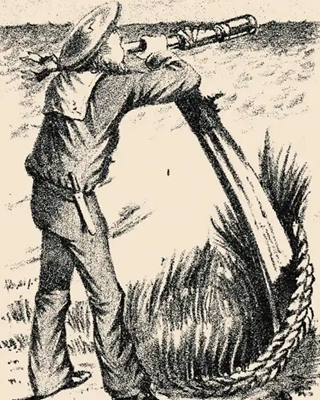
At first glance, the image appears deceptively simple. It depicts a sailor standing on a boat, gazing out at the sea, perhaps lost in thought as the waves lap against the hull. The scene feels tranquil and familiar — almost mundane.
But for those who look a little closer, there is a secret carefully tucked away: the face of the sailor’s wife is hidden in plain sight, masterfully integrated into the surrounding elements of the drawing. And finding her is far from easy.
These types of images are known as optical illusions. They exploit the brain’s natural tendencies to recognize patterns, make assumptions, and fill in gaps.
Our minds are wired to interpret shapes and lines based on what we expect to see, which is why illusions can deceive us so completely.
In this case, the illusion plays with perspective, shapes, and the arrangement of objects in the scene to obscure the hidden face. What looks like folds in clothing, shadows, or parts of the boat may, in fact, outline the contours of the woman’s face.
It is a subtle manipulation of perception, forcing the viewer to reconsider what they see and to look at the image in a completely different way.
According to reports, only a tiny fraction of viewers can locate the hidden face immediately — some estimates suggest that fewer than 1% spot it within the first 15 seconds.
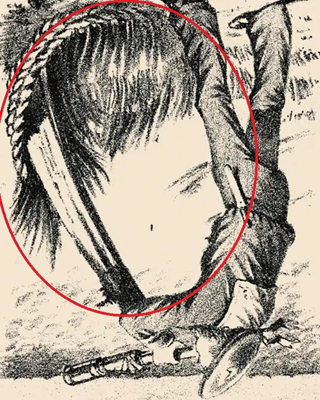
This has led to a flurry of online activity, with people sharing hints, expressing frustration, and celebrating when they finally uncover the secret. One of the most widely circulated tips is surprisingly simple: turn the image upside down.
Flipping the perspective allows the brain to recognize the facial features that were previously camouflaged within the shapes of the sailor and his surroundings.
What seemed invisible before suddenly becomes obvious, revealing the clever design of the illusion.
For those who remain puzzled even after this hint, the location of the hidden face is precise. It is situated between the sailor’s legs and the base of his telescope, subtly incorporated into the shapes and shadows around him.
The eyes, nose, and mouth align with lines that, in the normal orientation, appear to be part of the boat or the sailor’s clothing.
The illusion demonstrates how easily our perception can be tricked, and how a small change in perspective can completely alter what we see.
Reactions online have been fascinating to observe. Thousands of viewers have commented on the TikTok post alone, sharing their experiences and debating the difficulty of the puzzle.
Some viewers were able to identify the face instantly, proud of their sharp observation skills. Others struggled for minutes, or even longer, until they received a hint.
“Didn’t need to rotate it — saw her right away,” one confident commenter boasted, while another admitted, “Even with the hint, I was completely lost. My brain just refused to see it!”
The diversity of responses highlights the different ways our brains process visual information and demonstrates just how subjective perception can be.
Beyond entertainment, optical illusions like this serve as valuable mental exercises. They challenge viewers to break away from assumptions, to consider multiple perspectives, and to train their attention to detail.
Cognitive scientists have long studied illusions to understand how perception works, and how the brain interprets complex visual stimuli.
Engaging with puzzles like this one can improve problem-solving skills, enhance creativity, and strengthen the ability to notice subtle cues in everyday life.
In essence, they are small but powerful workouts for the brain, encouraging people to think differently and pay closer attention to the world around them.
The appeal of this particular illusion lies not only in its difficulty, but in the story it tells. It is more than a test of vision — it is a narrative hidden within art. The sailor’s gaze, directed out to sea, evokes longing, patience, and contemplation.
The hidden face of his wife adds an emotional layer, suggesting presence, connection, and intimacy even in her absence.
When viewers finally discover her face, there is a small but satisfying sense of accomplishment, a realization that careful observation and patience can uncover hidden truths.
Interestingly, the viral nature of the illusion has sparked a broader conversation about perception in the digital age.
In a world filled with images, videos, and visual information, the ability to discern detail, notice subtle differences, and challenge assumptions is increasingly important.
Illusions like this one remind us that our initial impressions are not always accurate, and that sometimes, understanding requires a shift in perspective — literally and figuratively.
For those who have yet to spot the hidden face, it remains a tantalizing challenge. For those who have succeeded, the discovery is thrilling, and often shared proudly online. In every case, the illusion serves as a reminder:
seeing is not always believing. Reality is often more complex than it appears, and sometimes the most obvious truths are the hardest to see.
As the sailor stands quietly in the drawing, looking out over the waves, he also stands as a metaphor for human perception — patient, steady, and aware that there is more to the world than what immediately meets the eye.
And for every viewer who has been challenged by this optical illusion, the lesson is clear: careful observation, an open mind, and a willingness to see things differently can reveal wonders hidden in the most ordinary of scenes.
In the end, the viral sailor’s wife illusion is more than just a fun social media puzzle. It is a study in perception, a test of patience, and a reminder that reality is often hidden in plain sight.
Whether viewers discover the hidden face in seconds or only after persistent effort, the experience leaves a lasting impression — a moment of surprise, wonder, and the simple joy of having trained their eyes to see what was once invisible.
A mind-bending optical illusion has been making waves across social media, testing viewers’ attention to detail in ways few images ever do.
The viral puzzle, which first gained traction on TikTok, has sparked countless debates, challenges, and reactions from people around the world, all trying to do the seemingly impossible:
locate a hidden face cleverly camouflaged within what looks at first like an ordinary scene.
At first glance, the image appears deceptively simple. It depicts a sailor standing on a boat, gazing out at the sea, perhaps lost in thought as the waves lap against the hull. The scene feels tranquil and familiar — almost mundane.
But for those who look a little closer, there is a secret carefully tucked away: the face of the sailor’s wife is hidden in plain sight, masterfully integrated into the surrounding elements of the drawing. And finding her is far from easy.
These types of images are known as optical illusions. They exploit the brain’s natural tendencies to recognize patterns, make assumptions, and fill in gaps.
Our minds are wired to interpret shapes and lines based on what we expect to see, which is why illusions can deceive us so completely.
In this case, the illusion plays with perspective, shapes, and the arrangement of objects in the scene to obscure the hidden face. What looks like folds in clothing, shadows, or parts of the boat may, in fact, outline the contours of the woman’s face.
It is a subtle manipulation of perception, forcing the viewer to reconsider what they see and to look at the image in a completely different way.
According to reports, only a tiny fraction of viewers can locate the hidden face immediately — some estimates suggest that fewer than 1% spot it within the first 15 seconds.
This has led to a flurry of online activity, with people sharing hints, expressing frustration, and celebrating when they finally uncover the secret. One of the most widely circulated tips is surprisingly simple: turn the image upside down.
Flipping the perspective allows the brain to recognize the facial features that were previously camouflaged within the shapes of the sailor and his surroundings.
What seemed invisible before suddenly becomes obvious, revealing the clever design of the illusion.
For those who remain puzzled even after this hint, the location of the hidden face is precise. It is situated between the sailor’s legs and the base of his telescope, subtly incorporated into the shapes and shadows around him.
The eyes, nose, and mouth align with lines that, in the normal orientation, appear to be part of the boat or the sailor’s clothing.
The illusion demonstrates how easily our perception can be tricked, and how a small change in perspective can completely alter what we see.
Reactions online have been fascinating to observe. Thousands of viewers have commented on the TikTok post alone, sharing their experiences and debating the difficulty of the puzzle.
Some viewers were able to identify the face instantly, proud of their sharp observation skills. Others struggled for minutes, or even longer, until they received a hint.
“Didn’t need to rotate it — saw her right away,” one confident commenter boasted, while another admitted, “Even with the hint, I was completely lost. My brain just refused to see it!”
The diversity of responses highlights the different ways our brains process visual information and demonstrates just how subjective perception can be.
Beyond entertainment, optical illusions like this serve as valuable mental exercises. They challenge viewers to break away from assumptions, to consider multiple perspectives, and to train their attention to detail.
Cognitive scientists have long studied illusions to understand how perception works, and how the brain interprets complex visual stimuli.
Engaging with puzzles like this one can improve problem-solving skills, enhance creativity, and strengthen the ability to notice subtle cues in everyday life.
In essence, they are small but powerful workouts for the brain, encouraging people to think differently and pay closer attention to the world around them.
The appeal of this particular illusion lies not only in its difficulty, but in the story it tells. It is more than a test of vision — it is a narrative hidden within art. The sailor’s gaze, directed out to sea, evokes longing, patience, and contemplation.
The hidden face of his wife adds an emotional layer, suggesting presence, connection, and intimacy even in her absence.
When viewers finally discover her face, there is a small but satisfying sense of accomplishment, a realization that careful observation and patience can uncover hidden truths.
Interestingly, the viral nature of the illusion has sparked a broader conversation about perception in the digital age.
In a world filled with images, videos, and visual information, the ability to discern detail, notice subtle differences, and challenge assumptions is increasingly important.
Illusions like this one remind us that our initial impressions are not always accurate, and that sometimes, understanding requires a shift in perspective — literally and figuratively.
For those who have yet to spot the hidden face, it remains a tantalizing challenge. For those who have succeeded, the discovery is thrilling, and often shared proudly online. In every case, the illusion serves as a reminder:
seeing is not always believing. Reality is often more complex than it appears, and sometimes the most obvious truths are the hardest to see.
As the sailor stands quietly in the drawing, looking out over the waves, he also stands as a metaphor for human perception — patient, steady, and aware that there is more to the world than what immediately meets the eye.
And for every viewer who has been challenged by this optical illusion, the lesson is clear: careful observation, an open mind, and a willingness to see things differently can reveal wonders hidden in the most ordinary of scenes.
In the end, the viral sailor’s wife illusion is more than just a fun social media puzzle. It is a study in perception, a test of patience, and a reminder that reality is often hidden in plain sight.
Whether viewers discover the hidden face in seconds or only after persistent effort, the experience leaves a lasting impression — a moment of surprise, wonder, and the simple joy of having trained their eyes to see what was once invisible.