They first sang this classic back in 1958 — and hearing it again after all these years brings tears to my eyes.

You’ve likely heard it hundreds of times in commercials, television shows, and movies, yet few have seen the original performance that made it unforgettable. “Mr. Sandman, bring me a dream. Make him the cutest that I’ve ever seen.”

The year was 1958. Dwight D. Eisenhower was midway through his second term as President of the United States. Families gathered around black-and-white television sets after dinner, and the airwaves were alive with a mix of postwar optimism and the new, rebellious sounds of rock-and-roll.

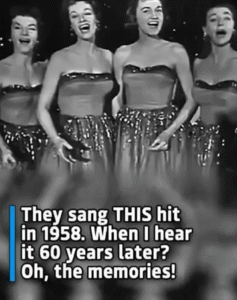
The Chordettes — Janet Ertel, Alice Buschmann, Lynn Evans, and Jinny Osborn — were poised to make history with a completely different kind of sound: delicate, precise, and radiant harmonies that seemed to float effortlessly through living rooms across the nation.

The Chordettes hailed from Sheboygan, Wisconsin, a small city on Lake Michigan, and each woman had trained her voice meticulously from a young age.

They came together in the early 1940s but truly rose to fame in the 1950s, a time when pop music was in a transitional phase.

While male crooners and emerging rock acts like Elvis Presley were taking the country by storm, the Chordettes carved a unique niche with songs that were sweet, melodic, and technically stunning.

The Iconic Performance

In the live television performance of “Mr. Sandman,” the group wore long, flowing gowns, perfectly styled hair, and radiant smiles.

They carried themselves with elegance that reflected both the standards of the era and their own confidence as musicians. But it wasn’t just their appearance that captivated viewers — it was the precision of their harmonies.

The opening lines, filled with the now-famous “bum-bum-bums,” were a marvel of timing: each “bum” sung in rapid succession by a different member of the quartet, creating the illusion of a single, cascading vocal line.

In an era before autotune, click tracks, or studio editing, this demanded impeccable coordination and talent. The women executed it flawlessly, captivating audiences both on set and at home.

What made the song even more fascinating was its playful, slightly cheeky undertone.

The lyrics invited Mr. Sandman to deliver a dream — a “cute” man — to the singer, a subtle nod to flirtation that was bold for its time yet presented with a polished, innocent charm.

To accentuate the whimsy, the televised performance included a young, handsome actor portraying Mr. Sandman himself, responding to their call.

The combination of music, theatrics, and playful interaction made the performance unforgettable, a perfect snapshot of mid-century entertainment.

The Chordettes’ Wider Legacy

Few viewers today realize that Janet Ertel, one of the original members, was connected to another legendary musical family: her daughter eventually married Phil Everly of The Everly Brothers.

This connection symbolized a bridge between generations of American pop music, linking vocal harmonies to the rock-and-roll revolution that followed.

The Chordettes were also pioneers of television music performance. They appeared on the very first nationally broadcast episode of American Bandstand, a program that would go on to define teenage culture and music in the U.S.

Their appearances helped cement their songs, including “Lollipop” and “Mr. Sandman,” as enduring classics.

Even decades later, their music remains iconic — heard in movies like Back to the FutureGrease 2, and series such as Stranger Things, demonstrating its timeless charm.

Interestingly, “Mr. Sandman” was not originally a female-driven song. Vaughn Monroe & His Orchestra first recorded it in 1954, but his version lacked the spark and personality that The Chordettes brought.

Their harmonies, the playful timing, and the charisma they infused into every note turned it from a standard tune into a cultural phenomenon.

A Song That Captures an Era

The 1950s were a complex period in American history. The country was thriving economically but also grappling with social conformity, emerging youth culture, and the first stirrings of civil rights movements.

Amidst this backdrop, The Chordettes offered music that was lighthearted, skillful, and comforting — yet subtly empowered. Their songs provided joy, nostalgia, and a sense of stability during a period of rapid social change.

Even now, over 60 years later, “Mr. Sandman” continues to resonate with listeners. Fans on social media share personal memories tied to the song:

“My grandma used to sing this to me when I was little. I remember hearing it as a kid and feeling like the world was full of possibilities. It reminds me of her stories about being a wild teenager in the ‘50s.”

Another viewer commented: “No cuss words. No auto-tune. No confusing beats. Just pure, perfect harmony. Music like this doesn’t exist anymore.”

The song’s longevity isn’t accidental — it’s a product of careful craftsmanship, heartfelt performance, and a timeless melody that appeals to every generation.

Why It Still Matters

What makes “Mr. Sandman” remarkable is not just the tune itself, but what it represents: a moment in history, the artistry of women who perfected their craft, and a kind of innocence that is increasingly rare in modern pop music.

It reminds us that musical talent does not always need a flashy production or digital manipulation to leave a lasting impression. Sometimes, the most profound art is simple, precise, and heartfelt.

In every note, every harmony, and every synchronized “bum-bum-bum,” the Chordettes preserved a piece of American history.

They remind us of a time when families listened together on a radio or a television, when song lyrics carried hidden flirtations and humor, and when music could bridge generations.

Today, decades after their first performance, “Mr. Sandman” still carries listeners into another world — a world of sweet dreams, elegant harmonies, and the lasting joy of pure music.

The Chordettes’ artistry continues to inspire singers, musicians, and fans, proving that true talent never fades and that a song can remain a cherished part of culture forever.
You’ve likely heard it hundreds of times in commercials, television shows, and movies, yet few have seen the original performance that made it unforgettable. “Mr. Sandman, bring me a dream. Make him the cutest that I’ve ever seen.”

The year was 1958. Dwight D. Eisenhower was midway through his second term as President of the United States. Families gathered around black-and-white television sets after dinner, and the airwaves were alive with a mix of postwar optimism and the new, rebellious sounds of rock-and-roll.

The Chordettes — Janet Ertel, Alice Buschmann, Lynn Evans, and Jinny Osborn — were poised to make history with a completely different kind of sound: delicate, precise, and radiant harmonies that seemed to float effortlessly through living rooms across the nation.

The Chordettes hailed from Sheboygan, Wisconsin, a small city on Lake Michigan, and each woman had trained her voice meticulously from a young age.

They came together in the early 1940s but truly rose to fame in the 1950s, a time when pop music was in a transitional phase.

While male crooners and emerging rock acts like Elvis Presley were taking the country by storm, the Chordettes carved a unique niche with songs that were sweet, melodic, and technically stunning.

The Iconic Performance

In the live television performance of “Mr. Sandman,” the group wore long, flowing gowns, perfectly styled hair, and radiant smiles.

They carried themselves with elegance that reflected both the standards of the era and their own confidence as musicians. But it wasn’t just their appearance that captivated viewers — it was the precision of their harmonies.

The opening lines, filled with the now-famous “bum-bum-bums,” were a marvel of timing: each “bum” sung in rapid succession by a different member of the quartet, creating the illusion of a single, cascading vocal line.

In an era before autotune, click tracks, or studio editing, this demanded impeccable coordination and talent. The women executed it flawlessly, captivating audiences both on set and at home.

What made the song even more fascinating was its playful, slightly cheeky undertone.

The lyrics invited Mr. Sandman to deliver a dream — a “cute” man — to the singer, a subtle nod to flirtation that was bold for its time yet presented with a polished, innocent charm.

To accentuate the whimsy, the televised performance included a young, handsome actor portraying Mr. Sandman himself, responding to their call.

The combination of music, theatrics, and playful interaction made the performance unforgettable, a perfect snapshot of mid-century entertainment.

The Chordettes’ Wider Legacy

Few viewers today realize that Janet Ertel, one of the original members, was connected to another legendary musical family: her daughter eventually married Phil Everly of The Everly Brothers.

This connection symbolized a bridge between generations of American pop music, linking vocal harmonies to the rock-and-roll revolution that followed.

The Chordettes were also pioneers of television music performance. They appeared on the very first nationally broadcast episode of American Bandstand, a program that would go on to define teenage culture and music in the U.S.

Their appearances helped cement their songs, including “Lollipop” and “Mr. Sandman,” as enduring classics.

Even decades later, their music remains iconic — heard in movies like Back to the FutureGrease 2, and series such as Stranger Things, demonstrating its timeless charm.

Interestingly, “Mr. Sandman” was not originally a female-driven song. Vaughn Monroe & His Orchestra first recorded it in 1954, but his version lacked the spark and personality that The Chordettes brought.

Their harmonies, the playful timing, and the charisma they infused into every note turned it from a standard tune into a cultural phenomenon.

A Song That Captures an Era

The 1950s were a complex period in American history. The country was thriving economically but also grappling with social conformity, emerging youth culture, and the first stirrings of civil rights movements.

Amidst this backdrop, The Chordettes offered music that was lighthearted, skillful, and comforting — yet subtly empowered. Their songs provided joy, nostalgia, and a sense of stability during a period of rapid social change.

Even now, over 60 years later, “Mr. Sandman” continues to resonate with listeners. Fans on social media share personal memories tied to the song:

“My grandma used to sing this to me when I was little. I remember hearing it as a kid and feeling like the world was full of possibilities. It reminds me of her stories about being a wild teenager in the ‘50s.”

Another viewer commented: “No cuss words. No auto-tune. No confusing beats. Just pure, perfect harmony. Music like this doesn’t exist anymore.”

The song’s longevity isn’t accidental — it’s a product of careful craftsmanship, heartfelt performance, and a timeless melody that appeals to every generation.

Why It Still Matters

What makes “Mr. Sandman” remarkable is not just the tune itself, but what it represents: a moment in history, the artistry of women who perfected their craft, and a kind of innocence that is increasingly rare in modern pop music.

It reminds us that musical talent does not always need a flashy production or digital manipulation to leave a lasting impression. Sometimes, the most profound art is simple, precise, and heartfelt.

In every note, every harmony, and every synchronized “bum-bum-bum,” the Chordettes preserved a piece of American history.

They remind us of a time when families listened together on a radio or a television, when song lyrics carried hidden flirtations and humor, and when music could bridge generations.

Today, decades after their first performance, “Mr. Sandman” still carries listeners into another world — a world of sweet dreams, elegant harmonies, and the lasting joy of pure music.

The Chordettes’ artistry continues to inspire singers, musicians, and fans, proving that true talent never fades and that a song can remain a cherished part of culture forever.

Related Posts

The Black Access Card

The Black Access Card PART 1 — THE BOY ON THE DOCK By five-thirty in the afternoon, the Miami marina looked almost unreal. The sun hung low…

Prince Harry reveals what Meghan Markle prayed for at Princess Diana’s grave

During a private visit to Princess Diana’s grave in 2022, Prince Harry has revealed what his wife, Meghan Markle, was praying.

This Cloud Has Everyone Arguing – Pulse Of The Blogosphere

At first glance, it looks like nothing more than an ordinary cloud drifting across a clear blue sky. Soft, white, unremarkable. The kind of shape you would…

SUV Window Message Sparks Heated Online Debate Over Wealth, Work, and Fairness – Pulse Of The Blogosphere

A single sentence written on the back window of an SUV has managed to do something that most political speeches, think pieces, and online threads struggle with:…

The Forgotten Breakfast Appliance That Changed Kitchens Forever: Can You Identify This Vintage Toaster? – Pulse Of The Blogosphere

Take a moment to imagine a typical family kitchen nearly one hundred years ago. The smell of fresh bread fills the room, the morning sun streams through…

I Discovered a Strange Metal Tool Hidden Inside My Grandmother’s Old Dresser—Its True Purpose Revealed a Beautiful Story About Her Life, Craftsmanship, and Quiet Dedication – Pulse Of The Blogosphere

Cleaning out a loved one’s home after they’ve passed away is rarely just about organizing belongings. Every drawer, every box, and every carefully folded piece of fabric…

Leave a Reply

Your email address will not be published. Required fields are marked *