The rain didn’t just fall the day we buried Thomas—it punished the earth. It pelted black umbrellas, soaked through dark coats, and turned the cemetery grass into a sinking field of mud.
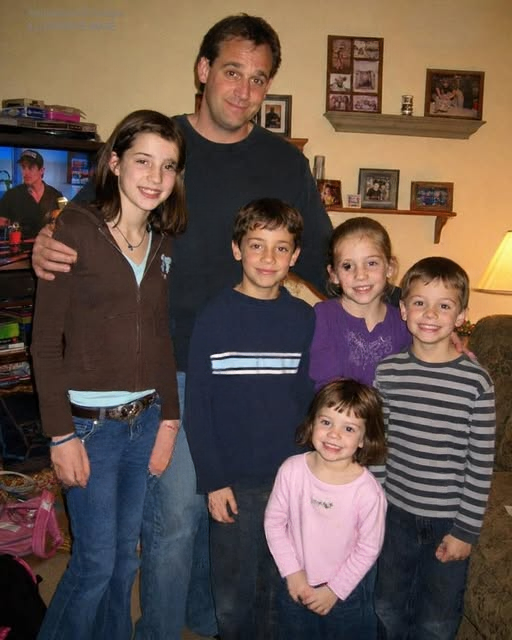
Five of us stood beside his grave, shoulder to shoulder. Not bound by blood, but by the relentless love of the man we were lowering into the ground. Thomas had chosen each of us when the world had quietly decided we were too damaged, too complicated, or too unwanted. He had given us a home—not perfect, not rich—but a place where the lights stayed on, dinner waited, and someone noticed when your silence sounded different.
We thought we knew his story. Then the lawyer stepped forward, holding a small wooden box against his chest. His eyes briefly landed on Susan, Thomas’s former wife, who stood apart from the family, waiting, perhaps, for judgment.
“Thomas asked that this be opened today,” the lawyer said.
The box felt impossibly heavy in my hands.
We did not open it at the cemetery. Grief made even a small latch feel heavier than stone. So we followed the lawyer to his office, silent, still damp from the rain, smelling of wet wool, flowers, and the cold earth that had swallowed the only father most of us had ever known.
The office was too warm, too quiet. Susan stood near the window, arms wrapped around herself. For years, I remembered her as the woman who left us—the one who abandoned a house full of children already acquainted with loss. I had hated her for that. Maybe we all had.
The lawyer opened the box. Inside were five letters, each with a name written in Thomas’s careful, uneven handwriting. Mine was first. My hands trembled as I unfolded it.
“My sweet girl,” it began, “Susan left because she discovered something about me the rest of you never knew.”
The words hit harder than the rain. Every old certainty about our family began to crack.
Thomas had not always been the man who made pancakes on Sunday mornings or fixed broken toys. Before us, he had belonged to another family—a sister, her children, a home loud with birthday songs, scraped knees, and ordinary love. Then, one terrible chapter of his life, that family was gone.
He survived when people he loved did not. Survival had not felt like mercy—it had felt like a debt. For years, Thomas carried a guilt so deep it changed the way he breathed, the way he loved, the way he checked our bedrooms at night. He had not taken us in because he believed himself noble. He had taken us in because he knew what it meant for a home to disappear, and he refused to let that happen to us.
Susan had found the truth years before we did—not because he confessed, but because she discovered a hidden compartment in his desk filled with photographs, folded documents, names, dates, pieces of a life he never spoke about. When she confronted him, he went silent. That silence became the beginning of the end. Susan believed Thomas had built our family not from love, but from guilt, and that we were living inside a memorial he had constructed for people he could not save. She thought there was no room for her in it. So she left.
The letters were different for each of us. To Daniel, he wrote that anger was grief wearing armor. To Maya, that being left behind once did not make her difficult to love. To Caleb, that silence could protect—but also imprison. To Rose, that her laughter saved him on days he had forgotten hope. And to me, he wrote:
“I hid my sorrow because I wanted your childhood to belong to you, not to my ghosts.”
All those years, I thought he was strong because he never fell apart. But he had fallen apart quietly, again and again, and simply made sure the broken pieces never cut us. Our birthdays, graduations, scraped knees, nightmares—he guarded all of it from the shadow of his grief. He had loved us because love was the only thing that had helped him survive losing it.
Susan began crying quietly, her shoulders trembling as if years of bitterness were leaving her body. Rose knelt beside her. “You thought he didn’t love us?” she whispered. “You thought every good thing was built on something he refused to let die.”
Susan nodded. “I was wrong. So wrong.”
Forgiveness did not arrive beautifully. It arrived awkwardly, through tears, unfinished sentences, and years of resentment loosening one knot at a time. Susan had not been innocent—but she had not been the villain either.
Afterward, we returned to Thomas’s house. The porch still creaked, the kitchen smelled faintly of cinnamon and coffee, and his coat still hung by the back door. We wandered from room to room, remembering him in small ways: clapping too loudly at school plays, keeping emergency cash under drawers, saying, “Call me when you get there,” even when we were adults. We realized those were prayers disguised as ordinary fatherhood—each one quietly telling the world: not this child, not this time, not while I am here.
A week later, we returned to Thomas’s grave. Susan came without invitation. She knelt beside Rose, holding a small brass lantern. Thomas used to keep it in the garage for storms, placing it on the kitchen table to light up darkness and say, “There. Now we can see each other.”
She whispered, “I’m sorry, Thomas.”
We set the lantern by his headstone—not as decoration, but as a promise. We would keep the house open. Stop letting silence become inheritance. Tell the truth, even when love makes it difficult.
Thomas had not been perfect. Wounded, afraid, stubborn, gentle, human. But he had loved us with everything he had left. And in the wake of his secret, we finally understood what family truly was—not blood, not perfection, not a past without pain. Family was the hand that reached for you after loss had decided you were alone. Family was the light someone protected, even while standing in darkness. Thomas had kept that light burning for us until the very end.
Uncategorized