Last Saturday, I wandered down a quiet suburban street, drawn to the casual chaos of a yard sale spread across a few folding tables on a sunlit lawn. I hadn’t expected much—just the usual collection of odds and ends that people no longer wanted: chipped coffee mugs, dusty paperback books, faded photographs, mismatched glass bowls, a few plastic toys, and a box of vinyl records whose sleeves had curled with age.
I was about to turn away when something unusual caught my eye. Among the clutter, leaning casually against a pile of forgotten kitchenware, was a wooden device with two sturdy metal rollers and a handle attached to the side. Its shape suggested purpose, but I couldn’t immediately place it. Kitchen tool? Part of an old machine? Its construction was simple yet solid, as though it had endured decades of use without complaint.
A small, faded tag tied to it with string offered a clue: “Vintage Laundry Wringer.”
Curious, I picked it up. The wooden handle was worn smooth from countless hands, and the metal rollers were cold and heavy, with scratches and small dents along their surfaces—evidence of years, perhaps decades, of hard work. For a moment, I simply held it, feeling the weight of its history.
Growing up with automatic washers and dryers, laundry had always been an effortless task: measure the detergent, press a button, and wait. But this wringer reminded me that laundry had not always been so easy. Before machines, washing clothes was a labor-intensive, time-consuming task. Families carried water from wells or pumps, heated it over fires or stoves, scrubbed, rinsed, wrung, and hung each garment. A cloudy sky or a sudden drizzle could transform a routine chore into a full-day ordeal.
The laundry wringer itself had a specific purpose: it squeezed water out of wet clothing, sparing tired arms and sore hands from twisting and wringing garments by hand. Feed the wet fabric between the rollers, turn the handle, and the water pressed out effortlessly. For its time, it was revolutionary.
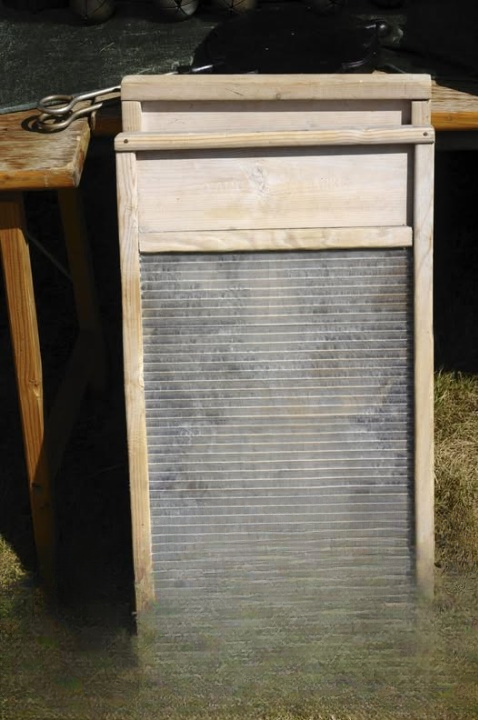
Alongside wringers, other tools were used to ease the burden: washboards with ridged metal or glass surfaces for scrubbing, wooden paddles and plungers to move laundry in tubs of soapy water, and even simple rubber gloves to protect hands from hot, soapy water. Each tool reflected ingenuity born of necessity, designed to make a physically grueling job manageable.
As I held the wringer, I began imagining its previous owner. Perhaps it belonged to a mother in a bustling household, washing school uniforms, work shirts, and blankets week after week. Maybe it had stood beside a wooden tub in a backyard, while children ran and played nearby. She would turn the handle over and over, moving from one soaking garment to the next, racing against the setting sun.
Laundry had once been more than a chore; it was a social and communal activity. Women often washed clothes together by rivers or shared washhouses, exchanging news, stories, and laughter between repetitive, taxing movements. The work was hard, but it forged connections and marked daily life in a way modern convenience has almost erased.
The wringer itself seemed alive with history. Every scratch, dent, and worn surface told a story. Rust patches whispered about rainy afternoons or forgotten storage in barns. It wasn’t shiny or perfect, but it carried dignity, evidence of service and necessity. It had been used. It had been valued. It had mattered.
Electric washing machines eventually transformed household chores. Manual labor gave way to buttons and cycles, and tools like wringers, washboards, and paddles were gradually stored in basements or garages, forgotten by most, until antique collectors or curious buyers stumbled upon them at yard sales, flea markets, or old barns.
I asked the seller about it. She smiled softly and said, “It belonged to my grandmother. She used it for years.”
That simple sentence changed everything. This wasn’t just a relic; it was a fragment of a life lived. Someone had relied on it to care for a family, to maintain a household before modern appliances made that effort invisible.
I bought it. Not because I needed it, but because I wanted to preserve its story.
Now, it sits on a shelf in my home. Visitors immediately notice it, asking about its purpose. And every time, I get to tell them: it’s a laundry wringer, a tool that once made one of life’s hardest weekly chores slightly easier.
Holding it, I remember the patience, strength, and care of those who came before. Tools like this remind us that comfort wasn’t always given—it was earned through effort, creativity, and persistence. They show that even the smallest, most ordinary objects can carry extraordinary histories.
So, next time you spot a curious, old wooden tool at a yard sale, don’t dismiss it. Pick it up. Feel its weight. Listen to the story it holds.
It might just be someone’s life waiting to speak.
Uncategorized