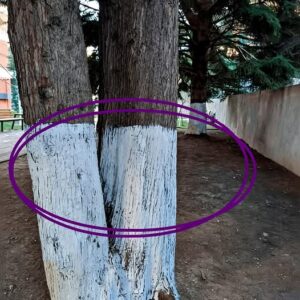
Many people notice tree trunks painted white and assume it is done for decoration or visibility, but the practice actually serves an important protective purpose. Arborists, gardeners, and orchard owners often use white paint to help young or newly planted trees cope with environmental stress. Trees with thinner bark are especially vulnerable during colder months, when fluctuating temperatures can cause damage. What appears to be a simple coat of paint is, in reality, a preventative measure designed to support the tree’s overall health and long-term growth.
Tree markings can mean many different things depending on their color and location. Bright orange or red paint is often used by municipalities to identify trees scheduled for trimming or removal, while purple markings may indicate property boundaries or restricted access areas. White paint stands apart from these markings because it is not meant to send a message to people. Instead, it acts as a physical shield for the tree. Its primary role is to prevent a condition known as sunscald, which occurs when winter sunlight warms the bark during the day and temperatures drop sharply at night, causing the bark to expand and contract too quickly.
White paint helps prevent this damage by reflecting sunlight away from the trunk. By keeping the bark cooler during the day, the paint reduces temperature swings and lowers the risk of cracking. The type of paint used is important: caretakers typically choose water-based latex paint, diluted with water to create a breathable, non-toxic coating. This mixture allows the tree to “breathe” while still offering protection. The paint is usually applied to the lower portion of the trunk, where damage is most likely to occur, using a brush or sprayer depending on the number of trees being treated.
In most cases, trees only need to be painted once per year, usually in late fall before the harshest winter conditions arrive. This small effort can significantly improve a tree’s chances of staying healthy through winter and into early spring. Over time, the practice can help prevent structural weakness and reduce the likelihood of disease entering through damaged bark. The next time you notice a tree with a white-painted trunk, you’ll know it’s not about appearance—it’s a simple, effective method used to protect trees from seasonal stress and help them thrive year after year.