A routine morning at a busy metropolitan transit terminal quickly turned into a high-pressure emergency when an unexpected K9 alert disrupted what had been an ordinary security patrol. The South Terminal, usually filled with commuters rushing to catch flights and trains, was crowded with travelers moving through gates, cafés, and seating areas as Officer David Vance and his K9 partner, Rook, began their standard inspection route. The atmosphere was typical of any busy transportation hub.
The sound of rolling luggage echoed across the concourse, announcements played over loudspeakers, and passengers moved between gates carrying coffee cups, backpacks, and suitcases. Nothing about the environment initially suggested anything out of the ordinary or dangerous. That changed within seconds when Rook, a four-year-old Dutch Shepherd trained for detection and tracking, suddenly stopped mid-patrol. His behavior shifted instantly from calm focus to intense alertness.
The dog turned sharply toward a seating area near Gate 4 and began pulling forcefully against his leash. Officer Vance immediately recognized the change in behavior. This was not distraction or curiosity. Rook had locked onto something specific. Despite verbal commands to maintain position, the dog refused to comply, showing a level of urgency that signaled a potential threat or critical detection.
Without warning, Rook broke forward through the crowd. Travelers reacted in confusion as the dog moved quickly toward a steel bench where an elderly woman sat alone near the terminal windows. The sudden movement caused panic among nearby passengers, many of whom had no idea what was happening.
Within seconds, Rook positioned himself directly beside the woman and used his body weight to pin her gently against the bench. The woman screamed in fear, and the situation immediately escalated as bystanders assumed the police dog had become aggressive without cause.
Several commuters pulled out their phones to record the incident. Voices rose across the terminal as people demanded the officer regain control of the dog. Some individuals moved closer, clearly upset, while others called for immediate intervention. At first glance, the situation appeared to be a loss of control in a highly public environment.
However, Officer Vance did not react emotionally. Instead, he observed the dog closely. Rook was not barking aggressively or attempting to bite. His behavior was focused, controlled, and deliberate. He maintained pressure without hostility, which immediately signaled to the officer that this was not a standard confrontation.
What caught Vance’s attention was Rook’s unusual fixation on the woman’s heavy green winter coat. Despite the warm temperature inside the terminal, she remained tightly wrapped in the thick garment, clutching it close to her body. Her posture appeared protective, but also tense and unusual for the environment.
As the officer watched more carefully, subtle movement became visible beneath the coat. The fabric shifted slightly in a way that suggested something was concealed underneath. Rook responded instantly, pressing his nose closer to the zipper and emitting a low, steady whine that indicated detection rather than aggression.
At that moment, an earlier security briefing came to mind. Authorities had recently issued an Amber Alert for a missing three-year-old girl named Maya. The child had disappeared from daycare, and investigators believed she had been taken by a relative following a custody dispute. Her possible location had been traced to the transportation network, where crowded terminals and transit systems made tracking difficult.
The suspect vehicle had been found abandoned near a transit hub, raising concerns that the child might be moved through public areas to avoid detection. Officers had been instructed to carefully monitor terminals, buses, and train stations throughout the city.
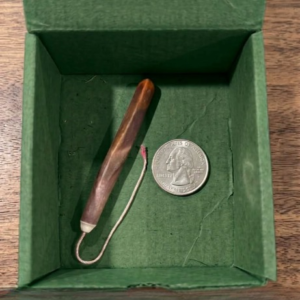
One detail from the alert stood out clearly: Maya wore a bright pink cochlear implant over her right ear, a distinctive medical device that made her identifiable if seen.
Meanwhile, the situation inside the terminal continued to escalate. The crowd grew louder and more agitated as more officers arrived. Captain Miller quickly approached and ordered that the dog be removed from the scene immediately, warning that the situation was becoming a public safety concern.
For Officer Vance, the decision became critical. If Rook was wrong, the consequences could include disciplinary action and public backlash. If he was right, a missing child could be in immediate danger. The pressure from the crowd and commanding officers intensified with each passing second.
Despite the tension, Rook did not move. The dog remained locked onto the woman’s coat, refusing to break focus. His body language remained calm but firm, indicating he was convinced something significant was present beneath the fabric.
Then, unexpectedly, a faint sound broke through the noise of the terminal. It was not a protest or movement from the crowd. It was a soft, muffled cry coming from inside the coat.
The entire atmosphere shifted instantly.
The woman’s expression changed, and her grip on the coat tightened. The surrounding crowd fell silent as realization began to spread. Officer Vance carefully approached, maintaining control of the situation while assessing the next steps.
After a brief moment of hesitation, the woman slowly opened the coat.
Inside, concealed beneath layers of fabric and straps, was a small child secured in a padded carrier worn against her chest. The toddler appeared exhausted and disoriented under the bright terminal lighting.
On the child’s right ear was a bright pink cochlear implant.
It was Maya.
Silence filled the terminal. Moments earlier, the crowd had been angry and vocal, questioning the officer’s actions. Now, no one spoke. Phones lowered. The energy of the entire space shifted from tension to shock and realization.
Emergency responders were immediately called to the scene. Officers carefully secured the suspect while paramedics moved in to assess the child’s condition. Rook stepped back calmly beside his handler, showing no further aggression. The dog remained composed as the situation transitioned from confrontation to rescue.
Maya was transported for medical evaluation as officers cleared a path through the stunned crowd. The emotional weight of what had just occurred became clear to everyone present. What had begun as a public misunderstanding had turned into the recovery of a missing child.
In the aftermath, Captain Miller acknowledged the outcome without further dispute. The earlier concerns about the dog’s behavior were no longer relevant. Rook’s actions had directly contributed to locating the child in a critical situation.
Officer Vance remained beside his partner as the terminal slowly returned to normal activity. Rook stayed calm and steady, as if the intensity of the moment had already passed for him. The dog had not reacted with aggression or chaos—only focused instinct and trained detection.
The incident became a clear reminder of the importance of trust between handler and K9 partner. In a high-pressure environment filled with confusion and public scrutiny, one decision to trust instinct over appearance led to a life-saving outcome.
In the end, the missing child was found safely, and the situation that began with panic ended with relief and resolution inside one of the busiest transit hubs in the region.