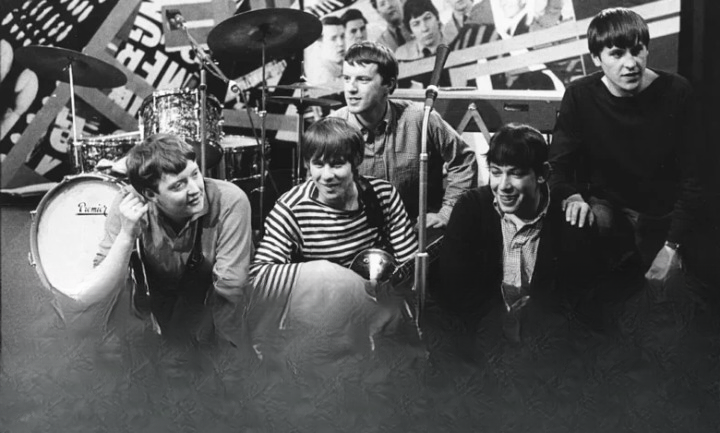
In 1964, the music world experienced a major shift when British rock band The Animals released their unforgettable version of “The House of the Rising Sun.” While the song itself had existed for generations as a traditional folk ballad, The Animals transformed it into something entirely new. Their dramatic interpretation blended emotional storytelling with the raw power of rock music, helping create a bridge between folk traditions and the rapidly growing rock movement of the 1960s.
More than six decades later, the song remains one of the most recognizable recordings in popular music history. Its haunting melody, emotional lyrics, and powerful performance continue to resonate with listeners of all ages, proving that truly timeless music never loses its impact.
A Song Rooted in Folk Tradition
Long before The Animals recorded it, “The House of the Rising Sun” existed as a traditional folk song passed down through generations. Historians and music experts still debate its exact origins, but versions of the song were circulating in American folk communities as early as the 1930s and possibly much earlier.
The lyrics told a dark and emotional story involving hardship, regret, and personal downfall. Unlike many upbeat songs dominating radio during the early 1960s, this ballad explored themes of suffering and lost opportunities. Its storytelling style reflected the deeper emotional traditions found in folk and blues music.
Several folk artists recorded the song before The Animals made it famous. However, earlier versions were generally acoustic and slower in style. While respected within folk circles, the song had not yet reached mainstream global audiences.
That changed dramatically in 1964.
The Animals Create Something Entirely New
When The Animals began performing “The House of the Rising Sun,” they approached it differently from previous artists. Instead of presenting it as a simple folk tune, they infused it with electric instrumentation, dramatic pacing, and emotional intensity.
The song opens with one of the most recognizable guitar introductions in music history. The arpeggiated chord progression immediately creates an atmosphere of tension and melancholy, drawing listeners into the story before a single lyric is sung.
Then comes Eric Burdon’s voice.
Burdon’s vocal performance became one of the defining elements of the recording. His delivery carried both power and vulnerability, making the lyrics feel deeply personal and emotionally authentic. Rather than sounding polished or theatrical, his voice conveyed genuine emotion and urgency.
The combination of Burdon’s vocals, Alan Price’s haunting organ work, and the band’s steady rhythm section created a sound that felt unlike anything dominating mainstream radio at the time.
It was folk music with the energy of rock.
It was rock music with the depth of folk storytelling.
And audiences immediately responded.
A Global Breakthrough
Upon its release, “The House of the Rising Sun” quickly climbed the charts in both the United Kingdom and the United States. It became one of the biggest international hits of 1964 and helped establish The Animals as one of the leading groups of the British Invasion.
At the time, many rock songs focused primarily on romance, dancing, or youthful fun. The Animals introduced something darker and more emotionally layered. Their version of “The House of the Rising Sun” proved that rock music could successfully explore serious subjects without losing mainstream appeal.
Listeners connected with the song’s emotional honesty.
Its themes of regret and consequence felt universal, allowing audiences from different backgrounds and generations to relate to the story being told. Even people who typically did not listen to folk music found themselves captivated by the song’s dramatic atmosphere and unforgettable melody.
Radio stations played it constantly, and its popularity spread rapidly around the world.
The Rise of Folk Rock
One of the most important aspects of the song’s success was its influence on the evolution of folk rock as a genre.
Before this period, folk music and rock music largely occupied separate spaces within the industry. Folk was often viewed as traditional, acoustic, and rooted in storytelling, while rock emphasized energy, rhythm, and youth culture.
“The House of the Rising Sun” demonstrated that these styles could successfully coexist.
By combining traditional lyrics with electric instruments and rock production, The Animals helped open the door for future artists to experiment with genre blending. Their success encouraged musicians throughout the 1960s to push creative boundaries and incorporate deeper lyrical themes into popular music.
Many later artists who mixed folk storytelling with rock instrumentation benefited from the path The Animals helped create.
A Distinctive Sound That Still Feels Powerful
Part of what makes the song endure today is its timeless musical structure.
Unlike heavily produced recordings tied closely to a specific era, “The House of the Rising Sun” relies on strong fundamentals: emotional vocals, compelling storytelling, memorable instrumentation, and a gradual build in intensity.
The organ arrangement adds a haunting atmosphere that gives the recording much of its emotional weight. The guitar work remains instantly recognizable even decades later, while the rhythm section keeps the song moving steadily forward without overpowering the storytelling.
The pacing of the track also contributes to its lasting impact. Rather than rushing through the lyrics, the song unfolds slowly, allowing listeners to absorb the emotional gravity of the narrative.
This careful balance between restraint and intensity helped make the recording feel cinematic long before music videos became common.
Why the Song Continues to Resonate
More than sixty years after its release, “The House of the Rising Sun” continues to appear in films, television series, documentaries, and streaming playlists. New generations continue discovering the song, often surprised by how modern and emotionally effective it still feels.
Part of its longevity comes from the universal nature of its themes.
The song speaks about choices, consequences, hardship, and reflection—experiences that remain deeply human regardless of the decade. Great storytelling rarely becomes outdated, and this recording captures emotion in a way that still feels authentic today.
Another reason for its continued popularity is its accessibility. Even listeners unfamiliar with 1960s rock music can immediately connect with the song’s atmosphere and melody.
Few recordings manage to sound both historically important and emotionally immediate at the same time. “The House of the Rising Sun” accomplishes both.
The Legacy of The Animals
While The Animals recorded many successful songs throughout their career, “The House of the Rising Sun” became their defining masterpiece.
The recording not only elevated the band to international fame but also secured their place in music history. Their willingness to experiment with style and emotion helped reshape expectations for what popular music could achieve.
Critics and fans continue to praise the song for its originality, emotional intensity, and innovative production. Many modern musicians still cite it as an influence because of the way it merged genres so naturally and effectively.
It remains a landmark recording that demonstrated how music could be both commercially successful and artistically ambitious.
A Song That Changed Popular Music
Looking back, it is clear that “The House of the Rising Sun” represented more than just another hit single from the British Invasion era.
It marked a turning point.
The song helped prove that mainstream audiences were ready for deeper storytelling, darker themes, and more emotionally complex music. It showed that folk traditions could evolve without losing their emotional power and that rock music could become more mature and expressive.
Most importantly, it created a musical experience that still captivates listeners decades later.
In an era where many songs fade quickly from public memory, “The House of the Rising Sun” continues to stand as one of the most enduring recordings ever made. Its haunting sound, unforgettable performance, and emotional depth ensure that it will remain a defining piece of music history for generations to come.
Uncategorized