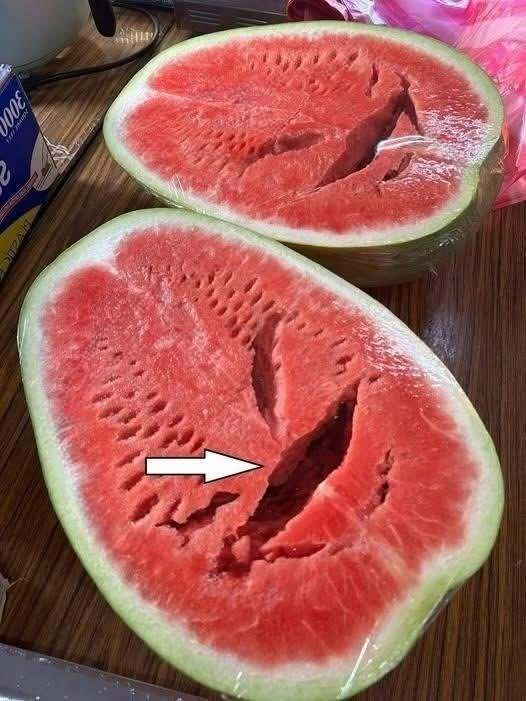
Cutting open a watermelon and discovering unusual cracks, hollow pockets, or irregular patterns inside can be surprising. Many people immediately assume the fruit is unsafe to eat, especially after seeing alarming posts online suggesting chemical contamination or hidden health risks. However, the reality is usually far less dramatic.
In most cases, internal cracking in watermelons is a natural result of how the fruit grows and responds to its environment. While it can affect texture and appearance, it does not automatically mean the watermelon is unsafe or harmful.
Understanding what causes these changes can help you make better decisions at home and avoid unnecessary food waste.
Why Watermelons Develop Internal Cracks
Watermelons are sensitive fruits that grow rapidly under the right conditions. Their internal structure depends heavily on consistent access to water, stable temperatures, and balanced nutrients.
When any of these conditions change suddenly, the flesh inside the fruit can expand unevenly. This is what often leads to visible cracks or hollow areas.
One of the most common causes is irregular watering during the growing phase. If a watermelon plant experiences a dry period followed by heavy watering or rainfall, the sudden surge in water uptake can cause the internal flesh to grow faster than it can structurally support. This mismatch may create fissures inside the fruit.
Temperature fluctuations can also play a role. Hot daytime temperatures followed by cooler nights may stress the plant, contributing to uneven ripening and structural inconsistencies.
In addition, physical stress during harvesting or transport can sometimes contribute to internal damage that only becomes visible when the fruit is cut open.
The Role of Rapid Growth and Natural Variation
Not all internal cracking is caused by stress. Some watermelons naturally develop irregular textures due to genetic variation or especially rapid growth conditions.
Farmers often aim for fast-growing crops to meet market demand, and while this improves yield, it can occasionally lead to hollow hearts or uneven flesh density inside the fruit. These variations are generally considered cosmetic rather than dangerous.
In fact, many of these watermelons taste perfectly normal. The sugar content, hydration level, and nutritional value remain largely unaffected.
What About Chemicals Like Growth Regulators?
One reason for concern online is the mention of plant growth regulators such as chlorfenuron, a compound used in some agricultural settings to promote fruit enlargement.
These substances are designed to influence cell division in plants, helping fruits grow larger or more uniform under controlled conditions. In some cases, improper or excessive use can contribute to hollow sections or irregular internal structures.
However, it is important to separate regulated agricultural use from fear-based assumptions. In many countries, the use of such substances is strictly monitored and subject to safety guidelines. When used correctly within legal limits, they are not considered a direct health risk to consumers.
Scientific research on long-term exposure is still evolving, but current regulatory frameworks are based on available toxicological data and safety margins designed to protect consumers.
The presence of internal cracks alone is not proof of chemical misuse. Most cases are still linked to natural growth conditions rather than additives.
When a Watermelon Is Still Safe to Eat
In most situations, a watermelon with mild internal cracking is perfectly safe to consume. The key is to evaluate the fruit as a whole rather than focusing on a single visual feature.
A good watermelon should still:
- Smell fresh and slightly sweet
- Have firm, crisp flesh in most areas
- Show no signs of mold or sliminess
- Taste normal when sampled
If the fruit meets these basic standards, minor internal imperfections are usually harmless.
When You Should Not Eat It
While cracks alone are not a warning sign, there are situations where a watermelon should be discarded.
You should avoid eating it if you notice:
- A strong fermented or sour smell
- Mushy, watery, or slimy texture
- Visible mold growth anywhere inside
- Off or bitter taste
These signs are more reliable indicators of spoilage or bacterial contamination than structural irregularities alone.
How to Choose Better Watermelons
If you want to reduce the chances of cutting into a low-quality fruit, a few simple tips can help:
Look for a watermelon that feels heavy for its size, which usually indicates good water content. A creamy yellow spot on the rind suggests it ripened on the ground naturally. The skin should be firm and free from deep cuts or soft spots.
When tapped, a ripe watermelon often produces a deep, hollow sound, although this method is not always precise.
These small observations can help you choose consistently better fruit at the store or market.
The Bigger Picture: Appearance vs Reality
It is easy to feel concerned when food does not look the way we expect. However, many natural foods vary in appearance without being unsafe. Watermelon is a good example of how visual differences can be misleading.
Internal cracks, hollow areas, or uneven textures often reflect environmental conditions during growth rather than contamination or danger. While it is always wise to stay observant and discard clearly spoiled food, it is equally important not to rely on appearance alone to judge safety.
Final Thoughts
Watermelon remains one of the most refreshing and nutritious fruits available, offering hydration, vitamins, and natural sweetness. Seeing internal cracks can be surprising, but in most cases, it is simply a reflection of natural growth variation.
By understanding what causes these patterns and knowing the real warning signs of spoilage, you can make informed decisions without unnecessary worry. In the end, a careful look, a simple smell test, and common sense are usually all you need to enjoy your watermelon with confidence.
Uncategorized