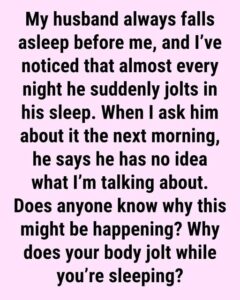
It usually happens in that quiet moment when the world begins to fade.
The lights are off. The noise of the day has softened into the background. Your body sinks deeper into the mattress, muscles loosening one by one as sleep slowly takes hold. Thoughts drift, images blur, and just as you begin to cross that invisible line between wakefulness and dreams—
Your body jerks.
Suddenly.
Your heart jumps, your muscles twitch, and for a split second it feels like you were falling through empty space. Sometimes your arms or legs kick out. Sometimes you wake up fully, confused, even a little shaken. Other times, you drift back to sleep as if nothing happened.
If this sounds familiar, you’re not alone.
This strange and often startling experience is incredibly common. In fact, most people will experience it at some point in their lives—many on a regular basis. While it can feel alarming in the moment, the truth is far less frightening and far more fascinating.
What you’re experiencing has a name: a hypnic jerk—sometimes called a sleep start.
And far from being a sign that something is wrong, it’s actually a natural part of how your body transitions into sleep.
The Moment Between Worlds
To understand why these sudden jolts happen, it helps to understand what your body is doing as you fall asleep.
Sleep doesn’t happen all at once. It’s a gradual process, a shift through several stages. At the beginning, your brain begins to slow its activity. Your breathing becomes more regular. Your heart rate decreases. Muscles begin to relax.
This early phase is known as light sleep, and it’s where hypnic jerks tend to occur.
Think of it as a transition zone—a space where your body is no longer fully awake, but not yet fully asleep. Signals between your brain and body are changing rapidly, and sometimes, they don’t sync perfectly.
That’s where the jolt comes in.
Why It Feels Like Falling
One of the most curious parts of this experience is the sensation of falling.
Many people report the same thing: just before the jolt, it feels like they’ve slipped, stumbled, or dropped from a height. It can feel incredibly real—so real that your body reacts instantly.
So why does your brain create that feeling?
Researchers believe it has to do with how your brain interprets muscle relaxation.
As you fall asleep, your muscles loosen dramatically. To your brain, especially if you’re very tired, that sudden release of tension can feel unfamiliar—almost like losing control.
In response, your brain may misinterpret this relaxation as a sign that you’re physically falling or in danger.
And when your brain senses danger, even mistakenly, it reacts fast.
The Brain’s “Wake-Up Call”
When your brain thinks something is wrong—even for a split second—it sends a powerful signal to your body.
This signal triggers a quick burst of activity:
- Muscles contract suddenly
- Your heart rate spikes
- You may gasp or take a sharp breath
- Your body jerks awake
It’s essentially a built-in alarm system.
From an evolutionary perspective, this makes sense. Early humans often slept in environments where falling—off a tree branch, a rock ledge, or uneven ground—could be dangerous. A rapid response to perceived falling might have helped prevent injury.
Today, we sleep in much safer environments, but that ancient reflex still lingers.
Why It Happens More When You’re Tired
Interestingly, hypnic jerks tend to happen more often when you’re extremely tired.
After a long day, your body is eager for rest. You fall asleep more quickly, sometimes skipping gradually through the early stages of sleep. This rapid transition can confuse the brain.
Instead of easing into sleep, your body shifts gears too fast—like a car jumping from high speed to a sudden stop.
That abrupt change increases the chances of miscommunication between the brain and body, making a hypnic jerk more likely.
So if you’ve ever noticed this happening after a stressful day, a late night, or when you’re running on very little sleep—that’s no coincidence.
The Role of Stress and Stimulation
Modern life doesn’t always make it easy for the brain to wind down.
Even when your body is ready for sleep, your mind may still be racing—thinking about work, replaying conversations, or scrolling through your phone.
Stress and mental stimulation can keep your nervous system more active than usual. When you finally try to sleep, your body and brain may not be fully in sync.
This mismatch can increase the likelihood of a hypnic jerk.
It’s like trying to shut off a machine that’s still running at high speed—the system doesn’t always stop smoothly.
Caffeine and Other Triggers
Certain everyday habits can also make hypnic jerks more frequent.
Caffeine is one of the most common culprits.
Found in coffee, tea, energy drinks, and even chocolate, caffeine stimulates the nervous system and keeps the brain alert. If consumed too close to bedtime, it can interfere with your ability to transition into sleep smoothly.
Nicotine has a similar effect, increasing alertness and disrupting the natural sleep process.
Even some medications—particularly those that affect the brain’s chemistry—can increase the chances of experiencing these sudden jolts.
That doesn’t mean you need to worry. It simply means your body is reacting to stimulation when it’s trying to power down.
Are Hypnic Jerks Dangerous?
For most people, hypnic jerks are completely harmless.
They might be annoying. They might interrupt your sleep. But they are not a sign of a serious medical condition.
In fact, they’re considered a normal part of human physiology.
However, if they happen very frequently, become intense, or are accompanied by other symptoms—such as ongoing sleep problems—it may be worth discussing with a healthcare professional.
In most cases, though, they’re just a quirky reminder of how complex the human body really is.
Why Some People Notice Them More
Not everyone experiences hypnic jerks the same way.
Some people have them often. Others rarely notice them. And some may experience them without fully waking up at all.
Several factors can influence this:
- Sleep habits: Irregular schedules can increase occurrences
- Stress levels: Higher stress can make them more noticeable
- Lifestyle choices: Diet, caffeine intake, and activity levels all play a role
- Awareness: Some people are simply more sensitive to changes in their body
The more attention you pay to your sleep patterns, the more likely you are to notice these small interruptions.
Simple Ways to Reduce Them
While you can’t always prevent hypnic jerks completely, there are simple habits that may help reduce how often they happen.
1. Create a consistent sleep routine
Going to bed and waking up at the same time each day helps your body establish a natural rhythm.
2. Limit caffeine in the evening
Try to avoid caffeinated drinks several hours before bedtime.
3. Wind down before sleep
Give your brain time to relax. Reading, gentle stretching, or quiet activities can help.
4. Reduce screen time at night
Bright screens can keep your brain alert longer than you realize.
5. Manage stress
Relaxation techniques like deep breathing or meditation can calm the nervous system.
These small changes won’t just reduce hypnic jerks—they can improve your overall sleep quality.
A Reminder of How Your Body Protects You
What makes hypnic jerks so fascinating is what they reveal about the human body.
Even in sleep, your brain is alert. It’s monitoring, adjusting, and protecting you—sometimes a little too enthusiastically.
That sudden jolt isn’t your body malfunctioning.
It’s your body doing its job.
It’s checking in, making sure everything is okay, even if it misreads the situation for a moment.
The Strange Beauty of Falling Asleep
There’s something oddly poetic about the experience.
You let go of the day. Your body relaxes. Your mind drifts. And just as you surrender completely, your body reminds you—briefly, sharply—that it’s still there, still watching, still responding.
Then, just as quickly, it lets you go again.
Back into rest.
Back into dreams.
Final Thoughts
The next time your body jolts you awake just as you’re falling asleep, try not to be alarmed.
Instead, think of it as a small glimpse into the incredible coordination happening behind the scenes.
Your brain and body are constantly communicating, adjusting, and protecting you—even in your most vulnerable state.
That sudden “falling” sensation?
It’s not a warning sign.
It’s a reminder.
A reminder that even in stillness, your body is alive with activity—quietly working to carry you safely from wakefulness into sleep.
And sometimes, along the way, it just needs to tap the brakes.