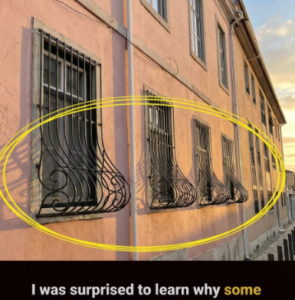
If you’ve ever walked past an older home and noticed window bars that bulge outward near the bottom, you may have paused and wondered: Why would anyone design them like that? At first glance, they look like a decorative flourish—or even a strange mistake in the metalwork. But those outward curves, often called “potbellied” window bars, weren’t created just for style. They were a clever answer to a real problem: how to keep a home secure without turning it into a cage. In tight neighborhoods where buildings sat close together and street life happened right outside the window, people needed protection and breathing room—and this design gave them both.
Window bars became common as cities grew and more families wanted safety while still keeping windows open for air and daylight. Early versions were usually straight and set flat against the wall, doing their job well but leaving the window feeling closed off. Over time, residents started shaping the bars outward, creating a small pocket of space between the window and the street. That extra room wasn’t wasted—it became useful. Homeowners could place flower pots, let laundry hang, or lean out slightly to check outside without stepping into danger. In some homes, the added space even made it easier to watch children nearby while staying safely indoors.
More than just practical, these curved bars often became part of everyday neighborhood life. In places where windows acted like mini “front porches,” potbellied bars gave people a way to feel connected to the street—catching sunlight, hearing conversations, and greeting neighbors passing by. They also became a small place for personal expression: plants arranged carefully, metal painted and maintained, or designs chosen to match the character of the home. The result was something functional that still felt warm and human, blending security with a sense of comfort instead of isolation.
Today, potbellied window bars can still be spotted in historic districts around the world, quietly showing how smart design can come from everyday needs. They continue to inspire homeowners and architects who want security features that don’t feel harsh or purely industrial. These curved bars prove that even simple details in older buildings carry stories—of people adapting, creating, and finding ways to make their homes safer while still keeping life close to the window.