Being a responsible pet owner goes far beyond providing food, water, and a comfortable place to sleep. True care also involves understanding how your dog communicates and why certain behaviors happen. Dogs experience the world very differently from humans, relying on senses and instincts that may seem unusual to us. When owners take time to learn about these natural tendencies, they build stronger trust and clearer communication. This understanding not only prevents misunderstandings but also deepens the emotional bond that makes the relationship between people and their pets so meaningful.
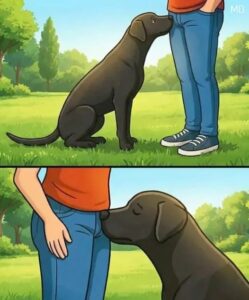
One behavior that often catches new dog owners off guard is when a dog sniffs someone’s private area. In social situations, this can feel awkward or even embarrassing. However, for dogs, this action is completely natural. A dog’s sense of smell is incredibly powerful — far stronger than a human’s — and it serves as their primary way of gathering information. Humans naturally release scent signals through sweat glands, and these scents can provide clues about age, mood, and general well-being. Because certain areas of the body carry stronger scent markers, dogs instinctively focus there when trying to learn about someone new.
Unlike people, dogs cannot rely on speech, complex facial expressions, or cultural norms to guide interactions. Instead, they depend on scent as their main communication tool. Sniffing is essentially their version of a greeting. It is similar to how humans shake hands or introduce themselves with words. Through scent, dogs quickly collect details and assess whether a person or another animal feels familiar, friendly, or new. When owners recognize this as curiosity rather than bad behavior, it becomes easier to respond calmly and avoid unnecessary frustration.
Even though this instinct is normal, it can still be guided in a polite direction when needed. Gentle and consistent training helps your dog learn boundaries without feeling punished for natural curiosity. Teaching simple commands like “sit,” “stay,” or “come,” and rewarding your dog with praise or small treats when they respond correctly, encourages alternative behaviors. Positive reinforcement is especially effective because it builds confidence and strengthens trust. Over time, your dog will learn appropriate social habits while still feeling secure. In the end, responsible pet ownership is about empathy, patience, and seeing the world through your dog’s remarkable sense of smell.