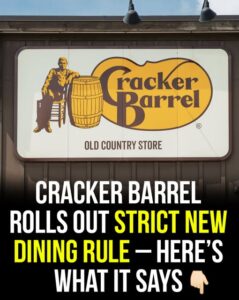
For decades, Cracker Barrel Old Country Store has been known for something more than just food. For many travelers across the United States, the brand represents a familiar roadside stop filled with warm hospitality, traditional Southern dishes, and a nostalgic atmosphere that feels like stepping into a piece of American history.
From rocking chairs lined up on the front porch to shelves filled with old-fashioned candy and country-style décor, the experience of visiting a Cracker Barrel location has always been about more than a meal. It’s about slowing down, enjoying comfort food, and reconnecting with a sense of tradition.
But like many long-established companies, the brand has recently faced an ongoing challenge: how to honor its heritage while still adapting to a changing world.
In the past few years, several decisions made by the company have sparked widespread public discussion. Some customers welcomed attempts to update the brand, while others strongly preferred that the restaurant remain exactly as they remembered it.
Now, in 2026, the company is once again part of a national conversation—this time due to an internal dining policy that applies to employees traveling for business.
Although the policy itself may seem simple, the reactions surrounding it reveal something deeper about how strongly people feel about the identity of the brand, its heritage, and its role in American culture.
A Restaurant That Became Part of American Culture
To understand why any change at Cracker Barrel Old Country Store attracts so much attention, it helps to look at the company’s place in American culture.
Founded in 1969, the chain built its reputation by creating a dining experience centered on Southern hospitality. The concept combined two ideas in one location: a restaurant serving classic comfort food and a small country store offering nostalgic products and gifts.
Guests entering a Cracker Barrel location are greeted by a setting designed to feel warm and familiar. Wooden rocking chairs sit outside the entrance, inviting travelers to relax for a moment before heading inside.
Inside, guests often find:
-
Antique-style decorations covering the walls
-
Vintage signs and photographs
-
Shelves filled with candy, toys, and household goods
-
A cozy dining room serving traditional American meals
Over time, the restaurant became a popular stop for road trips, family gatherings, and weekend breakfasts.
For many people, the experience of eating there is connected to memories—long drives with family members, holiday meals, or quiet mornings spent enjoying biscuits and coffee.
Because of this emotional connection, even small changes to the brand can spark strong reactions. Cracker Barrel is not just a restaurant—it is a living memory of Americana.
The Challenge of Updating a Nostalgic Brand
In recent years, many companies with long histories have tried to update their image in order to attract new generations of customers.
Restaurants often experiment with new menu items, modernized interiors, updated logos, and fresh marketing strategies. Some may introduce new technology, digital ordering systems, or even limited-time fusion cuisine to appeal to younger patrons.
However, companies built on nostalgia must approach change carefully.
Customers who love these brands often value consistency. They expect the same experience they remember from years earlier. For them, the smell of biscuits, the creak of a rocking chair, and the sight of vintage décor are integral parts of the experience.
When a brand changes too quickly, loyal fans sometimes feel that something important has been lost. This tension between tradition and modernization is particularly acute for a company like Cracker Barrel, where much of the appeal lies in the comfort of familiarity.
This delicate balance became clear when Julie Masino, the chief executive officer of Cracker Barrel Old Country Store, introduced plans to modernize certain elements of the company’s image.
A Modernization Effort That Sparked Debate
During an effort to refresh the brand, the company introduced several updates to its design and marketing approach.
Some restaurant interiors were redesigned to feel more modern, with updated lighting, cleaner lines, and brighter color palettes. A new logo was introduced, featuring simplified typography and sleeker graphics intended to appeal to a younger demographic.
Among the most talked-about changes was the removal of a familiar figure associated with the brand: Uncle Herschel.
For many longtime customers, this character symbolized the classic identity of the restaurant. His image, often featured in décor, menus, and advertisements, represented the warmth and familiarity that diners had grown to associate with Cracker Barrel.
The redesign was meant to help the brand appeal to a wider audience while still maintaining its traditional roots. It was an attempt to blend nostalgia with modern expectations—a balance that can be tricky to achieve in practice.
However, reactions from the public were immediate and intense.
Many customers expressed concern that the updates were moving the brand too far away from the nostalgic feeling they loved. Social media platforms quickly filled with comments from people who felt the new look did not match the warm, country-style atmosphere that defined the restaurant.
Some comments were humorous, others heartfelt, but all shared the same sentiment: Cracker Barrel should remain the familiar, comforting space they had grown up with.
Listening to Customer Feedback
As the public conversation grew louder, company leadership paid close attention to customer feedback. Businesses with strong brand identities often rely on loyal customers who have supported them for decades.
For that reason, companies sometimes adjust their strategies when they see that changes are not being received as expected.
In this case, Julie Masino acknowledged the strong emotional response from customers. She later explained that the level of criticism felt overwhelming, joking that the reaction made her feel as though she had been “fired by America.”
Although the remark was made humorously, it reflected how deeply customers care about the brand’s identity. For many patrons, Cracker Barrel is not merely a chain of restaurants—it is a touchstone of memory, tradition, and home-style comfort.
Shortly afterward, the company decided to restore elements of its traditional branding.
Returning to Familiar Symbols
In response to customer reactions, the company returned to its original “Old Timer” logo and brought back the familiar image of Uncle Herschel.
Marketing campaigns also began highlighting nostalgia and tradition once again. Classic menu items, old-fashioned décor, and stories of Southern hospitality were emphasized across advertising channels.
The goal was to reinforce the aspects of the brand that customers had always loved. This shift signaled that the company recognized the importance of its heritage.
Rather than pushing forward with changes that felt too unfamiliar, leadership decided to refocus on the classic elements that made the restaurant unique.
The Latest Headline: A Dining Policy for Employees
While the conversation about branding eventually cooled down, another topic recently brought Cracker Barrel Old Country Store back into national headlines.
According to reports, an internal company memo outlined guidelines regarding employee expenses during business travel.
The document suggested that employees traveling for work should dine at Cracker Barrel locations whenever it is practical to do so.
In addition, the guidelines noted that alcohol purchases should not be reimbursed without special approval.
When news of the memo surfaced, it quickly attracted public interest. Many people wondered whether the policy meant employees were required to eat only at company restaurants during work trips.
Clarifying the Policy
Company representatives explained that the policy was not intended to be restrictive.
Instead, it was designed to encourage employees to experience their own restaurants while traveling—something that can help staff understand customer experiences firsthand.
According to a spokesperson, the policy simply suggests that employees dine at Cracker Barrel locations when it is convenient based on travel schedules and nearby locations. Employees are still able to choose other dining options when necessary.
The company also explained that limiting reimbursement for alcoholic beverages is part of a broader effort to manage travel expenses responsibly. Such policies are common across many organizations.
Why Companies Sometimes Encourage Employees to Use Their Own Services
Encouraging employees to use their company’s products or services while traveling is not unusual in the business world.
Many organizations believe that firsthand experience helps employees better understand the customer perspective.
For example:
-
Hotel companies often encourage staff to stay in their own properties when possible.
-
Airline employees frequently travel using their company’s flights.
-
Retail brands sometimes ask staff to visit stores during business trips.
The idea behind these practices is simple: when employees experience the product themselves, they gain insights that can help improve the business.
For a restaurant chain like Cracker Barrel Old Country Store, dining at company locations can help employees observe service quality, menu presentation, and guest interactions.
Balancing Practicality and Flexibility
Although the policy encourages employees to visit company restaurants, it also recognizes that travel schedules and location availability vary widely.
Not every city has a Cracker Barrel location nearby. In those cases, employees can choose other dining options without difficulty.
The company’s guidance emphasizes practicality rather than strict rules. This flexibility helps ensure that employees can focus on their work responsibilities without unnecessary complications during travel.
The Broader Context of Brand Identity
The renewed attention surrounding this policy highlights something interesting about Cracker Barrel Old Country Store.
Unlike many companies, the brand holds a special place in American culture. People do not simply view it as a restaurant. Instead, they associate it with:
-
Family road trips
-
Traditional Southern meals
-
Nostalgic country décor
-
Relaxed moments spent with loved ones
Because of this emotional connection, even internal company decisions can spark public curiosity.
A Role in Celebrating American History
The company has also recently taken part in a national initiative connected to the country’s upcoming anniversary celebration.
America250 is a program commemorating the 250th anniversary of the United States.
As an official partner in the celebration, Cracker Barrel Old Country Store plans to host special in-store experiences and events.
These activities aim to highlight American traditions and encourage families to spend time together.
According to Sarah Moore, the partnership reflects the brand’s long-standing focus on community and shared experiences.
Bringing People Together Through Food
Throughout its history, the restaurant has emphasized the idea that meals can bring people together.
Classic dishes like biscuits, pancakes, fried chicken, and country-style sides are often associated with family gatherings and home cooking.
By offering these familiar foods in a welcoming environment, the brand aims to recreate the feeling of sitting down at a table with family members.
This emphasis on tradition is part of the reason customers reacted strongly to earlier modernization efforts.
For many guests, the restaurant represents a comforting connection to the past.
The Importance of Listening to Customers
Businesses that last for decades often succeed because they remain attentive to the preferences of their customers.
When feedback is clear and consistent, companies sometimes adjust their strategies accordingly.
The story of Cracker Barrel Old Country Store illustrates this dynamic.
When customers expressed concerns about changes to the brand’s identity, the company responded by restoring familiar symbols and emphasizing tradition in its marketing.
This willingness to listen helped rebuild trust with longtime fans.
The Ongoing Balance Between Tradition and Change
Every long-standing brand faces the challenge of balancing two important goals.
First, it must remain recognizable and true to its original identity.
Second, it must adapt enough to stay relevant in a constantly evolving marketplace.
Restaurants today compete not only with traditional dining chains but also with fast-casual concepts, delivery services, and digital ordering platforms.
Finding the right balance between heritage and innovation is a continuous process.
For Cracker Barrel Old Country Store, that balance often involves maintaining its nostalgic atmosphere while exploring new ways to serve modern customers.
Why Nostalgia Still Matters
Nostalgia is a powerful force in the restaurant industry.
Many people return to certain restaurants not only because of the food but also because of the memories attached to those places.
A familiar smell, a favorite menu item, or a recognizable piece of décor can instantly bring back moments from childhood or family traditions.
This emotional connection can make a brand especially meaningful.
For companies like Cracker Barrel, protecting that sense of familiarity is a key part of their identity.
Looking Ahead
As the restaurant industry continues to evolve, Cracker Barrel Old Country Store will likely continue exploring ways to grow while maintaining its roots.
Whether through new menu items, updated marketing strategies, or partnerships with national celebrations like America250, the company aims to remain a place where families can gather and enjoy traditional meals.
At the same time, leadership will likely remain mindful of the strong emotional bond that customers have with the brand.
That connection is one of the reasons the restaurant has remained popular for more than half a century.
A Conversation That Reflects a Larger Trend
The recent attention surrounding the company’s employee travel policy shows how closely people watch beloved brands.
Even a small internal guideline can spark discussions about company culture, customer expectations, and the future direction of a well-known restaurant chain.
For many observers, the conversation raises interesting questions:
-
Should companies encourage employees to experience their own products while traveling?
-
Is maintaining tradition more important than modernization for nostalgic brands?
-
And how should businesses balance heritage with innovation?
Final Thoughts
The story of Cracker Barrel Old Country Store demonstrates how deeply people care about the brands that become part of their lives.
From debates about logos and décor to discussions about internal policies, customers continue to pay attention because the restaurant represents something familiar and comforting.
Whether someone visits for a hearty breakfast, a quiet dinner, or a quick stop during a long drive, the experience often feels like stepping into a place where time moves a little more slowly.
As the company moves forward, its challenge will remain the same: honoring the traditions that built its reputation while adapting thoughtfully to the future.
And judging by the conversations happening today, people across the country will continue to watch closely to see how that story unfolds.