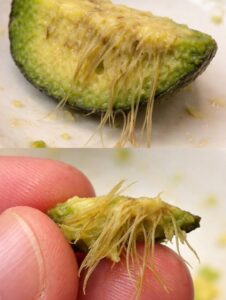
Have you ever sliced open an avocado expecting that smooth, buttery texture—only to find stringy fibers running through the flesh? It can be surprising, even a little off-putting at first. Many people assume something is wrong with the fruit. But in most cases, those strange strings are completely natural.
If you’ve encountered this before, you’re definitely not alone. Understanding why avocados sometimes become stringy, whether they’re safe to eat, and how to reduce the chances of buying one can make a big difference in your kitchen experience.
What Are the Strings Inside an Avocado?
The first time you notice fibrous strands inside an avocado, it’s easy to mistake them for something unusual—like contamination or even pests. Thankfully, that’s not the case.
These strings are known as vascular bundles. They are part of the fruit’s internal structure and play an important role while it grows on the tree. Their job is to transport water and nutrients throughout the fruit during development.
All avocados contain these fibers, but under normal conditions, they are soft and blend seamlessly into the creamy flesh. When they become more visible or slightly tougher, the fruit takes on what we describe as a “stringy” or fibrous texture.
You can think of them like the thin strands found in celery or certain mango varieties—completely natural and harmless.
Why Do Some Avocados Become Stringy?
Several factors influence whether an avocado develops a smooth texture or a more fibrous one. These differences often happen during the growing process and are not visible from the outside.
1. Environmental Stress During Growth
One of the most common reasons for stringy avocados is environmental stress affecting the tree.
Factors like:
- High heat
- Inconsistent watering
- Poor soil nutrition
can all influence how the fruit develops internally. When a tree experiences stress, the avocado may produce firmer tissue with more noticeable fibers.
The challenge is that the fruit can look perfectly normal on the outside, making it impossible to detect before cutting it open.
2. Harvest Timing
Another major factor is when the avocado is picked.
Unlike many fruits, avocados are often harvested before they are fully ripe. They continue ripening after being picked.
- If harvested too early → fibers may remain more pronounced as it ripens
- If left longer on the tree → flesh tends to be softer and creamier
Since consumers don’t control harvesting, this explains why two avocados that look identical can have completely different textures inside.
3. Type of Avocado
Not all avocados are the same. Different varieties naturally have different textures.
For example:
- Hass avocado is the most common and is known for its creamy, low-fiber flesh
- Other varieties, especially local or less common types, may be naturally more fibrous
Even within the same variety, occasional texture differences can still occur.
4. Overripeness
Ripeness also plays a role in how noticeable the fibers are.
As an avocado becomes overripe:
- The flesh softens significantly
- The surrounding tissue begins to break down
- Fibers become more visible by contrast
Important note: overripeness doesn’t create fibers—it simply makes them easier to see and feel.
Are Stringy Avocados Safe to Eat?
This is usually the first concern—and fortunately, the answer is yes.
In most cases, stringy avocados are completely safe to consume. The fibers are simply plant tissue and pose no health risk.
The main issue is texture, not safety.
However, there are situations where you should discard an avocado:
- Sour or fermented smell
- Unpleasant taste
- Large dark brown or black patches
- Visible mold
If none of these are present and the only issue is stringiness, the avocado is still perfectly edible.
How to Avoid Buying Stringy Avocados
While you can’t guarantee a perfectly smooth avocado every time, there are a few smart shopping habits that can improve your chances.
Choose the Right Texture
Look for avocados that:
- Feel firm but slightly soft when pressed
- Aren’t overly mushy (a sign of overripeness)
Check Appearance
Avoid fruits that:
- Look shriveled
- Feel unusually light for their size
These signs can indicate quality issues, including poor texture.
Buy from High-Turnover Stores
Stores that sell produce quickly tend to restock more often, meaning:
- Fresher inventory
- Better harvest timing
This increases the likelihood of getting a well-developed avocado.
What to Do With a Stringy Avocado
If you’ve already cut into a stringy avocado, don’t throw it away right away. There are plenty of ways to still use it effectively.
Best Uses for Stringy Avocados
- Guacamole
- Smoothies
- Salad dressings
- Avocado toast (well mashed)
Blending or mashing helps break down the fibers, making them far less noticeable.
In most cases, once processed, the texture becomes smooth enough to enjoy without issue.
Final Thoughts
Stringy avocados may not deliver the creamy texture you expect, but they’re usually nothing to worry about. Those fibers are a natural part of how the fruit develops and are influenced by growing conditions, harvest timing, variety, and ripeness.
The key takeaway:
- They’re normal
- They’re safe to eat
- And they can still be useful in the right recipes
While you can’t completely avoid the occasional fibrous avocado, understanding why it happens makes the experience far less frustrating—and helps you make better choices the next time you shop.
Sometimes, it’s just nature reminding us that even the most familiar foods can vary in unexpected ways.