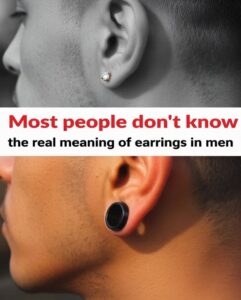
At a quick glance, a man’s earring might seem like a minor detail—just a finishing touch to an outfit, no more significant than a watch or a pair of shoes. But that small piece of jewelry often carries a far richer story than most people realize. Across centuries and cultures, earrings have functioned as symbols of identity, markers of status, reflections of belief systems, and expressions of individuality.
Today, when a man chooses to wear an earring—whether it’s a subtle stud or a bold, eye-catching design—he is, knowingly or not, participating in a long and complex tradition. That tradition stretches across continents and generations, shaped by shifting cultural values, personal meaning, and evolving ideas about self-expression.
Understanding what a man’s earrings can reveal requires looking beyond surface-level fashion and exploring the deeper layers of symbolism, history, and personal narrative that these small accessories often represent.

A Small Detail With a Long History
Earrings are not a modern invention. In fact, they are among the oldest forms of personal adornment known to humanity. Archaeological discoveries have revealed that men wore earrings thousands of years ago, long before contemporary fashion trends existed.
In ancient societies, earrings were rarely just decorative. They often carried specific meanings tied to social structure, wealth, and identity.
In ancient Egypt, for example, earrings were commonly associated with status and privilege. Wealthy individuals wore elaborate gold pieces to display their position within society. Jewelry wasn’t simply about beauty—it was a visible indicator of power and influence.
Similarly, in ancient Greece and Rome, men also wore earrings, though their meanings varied. In some contexts, earrings signaled affluence or refinement. In others, they were connected to artistic or philosophical identity. These early uses established earrings as more than accessories—they were visual statements about who someone was and where they belonged.
Cultural Roots and Global Traditions
Across the world, earrings have played meaningful roles in countless cultural traditions. Their symbolism often extended far beyond appearance, becoming deeply tied to identity, community, and heritage.
In many African societies, earrings have historically been used to signify age, social standing, or group affiliation. The size, shape, and material of an earring could communicate important information about the wearer’s place within a community.
Among various Indigenous cultures in the Americas, earrings have held spiritual and cultural significance. They were sometimes seen as a connection to ancestry, nature, or spiritual beliefs, serving as both adornment and symbol.
In parts of South Asia, ear piercing has long been part of traditional rites of passage. For many families, it marks an important stage in life, symbolizing growth, maturity, and belonging. These practices continue today, connecting modern individuals to generations of tradition.
What’s important to recognize is that these meanings are not universal—they vary widely depending on cultural context. But the common thread is clear: earrings have consistently served as tools for expressing identity and connection.

Spiritual and Symbolic Interpretations
Beyond cultural traditions, earrings have also been linked to spiritual beliefs and symbolic interpretations.
In some traditions, ear piercing is thought to influence energy flow within the body. Certain points on the ear are believed to correspond with physical or emotional balance, and wearing earrings in those locations is sometimes associated with well-being.
While these ideas are not scientifically established in a universal sense, they reflect how deeply intertwined jewelry can be with personal belief systems. For some individuals, wearing an earring is not just about style—it carries a sense of intention, protection, or meaning.
Even outside of specific traditions, people often assign symbolic value to their earrings. A piece of jewelry might represent strength, change, or a reminder of personal growth.
From Tradition to Rebellion
As society evolved, so did the meaning of earrings—especially for men.
In many Western cultures, there was a period when earrings for men were viewed as unconventional or even controversial. During the 20th century, particularly in certain decades, men wearing earrings became associated with rebellion, nonconformity, and counterculture movements.
Musicians, artists, and public figures played a significant role in reshaping these perceptions. By embracing earrings as part of their personal style, they challenged traditional expectations and helped redefine what was considered acceptable.
Over time, what was once seen as a bold or unconventional choice became increasingly normalized. Earrings transitioned from symbols of rebellion to widely accepted forms of self-expression.
Modern Style: Personal Choice Above All
Today, the meaning of a man’s earrings is more flexible than ever. There are no strict rules dictating what they represent. Instead, meaning is largely defined by the individual.
Some men wear earrings purely for aesthetic reasons. A minimalist stud might complement a clean, understated style, while a larger or more intricate design might reflect creativity or confidence.
Others choose earrings that hold personal significance. A piece might commemorate an important moment, symbolize a relationship, or represent a milestone in life.
In many cases, earrings serve both purposes—they enhance appearance while also carrying deeper meaning.
The Subtle Language of Style
Even when chosen for fashion, earrings can communicate subtle messages about personality and style preferences.
- Minimalist studs often suggest simplicity, focus, and refinement
- Hoops may convey confidence, openness, or a relaxed sense of style
- Bold or artistic designs can signal creativity and individuality
- Natural materials like wood or stone may reflect a connection to nature or a preference for organic aesthetics
These interpretations are not fixed rules, but they highlight how small details can contribute to overall perception.
Placement and Its Changing Meaning
In the past, the placement of an earring—left ear, right ear, or both—was sometimes associated with specific social signals or identities. These interpretations varied widely depending on time and place.
Today, those distinctions have largely faded. Most people view placement as a matter of personal preference rather than coded messaging.
This shift reflects a broader cultural movement toward individuality. Instead of adhering to predefined meanings, people now choose how to express themselves on their own terms.
Materials and Craftsmanship
The materials used in earrings can also add layers of meaning and expression.
- Gold is often associated with tradition, luxury, and timelessness
- Silver can suggest modernity and versatility
- Stainless steel offers durability and a contemporary edge
- Natural materials like wood or stone may reflect simplicity or environmental awareness
The choice of material isn’t just about appearance—it can reflect values, lifestyle, and personal taste.
Handcrafted or artisanal pieces, for example, may appeal to individuals who appreciate craftsmanship and uniqueness. Mass-produced designs, on the other hand, might prioritize accessibility and trend alignment.
Earrings as Personal Milestones
For many people, earrings become markers of important moments in life.
Getting a first piercing might represent independence or a step into adulthood. Choosing a new style could mark a period of change or self-discovery. An earring received as a gift might carry emotional significance tied to a relationship or memory.
Over time, these meanings can evolve. What starts as a simple fashion choice can become a symbol of growth, resilience, or transformation.
In this way, earrings are not static—they change along with the person who wears them.
The Role of Social Acceptance
The growing acceptance of men wearing earrings reflects broader cultural changes.
Society has become more open to diverse forms of self-expression, allowing individuals greater freedom to explore their identity without being confined to traditional expectations.
What was once considered unconventional is now widely normalized in many parts of the world. This shift has made it easier for people to express themselves authentically through style.
Earrings, once seen as a bold statement, are now simply one of many ways to personalize appearance.
The Psychology Behind Small Details
It’s easy to underestimate the impact of small details like earrings, but they can play a significant role in how people perceive themselves and others.
Wearing an earring can boost confidence, reinforce identity, and serve as a form of self-expression. Even subtle choices can influence how someone feels about their appearance and how they present themselves to the world.
From a psychological perspective, personal style is a form of communication. It allows individuals to express aspects of their personality without words.
Earrings, though small, are part of that language.
Breaking Stereotypes and Expectations
One of the most important aspects of modern earring culture is its ability to challenge stereotypes.
There is no single meaning attached to a man wearing earrings. It does not define his personality, values, or background in a fixed way.
Instead, it reflects choice—an individual decision about how to present oneself.
This flexibility is what makes earrings such a powerful form of expression. They allow people to move beyond assumptions and define their own identity.
A Connection Between Past and Present
Even as meanings evolve, earrings continue to connect modern wearers to historical traditions.
Whether inspired by ancient designs, cultural practices, or contemporary trends, each earring carries echoes of the past.
This connection adds depth to what might otherwise seem like a simple accessory. It’s a reminder that personal style is often rooted in history, even when it feels entirely modern.
The Stories Behind the Style
Perhaps the most meaningful aspect of earrings is the stories they can represent.
For one person, an earring might symbolize a cultural heritage. For another, it might mark a personal achievement. For someone else, it might simply be a reflection of their taste and creativity.
There is no single narrative—only individual experiences.
This diversity of meaning is what makes earrings so unique. They are small, but they can carry stories that are deeply personal and significant.
Looking Beyond First Impressions
In a world where first impressions often rely on appearance, it’s easy to overlook the deeper meaning behind small details.
An earring might seem like a simple accessory, but it can reveal layers of identity, history, and intention.
Taking a moment to look beyond the surface can lead to a greater appreciation of the choices people make and the stories they carry.
Final Thoughts
A man’s earrings are more than just decorative pieces. They are part of a long tradition that spans cultures, centuries, and personal experiences.
They can represent style, identity, heritage, and individuality—all at once.
In today’s world, their meaning is no longer dictated by strict rules or expectations. Instead, it is shaped by the person wearing them.
And that is what makes them truly significant.
Because sometimes, the smallest details tell the most meaningful stories.