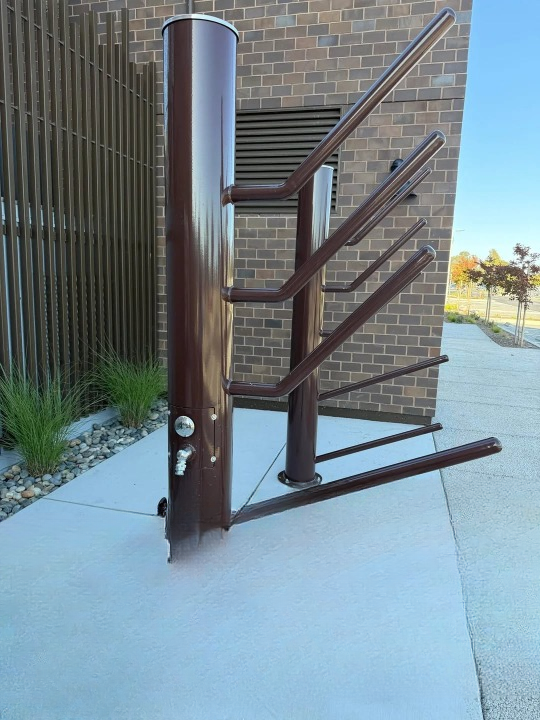
At first glance, these unusual metal structures might look like abstract public art or a half-finished bicycle rack. A series of angled metal arms protrudes from a vertical pole, seemingly random yet carefully arranged. Without context, you might walk past and assume it’s simply a quirky decorative feature of an apartment building.
In reality, these installations are far from random. They are surfboard wash stations, a surprisingly practical addition for coastal apartment communities.
What Are Surfboard Wash Stations?
These units are designed to make post-beach cleanup simple. A hose connection at the base of the vertical pole supplies water, while the angled horizontal arms act as supports. Residents can hang their surfboards on the arms and rinse them thoroughly, removing salt, sand, and debris before taking them inside.
This might seem like a minor convenience, but for students and residents who frequent the beach, it solves a major logistical challenge. Wet, sandy boards can leave a trail of salt, grit, and moisture through hallways, elevators, and apartments. With a dedicated wash station, these issues are dramatically reduced, protecting floors, carpets, and common areas.
Why Apartment Buildings Invest in These
Many coastal towns host colleges where surfing is a daily or weekly activity. Students may hit the waves early in the morning before class or unwind at the beach after a long day of lectures. Without a dedicated space to rinse boards, sandy floors, salt-stained carpets, and clogged drains are inevitable.
Installing surfboard wash stations allows residents to clean and maintain their equipment in minutes. Fins, waxed surfaces, and leashes can all be rinsed efficiently, preserving both the gear and the building itself. In short, a small fixture outside the building prevents larger headaches inside.
The Importance of Angled Arms
One detail that might go unnoticed at first is the slanted design of the horizontal arms. This feature is intentional. Longer boards need stable support, and a flat rack can make them wobble or scrape against hard surfaces like concrete or pebbles.
The angled arms:
- Secure boards safely at a slight incline
- Allow water to drain naturally off the surface
- Protect boards from scratches or damage
This thoughtful design ensures residents no longer need to lean boards against walls or lay them on sidewalks—common habits that often result in accidental damage.
Versatile Uses Beyond Surfboards
While these stations are primarily built for surfboards, they’re surprisingly adaptable. Residents often use them to rinse:
- Paddleboards
- Bodyboards
- Wetsuits
- Beach chairs or umbrellas
- Sand-covered coolers
This adaptability makes the installation a practical solution for a range of beach-related activities. In small apartments where space is limited, these wash stations become an essential part of daily life, preventing sandy showers and cluttered interiors.
A Small Detail That Tells a Bigger Story
Beyond functionality, surfboard wash stations offer insight into the lifestyle and design priorities of a building. Their presence signals a coastal environment with a high volume of beachgoers. The design reflects an understanding of local needs: keeping interiors clean, maintaining equipment longevity, and supporting outdoor recreation.
It’s a reminder that small architectural elements often serve purposes far beyond aesthetics. A seemingly random set of metal arms can transform post-beach routines, create cleaner living spaces, and enhance the overall resident experience.
The Takeaway
What might first appear as abstract or decorative is, in fact, a carefully considered solution to a very real problem. Surfboard wash stations are a practical, location-specific addition that blend convenience, protection, and thoughtful design.
For coastal apartment residents, they’re not just metal poles—they’re a lifeline for keeping apartments clean, preserving beach gear, and integrating daily beach activity into urban living.
The next time you spot a cluster of angled metal arms outside an apartment building, remember: it’s not art. It’s innovation disguised as simplicity.
Uncategorized