The smallpox vaccine scar is a small, circular mark that appears on the upper arm of people who received the vaccination. While it may seem like an ordinary scar at first glance, it carries a rich historical and medical significance, connecting generations and reminding us of one of humanity’s greatest public health triumphs. For decades, this small mark was more than just a physical reminder—it symbolized protection against a deadly disease, resilience in the face of global health crises, and the profound impact of vaccination programs worldwide.
Understanding the smallpox vaccine scar requires exploring its origins, how it forms, and why it remains an enduring emblem even long after the disease itself has been eradicated. This article examines the history, science, and cultural significance of this tiny yet powerful mark.
A Window into History: Smallpox and Its Devastation
Smallpox was one of the deadliest infectious diseases in human history, caused by the variola virus. The virus spread rapidly through populations, producing high fevers, widespread rashes, and painful skin lesions. Mortality rates were alarmingly high: approximately three out of ten people infected with smallpox did not survive. Survivors often bore deep scars across their bodies, a lasting reminder of the disease’s severity. In some cases, smallpox caused blindness and other long-term complications.
Throughout history, smallpox outbreaks terrorized communities, killing millions and leaving survivors physically and emotionally scarred. Before vaccines existed, methods like variolation—an early and risky form of inoculation—were used to try to protect people. These practices were dangerous and not always effective, leaving populations vulnerable to repeated outbreaks.
The invention of the smallpox vaccine in the late 18th century marked a turning point in humanity’s fight against this deadly virus. Developed by Edward Jenner in 1796, the vaccine used material from cowpox lesions to stimulate immunity against smallpox. This breakthrough laid the foundation for modern immunology and preventive medicine, creating a tool that would eventually eliminate a disease that had plagued humanity for centuries.

The Vaccine and How It Works
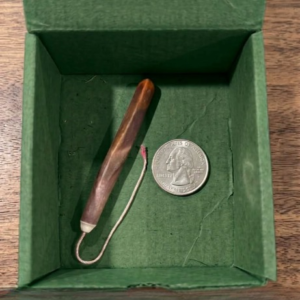
Unlike many modern vaccines, which are delivered with a single injection into the muscle, the smallpox vaccine was administered in a distinctive way. Vaccinators used a bifurcated needle, a tool with two tiny prongs, to carry a small droplet of the live vaccinia virus—the virus related to smallpox that would trigger immunity.
The needle was dipped into the vaccine solution and repeatedly pricked into the skin, usually on the upper arm, delivering the virus into the dermis, the middle layer of the skin. This method was deliberate: it created a controlled local infection, which stimulated the immune system to produce a strong and reliable response.
Within a few days, the vaccinated area would develop a small red bump. This bump progressed into a fluid-filled blister called a vesicle, caused by the immune system reacting to the vaccine virus. Over the following weeks, the blister would scab over, dry out, and eventually fall off, leaving a small, circular, pitted scar.
The formation of this scar was an expected outcome of the vaccination process. It indicated that the body had mounted an immune response, providing protection against smallpox. While the scar itself was harmless, it became a lasting symbol of immunity and survival, one that could be seen for decades.
Why the Scar Forms: The Science Behind the Mark
The distinctive appearance of the smallpox vaccine scar arises from how the skin heals after intentional injury. When the bifurcated needle introduced the vaccine, it caused minor, controlled damage to the skin’s surface. As the immune system responded, the skin formed scar tissue during healing.
Unlike normal skin, which has fibers arranged in multiple directions, scar tissue regenerates with fibers aligned more uniformly. This structural difference makes scars more visible and often slightly indented compared to surrounding skin. The size and prominence of the scar can vary depending on individual healing responses, age, and skin type. Some people develop small, subtle marks, while others have larger, more noticeable indentations.
The scar served as a physical indicator of vaccination and was often used as proof of immunity. Public health officials in the early 20th century would sometimes check children’s and adults’ arms to confirm they had been vaccinated, especially during outbreaks. In that sense, the scar functioned as a kind of early “vaccine passport,” visible evidence that a person had protection against a potentially deadly disease.

Widespread Vaccination Campaigns and Their Impact
Throughout the 20th century, the smallpox vaccine became a cornerstone of public health campaigns worldwide. Countries like the United States implemented mass immunization programs, ensuring that nearly every child received the vaccine. These campaigns dramatically reduced the number of smallpox cases and deaths, saving millions of lives.
By the 1950s and 1960s, widespread vaccination programs were underway across much of the globe. Health workers traveled to rural and urban areas, sometimes facing resistance, to ensure that the population received protection. This extensive vaccination effort was critical in breaking the chain of transmission and ultimately led to the global eradication of smallpox in 1980.
The last naturally occurring case of smallpox was recorded in 1977, and the World Health Organization declared the disease eradicated three years later. This achievement remains one of the most significant victories in medical history, demonstrating the power of coordinated, science-based public health initiatives.
The Legacy of the Scar in Modern Times
Although routine smallpox vaccination ended in the United States in 1972, the scars remain visible on the arms of millions of people who were immunized. For those who grew up before this time, the mark is a subtle yet meaningful link to a shared historical experience.
The scar is more than a reminder of childhood vaccinations; it symbolizes resilience, both personal and collective. It represents the successful protection against a virus that once caused widespread fear and suffering. For some, it is also a nostalgic connection to parents and grandparents who lived through a time when the threat of smallpox was very real.
In addition, the scar serves as a testament to the effectiveness of vaccines and the importance of immunization programs. In a world where public health challenges continue to emerge, it reminds us of the tangible results that science and preventive medicine can achieve.
Variations in Scarring and Individual Responses
Not everyone who received the smallpox vaccine developed the same type of scar. Individual differences in immune response, skin type, and healing processes led to variation in appearance. Some scars faded almost completely over time, while others remained prominent.
These differences did not affect the level of immunity provided by the vaccine. Even a faint scar indicated that the immune system had successfully responded to the vaccinia virus. Modern smallpox vaccines, still used for specific purposes such as protecting laboratory workers or military personnel, employ variations of the same bifurcated needle technique.
Understanding these variations also highlights the remarkable adaptability of the human immune system. The scar is a visible outcome of a complex interaction between the vaccine and the body’s defense mechanisms.
The Scar as a Cultural and Educational Symbol
In addition to its medical significance, the smallpox vaccine scar carries cultural and educational meaning. It connects generations, linking those who experienced mass vaccination programs to younger generations who live in a world free of smallpox. The mark prompts reflection on the sacrifices and efforts required to achieve global eradication.
For historians, educators, and public health professionals, the scar is a tool to teach about the history of infectious diseases, the development of vaccines, and the importance of community-wide health initiatives. It reminds us that disease prevention often requires patience, coordination, and trust in science.
The presence of these scars in older adults serves as a living history lesson. They are reminders of both personal and collective experiences—stories of families, communities, and nations overcoming a terrifying disease through knowledge and collaboration.
Reflections on the Power of Vaccination
The smallpox vaccine scar embodies a broader lesson about the power of preventive medicine. Vaccines work not only to protect individuals but also to safeguard communities and future generations. The visible mark on the skin becomes a symbol of the invisible work the immune system performs, building defenses that once saved millions from death.
Eradication of smallpox demonstrates the potential of global cooperation and scientific advancement. The scars are proof of both the individual response to vaccination and the collective success of humanity in combating disease. Each mark, no matter how small, carries a story of survival, resilience, and the triumph of medical innovation over fear and illness.
Conclusion: A Small Scar with a Big Story
The smallpox vaccine scar may be small in size, but its significance is vast. It connects personal memory with global history, linking generations who experienced vaccination programs and the eradication of one of humanity’s deadliest diseases.
More than a physical mark, it represents the successful interaction between the vaccine and the immune system, a visible acknowledgment of scientific achievement. It is a reminder of the resilience of both individuals and societies, the power of preventive medicine, and the enduring impact of coordinated public health campaigns.
Even in a world where smallpox no longer exists, the scar remains—a quiet, enduring emblem of triumph over disease. It is a symbol of protection, history, and the remarkable accomplishments that vaccination has achieved.
For those who carry the mark, it is a bridge across time, connecting the past, present, and future in a single, small circle on the arm. Every scar tells a story—not just of a vaccine, but of generations protected, families preserved, and humanity united against one of its most fearsome foes.
The smallpox vaccine scar is more than skin-deep. It is a reminder that even the smallest marks can hold immense meaning and that every effort toward disease prevention leaves a legacy that lasts far beyond the individual, shaping history itself.