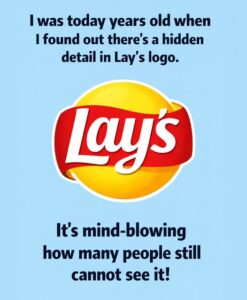
If you’ve ever grabbed a bag of Lay’s chips from the grocery store or picked one up from a vending machine, you’ve probably seen the brand’s iconic logo: a yellow background with a red swoosh, and the word “Lay’s” in white. It’s a classic design that’s been around for decades. But did you know there’s a subtle detail in the Lay’s logo that’s hiding in plain sight—and it’s tied to a much larger brand family?
At first glance, the logo looks simple, cheerful, and instantly recognizable. But if you take a closer look, you’ll see that it’s not just a random design choice. There’s a secret visual connection to Lay’s parent company, Frito-Lay, and it’s all about branding continuity. It’s an example of how marketing and design teams work behind the scenes to create a cohesive brand identity—one that people absorb without even realizing it.
The Hidden Meaning / Significance of the Lay’s Logo
A Subtle Nod to Frito-Lay’s Visual Identity
The Lay’s logo has been a staple of snack culture for years, but what many might not realize is that its design borrows a significant detail from the Frito-Lay logo, its parent company. When you look at the logo more closely, you’ll notice that the yellow circle in the background of the Lay’s logo is strikingly similar to the sun-like shape in the Frito-Lay logo.
While the Frito-Lay logo features a large, puffy, 3D golden sphere (which resembles both a sun and a chip), the Lay’s logo carries the same general shape and color scheme, albeit in a more simplified, two-dimensional form. The sun, or sphere, is a key visual element in the Frito-Lay logo, symbolizing fun, energy, and the warmth of their snack products. By incorporating a similar circular design, the Lay’s logo subtly reinforces its connection to the larger parent company—without explicitly stating it.
This isn’t just a coincidence or a random design choice; it’s a deliberate move that plays into brand loyalty. By echoing the Frito-Lay logo, Lay’s communicates its place within the larger snack empire while maintaining its unique identity. It’s almost like an Easter egg for those who are paying attention—a little visual cue that ties the two brands together.
Practical Implications for People, Consumers, and Businesses
Brand Recognition and Loyalty: How It’s All Connected
The visual connection between Lay’s and Frito-Lay might seem minor at first, but it’s part of a larger trend in branding. Consumers don’t often think about the underlying connections between products, but these subtle design elements help reinforce brand loyalty over time. When you see the familiar yellow and red color scheme or the sun-like symbol, your brain makes an unconscious association between Lay’s and the wider Frito-Lay brand family, which includes other snacks like Doritos, Cheetos, and Ruffles.
For consumers, this means that they are not just buying Lay’s chips—they are buying into a whole snack experience. The familiarity of the branding can create a sense of comfort and trust. Whether they realize it or not, they are surrounded by the Frito-Lay empire, with the logo acting as a soft reminder of the family of products it belongs to.
For businesses, maintaining visual continuity across product lines is crucial. The strategy of using similar design elements (like the sun shape) ensures that all products within the Frito-Lay family appear connected, strengthening the overall brand image. It’s a clever way to encourage cross-promotion and reinforce the idea that all the snacks come from the same, reliable source.
Historical / Cultural Context of the Lay’s Logo
Lay’s and Frito-Lay: A Brand Legacy
The Lay’s brand has a long history, dating all the way back to 1932, when it was founded by Herman Lay. Over the years, it grew into one of the most well-known chip brands in the world, eventually merging with the Frito Company to create Frito-Lay in 1961. Today, Frito-Lay is a division of PepsiCo, one of the largest food and beverage companies in the world. But it wasn’t always that way. Lay’s, much like other brands that became part of larger corporations, had to evolve in response to changing market dynamics and consumer preferences.
As the company expanded and acquired other snack brands, Frito-Lay became a powerhouse. And to maintain brand cohesion across all of its products, Frito-Lay has continued to use visual elements like the sun shape to create a sense of unity among its brands. The yellow orb in the Lay’s logo is not just a color or a design—it’s a symbol of the brand’s heritage and the larger snack empire it belongs to.
Tips, Insights, or Takeaways for Consumers and Designers
1. Pay Attention to the Small Details in Branding
While most people might overlook it, the subtle design choices in logos can reveal a lot about a brand’s history, values, and connections. When you see the yellow circle in the Lay’s logo, you’re not just looking at a design choice for aesthetic purposes—you’re seeing a piece of branding genius that ties back to a larger corporate strategy. Next time you look at a logo, try to identify these hidden connections. They might be more significant than you realize!
2. The Power of Color: Yellow and Red in Snack Marketing
The color choices in the Lay’s logo—bright yellow and bold red—are not random. Both colors are known to stimulate appetite and evoke feelings of excitement and energy. In fact, yellow and red are the go-to colors for many snack brands because they trigger a psychological response that makes consumers more likely to purchase the product. The next time you’re in the snack aisle, take a look at the packaging of various chips and snacks—you’ll see that many of them use these same colors. It’s all part of the branding strategy to get your attention and increase sales.
3. Simple Design, Big Impact
One of the most impressive aspects of the Lay’s logo is its simplicity. The design is clean, instantly recognizable, and easy to replicate, making it highly effective in creating brand recognition. For designers, this is a great lesson in how simplicity can be powerful. By using just a few colors and shapes, you can communicate a brand’s message without overwhelming the viewer.
Unpacking the Power of Brand Loyalty Through Design
How Subtle Brand Cues Foster Loyalty
When it comes to branding, consistency is key. The small design details, like the yellow circle in the Lay’s logo, are part of a larger effort to cultivate consumer loyalty. Over decades of exposure, consumers have subconsciously learned to associate certain colors, shapes, and symbols with specific emotions and experiences. The familiar yellow circle on Lay’s packaging, echoing the warmth and energy of the Frito-Lay sun, quietly reinforces the connection between the two brands, even if consumers don’t explicitly recognize it.
This kind of brand continuity isn’t just about maintaining visual familiarity; it’s about creating a sense of trust. Consumers tend to feel more comfortable with brands that feel familiar. Whether consciously or unconsciously, when a consumer picks up a bag of Lay’s, they aren’t just choosing a snack—they’re choosing a product from a family of trusted, reliable brands. The fact that the branding subtly nods to the larger snack empire, Frito-Lay, plays a crucial role in reassuring consumers that Lay’s is part of a broader legacy of quality products. In short, these little details make Lay’s feel like “home”—a consistent and reliable part of people’s snacking routines.
This effect doesn’t just apply to chips. Across various industries, companies use similar tactics to create a web of associations between their products. Whether it’s a logo or a marketing campaign, every visual element is carefully designed to elicit a desired feeling, shaping how consumers think about the brand. Even the color choices—like yellow and red—are meticulously selected to evoke feelings of warmth and hunger, triggering the desire to eat without any overt messaging. It’s part of a subtle yet powerful psychological strategy to make people want to buy, even before they fully realize why.
The Role of Nostalgia in Snack Branding
Creating Emotional Connections with Consumers
If you’ve been a Lay’s fan for years, the brand likely brings up a sense of nostalgia. Whether it’s the familiar crunch of Classic Lay’s chips or the comforting flavor of Sour Cream & Onion, these snacks are embedded in countless memories. That emotional connection between the consumer and the brand is cultivated over time through consistency in branding, product quality, and marketing.
In fact, the Lay’s logo itself plays a part in triggering these emotional responses. The circular, sun-inspired shape isn’t just symbolic of the Frito-Lay legacy—it’s also associated with warmth, comfort, and moments of joy. Imagine opening a bag of Lay’s on a lazy Sunday afternoon or at a family gathering; these feelings of relaxation and fun are tied directly to the packaging and branding that has remained familiar to you for years. The cheerful yellow and red colors become synonymous with happiness and indulgence, making the snack more than just a product, but a source of pleasure in your daily routine.
The power of nostalgia in snack marketing is no accident. Brands like Lay’s work hard to establish these emotional touchpoints with their consumers because they know that emotional connections lead to loyalty. When you’re choosing a snack in the aisle, it’s not just the taste or the nutritional information you consider—it’s the comforting feeling that comes with reaching for something familiar. That emotional tie, strengthened by years of consistent branding, ensures that when it’s time to grab a snack, Lay’s is an easy, instinctual choice.
Branding Beyond Just the Logo: How Lay’s Stands Out
The Evolution of the Lay’s Brand Identity
While the logo plays an integral role in branding, it’s also important to recognize that the overall Lay’s brand identity extends far beyond the logo itself. The brand has evolved over the years to stay relevant in an increasingly competitive market. From flavor innovations to celebrity endorsements and eye-catching ad campaigns, Lay’s consistently adapts its branding to appeal to new generations of snackers. Yet, the foundational elements—the familiar logo, color palette, and visual cues—remain intact, ensuring that the brand doesn’t lose touch with its roots.
For example, Lay’s has consistently introduced bold new flavors while maintaining its iconic aesthetic. The limited-edition flavor campaigns, such as “Do Us A Flavor,” create excitement around the brand while reinforcing the connection between the modern-day Lay’s and the classic, time-tested image. Through this balance of innovation and tradition, Lay’s ensures that it remains relevant in the ever-changing snack industry without alienating its loyal customer base.
Visual Identity in the Digital Age
In today’s digital-first world, where people are constantly scrolling through social media feeds, brand consistency is more important than ever. Lay’s, like many other brands, is aware of this shift and has optimized its logo and branding for various digital platforms. The bright, simple design of the Lay’s logo ensures that it remains highly visible and recognizable on everything from Instagram posts to digital ads. The strong, easily identifiable visual cues—yellow and red color schemes and the circular shape—work well in small, mobile-friendly formats, making the brand instantly recognizable even on a small screen.
This adaptability is key for staying competitive in a digital landscape, where attention spans are short, and visual impact is everything. The Lay’s logo, with its clever connection to Frito-Lay’s larger branding, stands as a prime example of how consistent, strategic design can make a lasting impact on consumers, no matter where they encounter it.
Conclusion
The Lay’s logo is far more than just a cheerful, yellow-and-red design. The subtle visual cues within the logo connect it to its parent company, Frito-Lay, and communicate a sense of continuity, trust, and comfort to consumers. By using the familiar yellow circle and red swoosh, Lay’s taps into decades of branding history, creating a connection to a larger snack empire without overtly stating it. For consumers, this quiet branding strategy fosters a sense of loyalty and familiarity, reinforcing Lay’s as a trusted snack brand. And for businesses and designers, Lay’s logo is a prime example of how small design choices can have a massive impact on brand recognition, consumer loyalty, and emotional connections.
So, the next time you grab a bag of Lay’s, take a moment to appreciate the subtle branding that makes the snack so much more than just a chip. It’s a product steeped in history, psychology, and marketing genius—wrapped up in that iconic, yellow logo.