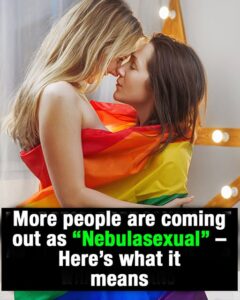
As society’s understanding of identity expands, new terms are emerging to capture experiences that don’t fit traditional labels. One of the newer labels is nebulasexual, an identity tied to neurodivergence and the often confusing, foggy nature of attraction.
The LGBTQ+ community continues to expand with new labels that help people better understand and express their identities. One term that’s drawing attention, particularly among neurodivergent individuals, is nebulasexual – an identity that acknowledges the complicated intersection between attraction and neurological differences.
Sexuality through neurodivergent lens
As awareness of neurodiversity grows, more people are discovering that traditional orientation labels don’t always capture their lived reality. For some, neurological differences, including ADHD, autism, or intrusive thought patterns (OCD), make it difficult to distinguish between types of attraction – sexual, aesthetic, or emotional.
The term nebulasexual provides language for this experience, helping individuals feel less isolated and more understood, validating the idea that attraction doesn’t look or feel the same for everyone, especially when filtered through a neurodivergent lens.
What is nebulasexual?
The prefix “nebula” comes from the Latin word nebulous, meaning “clouded” or “unclear,” perfectly capturing the hazy, hard-to-define experience at the heart of nebulasexuality – a label exclusive to neurodivergent people.
According to a Facebook post shared by Autism Nottingham, nebulasexual is a sexuality that falls under the quoisexual umbrella. It describes someone who “cannot tell if they experience sexual attraction or not due to neurodivergency or intrusive thoughts/urges/images. One who is nebulasexual might want sex or a sexual relationship, but they do not know if they experience attraction.”
This makes nebulasexual different from being confused or questioning. Instead, it acknowledges a constant, ongoing experience in which neurological differences blur the ability to define attraction in conventional terms.
People on the spectrum
“We aren’t broken, we just experience attraction in a different way due to our disorders,” writes one Redditor in a forum that’s become a central space for discussing nebulasexuality.
Responding to the thread, another netizen writes, “I’ve made posts on LGBT subreddits asking because I literally cannot tell. I get just get feelings, and I don’t know what they mean! Also, I am neurodivergent, so that checks out. I’m definitely nebulasexual. New label time!”
Another online user, who’s on the spectrum, shared their perspective, explaining they don’t feel “disgust or desire, just nothing.”
“At least I can understand this part of myself. Many autistic people, at least as far as I can see, experience attraction in very different and nuanced ways than what the neurotypical norm posits, and I’m glad we’re gradually giving these ideas a platform,” the user writes.
ADHD and OCD
“As someone with ADHD, my brain processes everything differently. I might think someone is attractive, but whether that’s sexual, aesthetic, or just my brain hyperfixating on their features? No clue. Nebulasexual fits perfectly,” shared one netizen, explaining that ADHD complicates their understanding of attraction.
For some, OCD adds another layer of confusion: “The intrusive thoughts make it so hard to know what’s ME and what’s just my brain being chaotic. This label helps me feel less broken and more understood.”
‘Officially lost it’
But, like many emerging identities, nebulasexualism has faced skepticism. Some users have questioned whether the term is necessary: “I don’t understand why we need so many labels. Isn’t this just being confused about your sexuality?” asks one user.
A second shared a post on Facebook, expressing her frustration over the puzzling list of labels describing so many identities: “We have officially lost it… Really, doesn’t it just make you want to drop whatever is in your hands and go home.”
Relationship with biosex
Meanwhile on Quora, one user attempted to explain the dozens of gender identities: “The definition of gender was remade to not be equal to biological sex. Gender now is understood as a social construct around biosex [biological sex], the way in which individuals and the wider society perceive and interact with it.
“Under this definition, everyone’s gender is as unique as their personal experience, but there are ways to broadly classify people based on their relationship with their biosex, and that is the origin of the gazillion of terms used to describe different genders.”
As identities like nebulasexual gain visibility, they expand our collective understanding of human sexuality. For many neurodivergent individuals, it’s not about putting themselves into another box – it’s about finding a word that reflects their reality.
What do you think about the identities that keep popping up? Please share your thoughts with us and then share this story so we can hear from others!