Have you ever picked up a fork and noticed that one of its prongs looks slightly different from the others? Maybe one tine appears wider, a bit shorter, or even slightly flattened compared to the rest. At first glance, it can seem like a defect in the utensil—perhaps damage from years of use or a minor manufacturing mistake.
But if you start paying attention, you may realize something interesting. This feature appears on many forks, especially in older flatware sets or certain restaurant utensils. When the same “odd” detail shows up repeatedly, it becomes clear that it probably isn’t accidental at all.
In fact, that unusual prong is often the result of intentional design.
For decades, utensil designers have experimented with small changes that make everyday dining tools more versatile and practical. One such design is the cutting fork, a utensil created with a slightly modified tine that allows the fork to perform more than one task at the table.
What might look like a flaw is actually a clever solution that dates back many years. Understanding the purpose of that unusual prong reveals how much thought goes into even the most ordinary items in our kitchens.
Let’s explore the story behind this small but fascinating design feature and why it still appears in flatware today.
A Small Detail That Catches the Eye
Most forks follow a familiar design. They typically have four slender prongs, also called tines, that are evenly spaced and identical in shape. The prongs are slightly curved and tapered to help pick up food easily.
Because this design is so common, anything that looks different tends to stand out immediately.
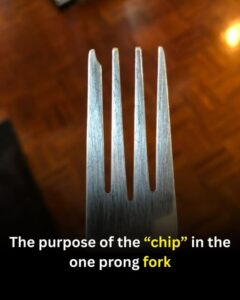
That’s why a fork with a slightly unusual prong can seem puzzling. One tine might look wider than the others, or it might appear flattened near the tip. Sometimes the edge of the prong even looks almost like a tiny blade.
Many people assume the utensil has been bent or damaged.
Others believe it might be a manufacturing mistake.
But when the same design appears across multiple forks, especially in matching sets, it becomes clear that the feature was intentional from the start.
The purpose behind it lies in making the fork more versatile.
Introducing the Cutting Fork
The fork with the slightly modified prong is often referred to as a cutting fork.
Unlike a standard fork, which is primarily used to spear and lift food, a cutting fork includes one tine that is slightly broader or flattened. This change may seem subtle, but it serves a practical purpose.
The wider prong can help gently divide softer foods without requiring a knife.
For example, imagine sitting down to a meal that includes:
-
Cooked vegetables
-
Pasta
-
Soft fish
-
Omelets
-
Tender meats
In many of these situations, the food can be separated easily with just a little pressure. A standard fork might struggle to cut through it smoothly, but a wider or slightly flattened tine can make the task easier.
The modified prong acts almost like a tiny cutting edge.
It isn’t meant to replace a knife entirely, but it adds a bit of extra functionality to the utensil.
Meanwhile, the other prongs remain narrow and pointed so the fork continues to function normally for spearing food.
Practical Convenience at the Table
The idea behind the cutting fork is simple: convenience.
Instead of reaching for a knife every time you want to separate a piece of food, the fork itself can handle small tasks.
Imagine eating a plate of roasted vegetables or a piece of tender fish. With a traditional fork, you might need to press repeatedly or switch to a knife to break the food apart.
With a cutting fork, the wider prong provides extra leverage and a slightly sharper edge that can make the job easier.
This small feature reduces the need for additional utensils during casual meals.
And in everyday dining, small conveniences like that can make a noticeable difference.
A Design That Became Popular in the 20th Century
The cutting fork became particularly popular during the mid-20th century.
During that time, households were increasingly interested in practical tools that could serve multiple purposes. Kitchen designers often focused on efficiency and convenience.
Flatware was no exception.
Manufacturers began producing utensils that combined functions whenever possible. A fork that could both spear and lightly cut food fit perfectly into that philosophy.
Many flatware sets from the 1940s through the 1970s included cutting forks as part of their standard designs.
Some sets featured the wider prong on all forks, while others used it only on specific utensils intended for certain meals.
The design became common enough that many people grew up using these forks without ever questioning their unique appearance.
Why the Modified Prong Works
At first glance, the difference between a regular prong and a cutting fork prong may appear minor. However, even a slight change in shape can alter how the utensil interacts with food.
A broader tine increases surface area, allowing more pressure to be applied when pressing down.
A flattened edge can help slice through soft textures more effectively.
Together, these changes create a fork that is better suited for separating foods like:
-
Soft vegetables
-
Pasta dishes
-
Scrambled eggs or omelets
-
Baked casseroles
-
Tender seafood
Because the modified prong still maintains a rounded tip, it remains safe and comfortable to use.
This balance between functionality and safety is an important aspect of utensil design.
Why Some People Mistake It for Damage
Despite its usefulness, the cutting fork design sometimes causes confusion.
People who encounter the utensil for the first time may assume something is wrong with it.
The wider or flattened prong can resemble a bent or chipped tine. In older forks, years of use may also add small scratches or wear marks, which can reinforce the idea that the fork has been damaged.
Without knowing the design history, it’s easy to misinterpret the feature.
In reality, the difference in shape was carefully engineered.
It’s simply a case where thoughtful design can look unusual if you’re expecting all prongs to be identical.
Vintage Flatware and the Cutting Fork
Today, cutting forks are most commonly found in vintage flatware collections.
Collectors who enjoy antique kitchen items often recognize the design immediately. In fact, the modified prong can sometimes help identify the era in which a flatware set was produced.
During the mid-1900s, many manufacturers experimented with unique utensil features. Some focused on decorative patterns, while others emphasized practicality.
The cutting fork emerged during this period as a clever way to add versatility without significantly changing the overall appearance of the utensil.
Even now, vintage sets featuring this design remain popular among collectors and enthusiasts.
Modern Versions Still Exist
Although cutting forks are often associated with older flatware, the design has not disappeared.
Some modern manufacturers continue to produce forks with slightly modified prongs. In certain cases, the change is subtle enough that most people barely notice it.
Restaurants and casual dining establishments sometimes favor utensils that can handle multiple functions. A fork that can lightly cut food may reduce the need for knives in certain situations.
This approach can simplify table settings and make dining more convenient.
While the design is less common today than it once was, it still appears in some contemporary flatware collections.
The Evolution of Everyday Utensils
The story of the cutting fork highlights something interesting about everyday objects.
Many of the tools we use regularly—forks, spoons, knives—seem simple and unchanging. But in reality, their designs have evolved over time.
Small adjustments have been introduced to improve comfort, efficiency, and usability.
For example:
-
Spoon bowls have been shaped differently across cultures.
-
Knife blades vary depending on the foods they’re designed to cut.
-
Fork tines have been modified to improve grip and balance.
The cutting fork represents one of these subtle innovations.
It’s a reminder that even ordinary objects often reflect years of experimentation and design thinking.
Dining Habits and Utensil Design
Utensils often evolve alongside changes in dining habits.
As meals become more casual or as certain types of cuisine become popular, designers adapt tools to meet those needs.
In the mid-20th century, families often served meals that included casseroles, soft vegetables, pasta dishes, and fish. These foods didn’t always require heavy cutting, but they sometimes benefited from gentle separation.
The cutting fork provided a practical solution.
Instead of switching between fork and knife repeatedly, diners could use a single utensil for most of the meal.
This efficiency appealed to households looking for simple and practical table settings.
A Subtle Innovation That Many Miss
One reason the cutting fork remains fascinating is that many people never notice it.
Because the change in shape is small, it’s easy to overlook unless you’re specifically looking for it.
And even if you do notice the unusual prong, the reason behind it isn’t immediately obvious.
That’s what makes the design so interesting.
It’s a tiny piece of innovation hidden in plain sight.
Many people have used cutting forks for years without realizing they were holding a utensil designed to do more than it appears.
Everyday Design Hiding in Plain Sight
The world is full of objects that contain thoughtful design details we rarely think about.
From kitchen gadgets to household tools, many items include features that solve small problems in clever ways.
The cutting fork is one of those examples.
It demonstrates how designers can improve everyday experiences with subtle adjustments rather than dramatic changes.
By modifying just one prong, they created a utensil capable of performing additional tasks without sacrificing its original function.
Why These Details Matter
Understanding design features like the cutting fork can change how we see everyday objects.
Instead of viewing utensils as simple tools, we begin to recognize the creativity and problem-solving behind them.
Designers often spend years refining small details that improve usability.
In many cases, these improvements are so subtle that users never notice them consciously.
But the benefits are still there.
A fork that can gently cut food saves time and effort during meals, even if we don’t realize why it works so well.
The Next Time You Pick Up a Fork
The next time you’re setting the table or eating a meal, take a moment to look at your fork.
Do all the prongs look identical?
Or is one slightly wider or flatter than the others?
If you notice that subtle difference, you may be holding a cutting fork.
What once seemed like a strange imperfection might actually be a clever piece of design history.
A Simple Example of Smart Design
In the end, the mystery of the notched or wider fork prong isn’t complicated.
It’s simply a reminder that everyday tools are often created with more thought than we realize.
A small design tweak can turn an ordinary utensil into something more versatile.
The cutting fork demonstrates how innovation doesn’t always require dramatic changes. Sometimes the smartest solutions are the ones that blend seamlessly into familiar objects.
What looks unusual at first glance may actually be a practical idea that has quietly improved dining experiences for generations.
So if you ever spot a fork with a slightly different prong, you’ll know the secret.
It’s not broken.
It’s just cleverly designed.