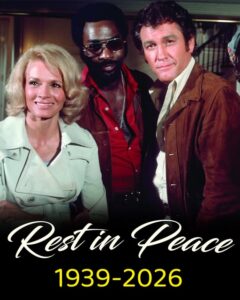
The passing of Ed Bernard marks the quiet close of a career built not on spectacle, but on steady presence and enduring craft. Best known for his roles as undercover detective Joe Styles on Police Woman and principal Jim Willis on The White Shadow, Bernard died at the age of 86. His family confirmed that he passed away on January 23 in Northridge, California.
For many viewers, he was a familiar face throughout the 1970s — a reliable figure in an era when television dramas were beginning to explore more layered characters and social themes. Yet beyond the screen, those closest to him describe a man whose life extended far beyond acting.
In a statement, his family reflected on the person they knew behind the roles:
“While the world knew him as a star, his family knew him as a devoted father, a proud grandfather and a man of deep curiosity.”
They added:
“Ed was a true ‘foodie’ who loved sushi and healthy cooking, a lifelong learner and a man of great faith.”
Born on July 4, 1939, in Philadelphia, Bernard’s path into entertainment began on stage. His early work included an off-Broadway appearance in Five on the Black Hand Side in 1969 — a foundation that would shape his transition into film and television in the years that followed.
His film debut came with Shaft, followed by appearances in Across 110th Street and The Hot Rock. While these roles helped establish his versatility, it was television that ultimately made him a consistent presence in American households.
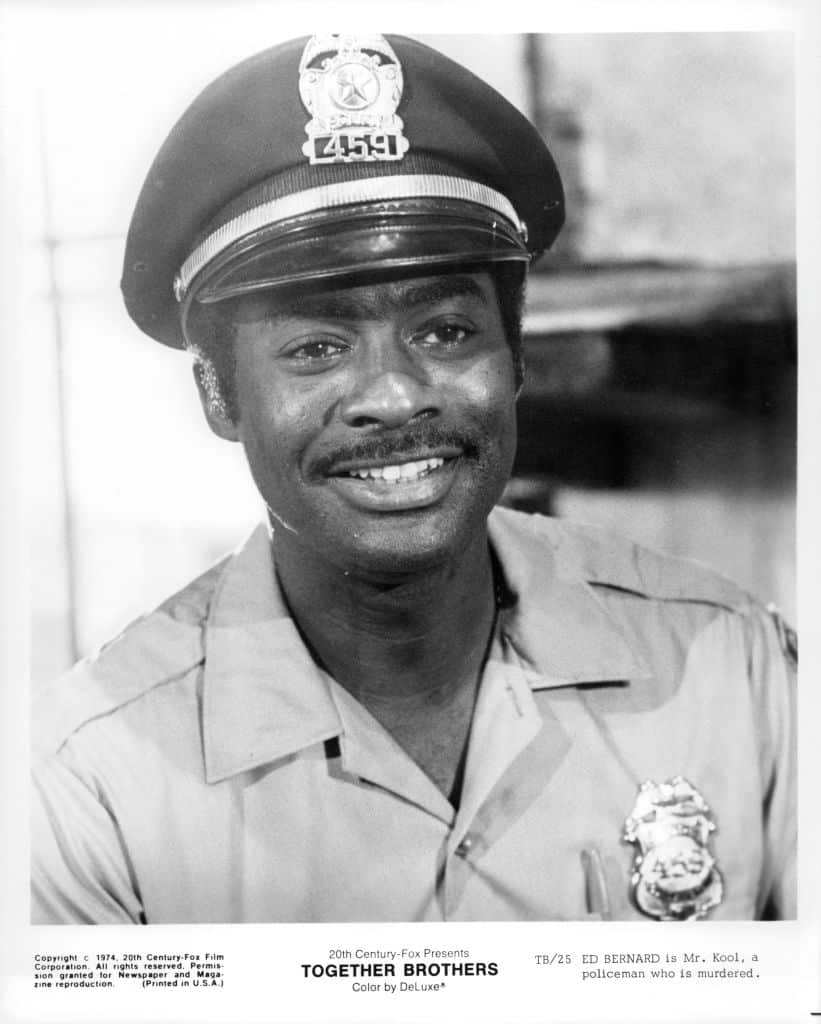
His breakthrough arrived through Police Story, particularly the 1974 episode “The Gamble,” which later evolved into the series Police Woman. When the show officially launched, Bernard stepped into the role of Det. Joe Styles, working alongside Angie Dickinson’s Sgt. “Pepper” Anderson.
From 1974 to 1978, the series ran successfully for four seasons, with Bernard appearing in 90 episodes. The show itself became notable for its groundbreaking portrayal of a female lead in law enforcement, and Bernard’s performance helped provide balance and depth within the ensemble.
Not long after, he moved into another defining role, portraying Principal Jim Willis on The White Shadow. Starring Ken Howard as a former NBA player turned high school basketball coach, the series explored social issues through sports and education. Bernard’s character brought authority and nuance to the fictional Carver High School, serving as both administrator and grounding force.
He remained with the show for its first two seasons before his character departed to take a position with the Oakland Board of Education — a transition that mirrored the thoughtful storytelling the series aimed to deliver.
In the decades that followed, Bernard continued working steadily, appearing across a wide range of television series including Kojak, Mannix, What’s Happening!!, T.J. Hooker, NYPD Blue, ER, JAG, Becker, and Cold Case. He also held a recurring role in Hardcastle and McCormick during the 1980s and appeared in the 1983 film Blue Thunder.
His final on-screen credit came in 2005, a year marked by personal loss as well — the passing of his wife of 44 years, Shirley.
In later years, his contributions were acknowledged by the Academy of Motion Picture Arts and Sciences, where his name appeared in the annual In Memoriam tribute — a quiet but meaningful recognition of a career that spanned decades.
Though he was never one to seek the spotlight beyond his roles, Bernard’s work left a lasting impression. His performances carried a sense of authenticity and restraint, qualities that often resonate longer than more overt displays of fame.
With his passing, he becomes the last of the core cast of Police Woman to go, leaving Angie Dickinson as the sole surviving main star of the series.
He is survived by his sons, Edward and Mark, and his four grandchildren — Liz, Joshua, Samantha, and Alexandra.
In many ways, Ed Bernard’s legacy reflects the kind of career that doesn’t always dominate headlines, but quietly shapes the fabric of television history.