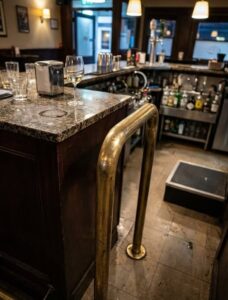
When you sit at a restaurant or bar, it’s easy to notice the shiny details that give the space character: polished countertops, ambient lighting, and sometimes, a metal bar running along the front of the bar counter. If you’ve ever paused to wonder what that metal bar is for, you’re not alone.
That sleek, shiny strip is called a service bar rail, and it plays a crucial role in both restaurant design and bartender workflow. While many patrons assume it’s purely decorative, the truth is far more functional—and knowing its purpose can enhance your appreciation of the bar experience.
In this article, we’ll explore everything you need to know about service bar rails, including their function, history, materials, and why they are essential for efficient bar operation. We’ll also touch on related design elements like foot rails and waitress stations.
What Is a Service Bar Rail?
A service bar rail is the metal bar that runs along the front edge of a bar counter. It’s most often made of brass, though other metals can be used. Its primary purpose is to serve as a physical divider between customers and bartenders, ensuring that patrons do not encroach on the work area behind the counter.
While it adds a touch of elegance and sophistication to the bar, the service bar rail is much more than a decorative accessory. It helps bartenders move freely, collect glasses, serve drinks, and complete tasks efficiently—especially during busy service hours.
The Function of a Service Bar Rail
- Separates Customers from Bartender Workspace
The main function of the service bar rail is to maintain a clear boundary between customers and bar staff. Bars can get crowded, particularly during peak hours, and bartenders need space to move quickly without bumping into patrons. The rail creates an invisible “line” that patrons subconsciously respect, minimizing disruptions. - Supports Ergonomics and Foot Placement
Most service bar rails are paired with a foot rail at the base of the bar. Foot rails allow patrons to rest their feet comfortably while sitting at the bar, reducing strain and improving posture. This dual-rail system balances functionality for both staff and customers. - Enhances Safety and Workflow
By defining a clear boundary, the service bar rail reduces the risk of spills, dropped glasses, or accidents caused by customer interference. Bartenders can focus on efficient workflow and faster service without worrying about crowding behind the counter.
Why Are Service Bar Rails Usually Brass?
Brass is the traditional material used for restaurant bar rails for several reasons:
- Aesthetic Appeal: Brass offers a shiny, elegant finish that complements a wide variety of bar decor styles. It communicates sophistication and luxury.
- Durability: Bars see heavy foot traffic and constant use. Brass is sturdy, resists corrosion, and maintains its shine over time.
- Consistency: Using brass for both the service bar rail and foot rail creates a cohesive look, enhancing overall bar design.
While other metals such as stainless steel or aluminum can be used, brass remains the classic choice, particularly in high-end bars and restaurants.
The History of Service Bar Rails
The service bar rail has a long history in bar and restaurant design. Originating in the early 20th century, these rails were initially implemented in speakeasies and taverns to provide order and structure during busy service periods.
Over time, the bar rail evolved into a standard feature of modern bar design, offering both practical functionality and visual appeal. Today, they are found in virtually every restaurant with a full-service bar.
Related Bar Design Features
Understanding the service bar rail also involves recognizing other design elements that work alongside it:
1. Foot Rails
Foot rails run along the base of the bar counter and allow patrons to rest their feet while sitting at the bar. They are usually made from the same material as the service bar rail (often brass) to maintain design cohesion. Foot rails improve comfort and encourage guests to linger longer, which can increase revenue for bars.
2. Waitress Station
The waitress station refers to the area behind the bar where servers gather drinks, utensils, and other items necessary for service. The service bar rail ensures that this area remains clear of customer traffic, allowing servers to work efficiently.
3. Bar Counter Opening
Many bar designs feature a small opening or cutout under the bar for bartenders to easily access the service area. This opening, combined with the bar rail, creates a functional yet stylish workspace that supports smooth workflow.
Benefits of Service Bar Rails
- Improved Customer Flow: Patrons are guided to stay on one side of the counter.
- Efficient Bartender Movement: Staff can navigate quickly without obstruction.
- Enhanced Safety: Reduces spills and accidents behind the counter.
- Elegant Design: Adds visual appeal and a classic touch to bar interiors.
Service Bar Rails in Different Types of Restaurants
- High-End Restaurants: Often feature ornate brass rails, combined with polished countertops and luxurious foot rails.
- Casual Bars & Pubs: May use simpler brass or stainless steel rails to maintain durability while complementing rustic or industrial decor.
- Hotel Bars: Rails are usually paired with premium seating to ensure guest comfort.
How to Identify a Service Bar Rail
Next time you visit a restaurant or bar, take note of these characteristics:
- Runs along the front edge of the bar counter.
- Usually made of brass or another polished metal.
- Serves as a boundary between patrons and bartenders.
- Often paired with a foot rail at the base.
Understanding its purpose can make you appreciate the thoughtfulness behind bar design and why bartenders are able to work so efficiently during even the busiest nights.
FAQs About Service Bar Rails
Q: Are all bar rails made of brass?
A: Not all, but brass is the most common due to its aesthetic appeal and durability. Some bars use stainless steel or aluminum depending on design preferences.
Q: Can service bar rails be found in home bars?
A: Absolutely! Many home bar designs incorporate a brass or metal rail to mimic the functionality and style of commercial bars.
Q: Do foot rails and bar rails serve the same purpose?
A: No. The service bar rail defines the bartender workspace, while the foot rail is for patron comfort. They work together to enhance both functionality and design.
Q: Is a service bar rail necessary for bar safety?
A: While not strictly necessary, it greatly improves workflow, reduces spills, and enhances safety for both patrons and staff.
Conclusion
The next time you notice a shiny metal bar along a restaurant counter, take a moment to appreciate it. The service bar rail is more than a decorative feature—it’s a carefully designed tool that improves bartender workflow, ensures safety, and elevates the restaurant bar aesthetic. Paired with foot rails and clear openings for staff, this small but important detail contributes to the seamless operation of bars everywhere.
So whether you’re a design enthusiast, a bar regular, or just curious, understanding the purpose of the service bar rail can give you a new perspective on the thoughtfulness behind restaurant interiors.