The smell was familiar. Comforting, even.
I stirred it absentmindedly, breaking it apart, watching it brown the way it always does. Everything looked normal—until it didn’t.
When I finally turned off the heat and started scooping the beef out of the pan, something caught my eye.
At first, I thought it was just a shadow.
Then I saw it.
Something pale. Curled. Out of place.
I froze.
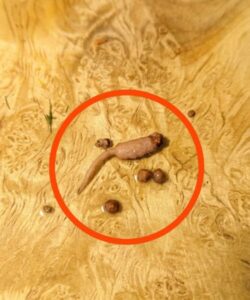
It didn’t look like meat. Not really. It was longer, thinner… almost worm-like. The kind of thing your brain instantly flags as wrong before you even have time to think.
I set the spoon down slowly, my stomach tightening.
“What is that?”
I leaned closer, trying to make sense of it without touching it. It didn’t move—but that didn’t make it better. Somehow, it made it worse. My mind started racing through every possibility I didn’t want to consider.
Was it contamination?
Something in the meat?
Something that wasn’t supposed to be there?
That initial wave hit hard—disgust, confusion, that instinctive fear that makes you question everything you were just about to eat.
I stepped back from the stove.
For a moment, I genuinely considered throwing the entire pan away.
But curiosity has a way of creeping in once the shock settles.
I grabbed a fork and carefully moved the piece onto a paper towel, isolating it. Up close, it looked… different than I first thought. Still strange, still unsettling—but not quite what my brain had jumped to.
There were no segments. No defined shape. Just a thin, stringy strip—uneven, slightly translucent.
I stared at it longer than I probably should have.
Then I did what everyone does in that moment—I started looking it up.
And slowly, the panic started to fade.
What I found was surprisingly simple.
Ground beef isn’t just muscle. It includes fat, connective tissue, bits of tendon—parts you don’t usually notice because they blend in. But when heat hits them, they don’t always behave the way you expect.
They shrink. Twist. Curl.
Sometimes into shapes that look… very wrong.
What I was staring at wasn’t something foreign.
It was part of the meat itself—most likely connective tissue that had tightened and warped as it cooked.
I looked back at the pan.
Suddenly, it didn’t feel as alarming.
Unpleasant? Sure.
But dangerous? No.
That realization didn’t magically make it appetizing again—I still pushed that piece aside and took a minute before deciding what to do next. But the fear, that sharp edge of “something is seriously wrong,” had dulled.
It was just one of those moments.
The kind that reminds you how easily your brain fills in the worst-case scenario when something looks unfamiliar.
Because at first glance, it really did look like something it wasn’t.
And if I hadn’t stopped to look closer, I probably would’ve believed that first reaction completely.
Now I check a little more carefully when I cook. Not out of fear—but out of understanding.
Sometimes things look strange for simple reasons.
And sometimes, what seems shocking at first… turns out to be completely ordinary once you know what you’re actually seeing.