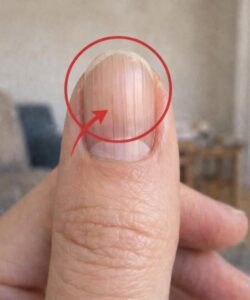
The idea that your fingernails can hint at your overall health—and even aspects of aging—has gained attention in recent years, especially through discussions linked to David Sinclair. While some interpretations can be overstated, there is a meaningful scientific basis behind observing your nails.
At the center of this discussion is not a single dramatic “sign,” but rather something more subtle: how fast your nails grow over time.
Nail growth reflects the rate at which your body produces new cells. Faster growth can indicate more active cellular regeneration, while slower growth may suggest a gradual decline in that process—something naturally associated with aging. A long-cited study from the late 1970s found that fingernail growth tends to slow slightly each year after about age 30. That doesn’t predict lifespan directly, but it does give a rough window into what’s often called biological age—how your body is functioning internally, which may differ from your actual age.
That said, treating nail growth as a “life expectancy indicator” is an oversimplification. It’s better understood as one small signal among many, rather than a reliable predictor.
Where fingernails become more clinically relevant is in visible changes. These can sometimes point to underlying conditions:
Dark vertical streaks may need evaluation to rule out serious issues like melanoma.
Pitting (small dents) can be linked to skin conditions such as psoriasis.
Yellowing may be associated with fungal infections, but in some cases also systemic conditions.
Clubbing (rounded, enlarged fingertips) can be connected to long-term issues involving the heart or lungs.
Pale or white nails may suggest anemia or liver-related concerns.
Bluish nails can indicate reduced oxygen levels in the blood.
It’s important to note that many nail changes are harmless or temporary. Everyday factors—frequent handwashing, exposure to chemicals, minor injuries, or nutritional gaps—can affect nail appearance and strength. Brittle or peeling nails, for instance, are often linked to dryness or external damage rather than serious illness.
So what should you actually do if you notice something unusual?
First, observe patterns, not isolated moments. A single change may mean little, but persistent or worsening changes deserve attention. Second, consider recent lifestyle factors—diet, stress, new products, or medications. Finally, if something stands out—especially discoloration, shape changes, or symptoms that don’t resolve—it’s reasonable to consult a healthcare professional for proper evaluation.
 100vw, 616px” data-lazy-src=”http://new24.info/wp-content/uploads/2026/04/dc23.png” /></p>
<p>The broader takeaway is simple and grounded: your nails are part of your body’s communication system. They don’t forecast your future, but they can reflect how your body is functioning right now.</p>
<p><img loading=)
Paying attention doesn’t mean worrying—it means staying informed.