In December 2025, President Donald Trump addressed the nation from the White House, delivering a wide‑ranging speech that combined economic commentary.
Political critique, and a Christmas‑season announcement many Americans found surprising.
At the center of the president’s remarks was a new benefit for members of the United States military — a one‑time $1,776 payment called the “Warrior Dividend.”
This article walks through what the president announced, who is eligible, how the payments are funded, and how this plan fits into broader economic discussions under the Trump administration.
The Announcement: White House Address
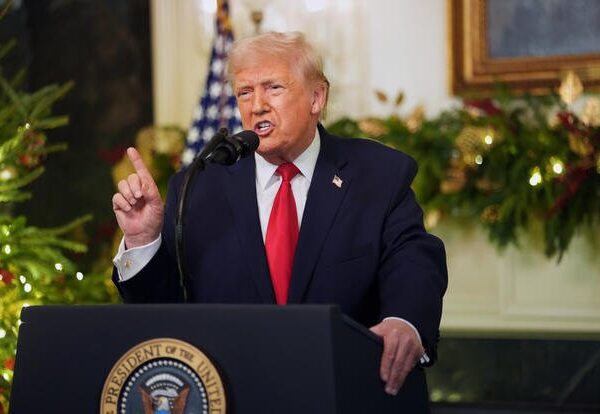
On the evening of December 17, 2025, President Trump spoke in a televised address from the White House to the American public.

Among his comments were strong critiques of former President Joe Biden on issues like inflation, pharmaceutical costs, immigration, and wage stagnation — messaging that aligned with Trump’s broader economic narrative.
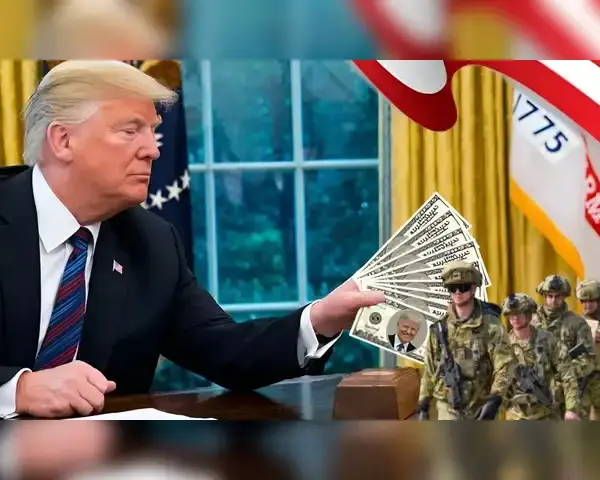
As part of that address, Trump unveiled what he called the “Warrior Dividend,” a one‑time cash bonus of $1,776 for U.S. military service members to be distributed before Christmas.
He framed the benefit both as a thank‑you to the armed forces and as a symbolic gesture tied to the nation’s founding year, 1776.
Trump said: “Tonight, I am proud to announce that 1,450,000 military service members will receive a special, we call it the ‘Warrior Dividend’ before Christmas … $1,776 to honor the founding of our nation and the selfless service of our troops.
The checks are already on the way.”
What the Warrior Dividend Is
The Warrior Dividend is a one‑time, tax‑free payment of $1,776 for eligible U.S. service members.
It is not a recurring bonus or part of normal pay, but a supplemental payment that will be sent separate from usual military wages.
The amount — $1,776 — is intended to reflect the year of the Declaration of Independence and the founding of the United States, an element Trump highlighted in his address.
Who Qualifies for the Payment
According to Pentagon and White House statements:
The Warrior Dividend will be paid to active‑duty service members and reservists on active duty for at least 31 consecutive days as of November 30, 2025.
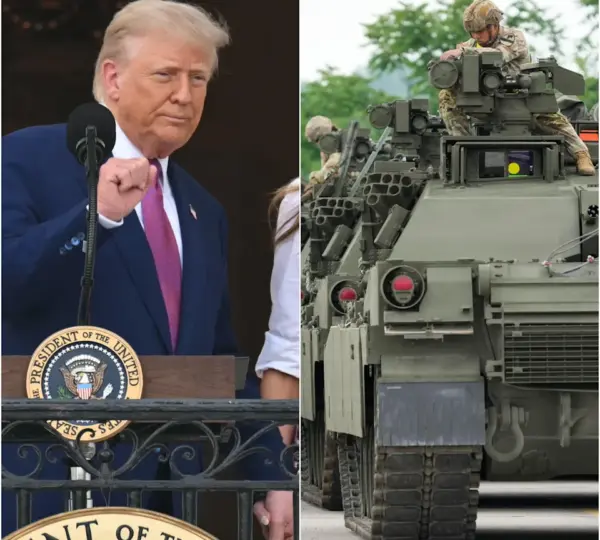
Eligible ranks include enlisted personnel at grade E‑1 through officer grade O‑6 — meaning most nonsenior leadership in the Army, Navy, Air Force, Marine Corps, Space Force, and Coast Guard.
Approximately 1.45 million service members are expected to receive the payment, including about 1.28 million active‑duty members and 174,000 reservists.
Because the payments are classified as supplements to the regular pay cycle and are distributed outside typical payroll timing, military members should see the bonus hit accounts by around December 20, 2025.
How the Warrior Dividend Is Funded
One of the most significant points of discussion about this initiative is how the payments are being financed — and how that compares with what the president implied in his speech.
What Trump Claimed
In his December address, Trump credited increased tariff revenues collected under his administration as part of the source of the funding for the dividend.
He noted that tariffs brought in “a lot more money than anybody thought” and said that this made it possible to “send every soldier $1,776,” adding that “nobody deserves it more than our military.”
What the Pentagon and Budget Documents Show
According to multiple reporting sources, including Federal News Network and the Associated Press:
The Warrior Dividend payments are being financed using funds already appropriated by Congress to the Department of Defense.
Specifically, $2.9 billion was allocated earlier in 2025 to supplement the Basic Allowance for Housing (BAH) — a line item intended to cover the housing costs of service members.
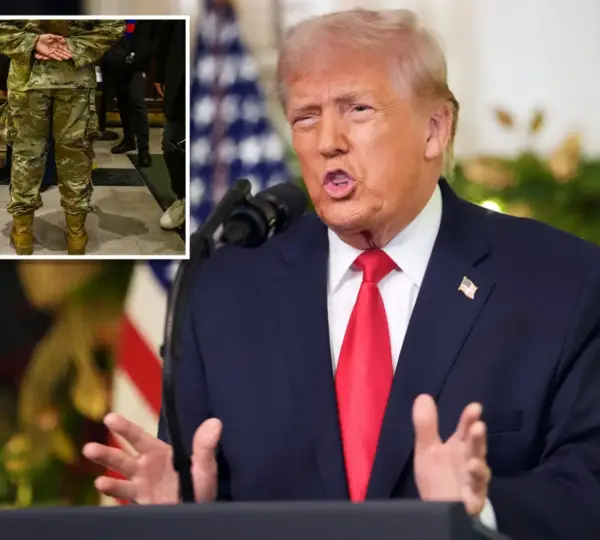
This was part of broader defense appropriations included in the One Big Beautiful Bill Act passed midsummer.
A senior Pentagon official told reporters that $2.6 billion of that housing supplement will be used for Warrior Dividend payments, leaving some funds for future basic housing needs.
These officials framed the payments as a one‑time housing supplement rather than a tariff‑funded dividend, and noted that the Department of Defense views this as part of efforts to improve troops’ quality of life by consolidating housing support and cash bonuses.
Analysts note that, while Trump cited tariff revenue, tariff collections alone do not provide enough revenue to cover large cash payouts on a broad scale without congressional approval — meaning the housing funds represent the legally approved source for this particular program.
Tax and Timing Details
According to the White House and Pentagon communications:
The $1,776 payments are expected to be tax‑free, similar to other supplemental military allowances, benefiting recipients directly.
Payments are scheduled to be distributed by around December 20, 2025, ensuring service members receive the bonus before the Christmas holiday.
Eligible recipients include both active duty and qualifying reservists under the criteria listed above.
Broader Context: Tariff Dividend Proposals
The Warrior Dividend is not the only cash incentive President Trump has discussed during his current term.
Earlier in 2025, Trump floated the idea of using tariff revenue collected under his administration to send $2,000 “tariff dividend” checks to most Americans as a form of economic stimulus.
Treasury Secretary Scott Bessent also commented in media appearances that proposed tariff dividend checks could be directed to working families, but stressed that further legislative action by Congress would be required to implement a universal program.
However, as of late December 2025, no broad tariff dividend payment has been finalized or approved, and the Warrior Dividend remains limited to military service members.
Political Reaction and Commentary
The Warrior Dividend announcement drew reactions from across the political spectrum:
Supporters of the move emphasize that military service is demanding and that providing a holiday bonus recognizes dedication and sacrifice.
They view the timing during the holiday season as both practical and symbolic.
Critics note that repurposing housing funds could affect other aspects of support for service members, warning that reallocating Congressional appropriations for supplemental bonuses may have unintended consequences.
Legislative leaders from both parties highlighted the need for clarity on long‑term funding and the legality of redirecting existing appropriations.
Some Democratic lawmakers argue that more comprehensive defense budgeting discussions should prioritize permanent improvements over one‑time payments.
This broader fiscal debate reflects how cash payments and benefits are entangled with broader questions about defense spending priorities, budget authority, and how Congress sets funding levels for military support.
What It Means for Service Members
For many military families, supplemental payments like the Warrior Dividend represent welcome financial support amid ongoing cost‑of‑living pressures, including inflation and housing costs that have affected military families in recent years.
While $1,776 may not address all financial challenges service members face, the bonus provides a meaningful one‑time boost ahead of holiday expenses.
It also signals administration attention to the needs of the armed forces, which may matter for morale and recruitment in an era of evolving national security priorities.
What the Announcement Does Not Include
It’s important to clarify what the Warrior Dividend does not represent:
It is not a universal cash payment for all Americans.
It is not a recurring benefit or ongoing annual stipend.
It does not create a new entitlement program for veterans or retired service members.
It does not apply to financial groups outside the specified active‑duty and qualifying reserve service members.
Understanding these limits helps separate the actual policy from more speculative interpretations circulating online.
Conclusion: A Holiday Bonus With Specific Reach
President Donald Trump’s announcement of the $1,776 Warrior Dividend in December 2025 was a targeted benefit focused on U.S. military service members, delivered through a widely viewed address to the nation.
It reflects a mixture of patriotic symbolism, political messaging, and practical financial support for members of the armed forces during the holiday season.
While the president credited tariff revenue as a funding source in spirit, the actual financing for the dividend comes from existing appropriations for military housing allowances authorized by Congress earlier in the year.
The announcement does not currently extend similar cash payouts to the general public, and broader tariff dividend proposals remain dependent on future legislative action.
For service members — active duty and qualifying reservists — the Warrior Dividend represents a one‑time acknowledgment of their service, delivered just before Christmas and rooted in both political symbolism and concrete financial support.
In December 2025, President Donald Trump addressed the nation from the White House, delivering a wide‑ranging speech that combined economic commentary.
Political critique, and a Christmas‑season announcement many Americans found surprising.
At the center of the president’s remarks was a new benefit for members of the United States military — a one‑time $1,776 payment called the “Warrior Dividend.”
This article walks through what the president announced, who is eligible, how the payments are funded, and how this plan fits into broader economic discussions under the Trump administration.
The Announcement: White House Address
On the evening of December 17, 2025, President Trump spoke in a televised address from the White House to the American public.
Among his comments were strong critiques of former President Joe Biden on issues like inflation, pharmaceutical costs, immigration, and wage stagnation — messaging that aligned with Trump’s broader economic narrative.
As part of that address, Trump unveiled what he called the “Warrior Dividend,” a one‑time cash bonus of $1,776 for U.S. military service members to be distributed before Christmas.
He framed the benefit both as a thank‑you to the armed forces and as a symbolic gesture tied to the nation’s founding year, 1776.
Trump said: “Tonight, I am proud to announce that 1,450,000 military service members will receive a special, we call it the ‘Warrior Dividend’ before Christmas … $1,776 to honor the founding of our nation and the selfless service of our troops.
The checks are already on the way.”
What the Warrior Dividend Is
The Warrior Dividend is a one‑time, tax‑free payment of $1,776 for eligible U.S. service members.
It is not a recurring bonus or part of normal pay, but a supplemental payment that will be sent separate from usual military wages.
The amount — $1,776 — is intended to reflect the year of the Declaration of Independence and the founding of the United States, an element Trump highlighted in his address.
Who Qualifies for the Payment
According to Pentagon and White House statements:
The Warrior Dividend will be paid to active‑duty service members and reservists on active duty for at least 31 consecutive days as of November 30, 2025.
Eligible ranks include enlisted personnel at grade E‑1 through officer grade O‑6 — meaning most nonsenior leadership in the Army, Navy, Air Force, Marine Corps, Space Force, and Coast Guard.
Approximately 1.45 million service members are expected to receive the payment, including about 1.28 million active‑duty members and 174,000 reservists.
Because the payments are classified as supplements to the regular pay cycle and are distributed outside typical payroll timing, military members should see the bonus hit accounts by around December 20, 2025.
How the Warrior Dividend Is Funded
One of the most significant points of discussion about this initiative is how the payments are being financed — and how that compares with what the president implied in his speech.
What Trump Claimed
In his December address, Trump credited increased tariff revenues collected under his administration as part of the source of the funding for the dividend.
He noted that tariffs brought in “a lot more money than anybody thought” and said that this made it possible to “send every soldier $1,776,” adding that “nobody deserves it more than our military.”
What the Pentagon and Budget Documents Show
According to multiple reporting sources, including Federal News Network and the Associated Press:
The Warrior Dividend payments are being financed using funds already appropriated by Congress to the Department of Defense.
Specifically, $2.9 billion was allocated earlier in 2025 to supplement the Basic Allowance for Housing (BAH) — a line item intended to cover the housing costs of service members.
This was part of broader defense appropriations included in the One Big Beautiful Bill Act passed midsummer.
A senior Pentagon official told reporters that $2.6 billion of that housing supplement will be used for Warrior Dividend payments, leaving some funds for future basic housing needs.
These officials framed the payments as a one‑time housing supplement rather than a tariff‑funded dividend, and noted that the Department of Defense views this as part of efforts to improve troops’ quality of life by consolidating housing support and cash bonuses.
Analysts note that, while Trump cited tariff revenue, tariff collections alone do not provide enough revenue to cover large cash payouts on a broad scale without congressional approval — meaning the housing funds represent the legally approved source for this particular program.
Tax and Timing Details
According to the White House and Pentagon communications:
The $1,776 payments are expected to be tax‑free, similar to other supplemental military allowances, benefiting recipients directly.
Payments are scheduled to be distributed by around December 20, 2025, ensuring service members receive the bonus before the Christmas holiday.
Eligible recipients include both active duty and qualifying reservists under the criteria listed above.
Broader Context: Tariff Dividend Proposals
The Warrior Dividend is not the only cash incentive President Trump has discussed during his current term.
Earlier in 2025, Trump floated the idea of using tariff revenue collected under his administration to send $2,000 “tariff dividend” checks to most Americans as a form of economic stimulus.
Treasury Secretary Scott Bessent also commented in media appearances that proposed tariff dividend checks could be directed to working families, but stressed that further legislative action by Congress would be required to implement a universal program.
However, as of late December 2025, no broad tariff dividend payment has been finalized or approved, and the Warrior Dividend remains limited to military service members.
Political Reaction and Commentary
The Warrior Dividend announcement drew reactions from across the political spectrum:
Supporters of the move emphasize that military service is demanding and that providing a holiday bonus recognizes dedication and sacrifice.
They view the timing during the holiday season as both practical and symbolic.
Critics note that repurposing housing funds could affect other aspects of support for service members, warning that reallocating Congressional appropriations for supplemental bonuses may have unintended consequences.
Legislative leaders from both parties highlighted the need for clarity on long‑term funding and the legality of redirecting existing appropriations.
Some Democratic lawmakers argue that more comprehensive defense budgeting discussions should prioritize permanent improvements over one‑time payments.
This broader fiscal debate reflects how cash payments and benefits are entangled with broader questions about defense spending priorities, budget authority, and how Congress sets funding levels for military support.
What It Means for Service Members
For many military families, supplemental payments like the Warrior Dividend represent welcome financial support amid ongoing cost‑of‑living pressures, including inflation and housing costs that have affected military families in recent years.
While $1,776 may not address all financial challenges service members face, the bonus provides a meaningful one‑time boost ahead of holiday expenses.
It also signals administration attention to the needs of the armed forces, which may matter for morale and recruitment in an era of evolving national security priorities.
What the Announcement Does Not Include
It’s important to clarify what the Warrior Dividend does not represent:
It is not a universal cash payment for all Americans.
It is not a recurring benefit or ongoing annual stipend.
It does not create a new entitlement program for veterans or retired service members.
It does not apply to financial groups outside the specified active‑duty and qualifying reserve service members.
Understanding these limits helps separate the actual policy from more speculative interpretations circulating online.
Conclusion: A Holiday Bonus With Specific Reach
President Donald Trump’s announcement of the $1,776 Warrior Dividend in December 2025 was a targeted benefit focused on U.S. military service members, delivered through a widely viewed address to the nation.
It reflects a mixture of patriotic symbolism, political messaging, and practical financial support for members of the armed forces during the holiday season.
While the president credited tariff revenue as a funding source in spirit, the actual financing for the dividend comes from existing appropriations for military housing allowances authorized by Congress earlier in the year.
The announcement does not currently extend similar cash payouts to the general public, and broader tariff dividend proposals remain dependent on future legislative action.
For service members — active duty and qualifying reservists — the Warrior Dividend represents a one‑time acknowledgment of their service, delivered just before Christmas and rooted in both political symbolism and concrete financial support.