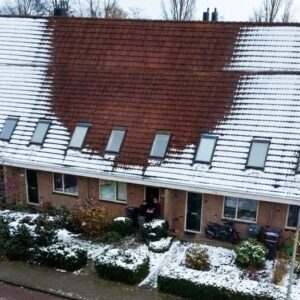
After a heavy snowfall settled over a quiet residential neighborhood, everything appeared exactly as expected. Cars, sidewalks, trees, and rooftops were slowly covered by a smooth white blanket, creating a peaceful winter scene. Yet one detail stood out clearly: a single house whose roof remained entirely free of snow. While every surrounding home collected layer after layer, this rooftop stayed bare, as if untouched by the storm. At first, neighbors assumed it was a coincidence—perhaps a difference in roof angle or sunlight exposure—but as the snow continued to fall and melt instantly on that one house, curiosity quickly grew.
As days passed and the pattern repeated itself, conversations among residents shifted from casual observation to genuine concern. During winter, a snow-free roof can sometimes indicate that excessive heat is escaping from inside a building. This raised questions about insulation quality, heating system issues, or possible safety risks. In colder climates, unusual heat patterns are often taken seriously, as they can point to electrical overloads or structural concerns. Wanting to ensure the well-being of both the homeowner and the surrounding properties, several neighbors decided it was best to alert local authorities so the situation could be examined properly.
When officials inspected the property, they discovered that the home contained an unlicensed indoor cultivation setup. High-powered lighting and ventilation equipment inside the house produced significant heat, which traveled upward and prevented snow from settling on the roof. While such equipment is commonly used in legal, regulated environments, it requires proper permits and safety measures. Without authorization, the operation posed potential risks, including excessive energy use and fire hazards. Authorities noted that winter conditions often make these situations more visible, as snow coverage—or the lack of it—can highlight hidden heat sources.
The incident serves as a reminder that small environmental details can sometimes reveal larger underlying issues. While laws regarding certain activities vary widely by region, unlicensed or unsafe operations remain a concern for communities and regulators alike. Observant neighbors played a key role in bringing attention to a potential safety issue before it escalated. More broadly, the situation highlights how everyday observations—such as noticing differences in snow accumulation—can help communities stay informed, proactive, and safe. Paying attention to subtle changes in our surroundings can contribute to neighborhood awareness and ensure that homes remain compliant with local standards, protecting everyone involved.