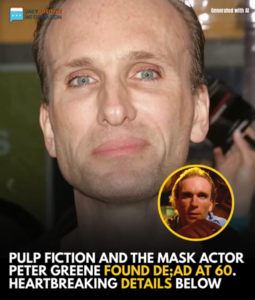
Peter Greene: A Life of Shadows, Light, and Cinematic Impact
The Lower East Side of Manhattan has always possessed a unique rhythm—a mixture of grit, history, and the relentless, cinematic pulse of the city.
This neighborhood has been home to countless artists, actors, and dreamers, but few fit into its landscape quite like Peter Greene.
For Greene, the Lower East Side was not merely an address; it was an anchor, a grounding force amid the turbulence of Hollywood and personal life.
On a gray December afternoon, that rhythm faltered. Peter Greene, the actor whose angular features and piercing gaze defined a generation of American cinema, passed away at the age of 60.

The news, confirmed by his longtime agent and confidant Gregg Edwards, sent shockwaves through both the film community and the streets of New York.
For audiences worldwide, Greene was the archetypal screen villain—the man you couldn’t take your eyes off, even when he terrified you.
Yet behind the camera, he was Peter: a gentle soul, compassionate and fiercely loyal, whose kindness contrasted sharply with the darkness of his on-screen characters.
The Quiet Exit in the City That Never Sleeps
Greene’s passing was discovered at approximately 3:25 p.m. on December 12 in his Lower East Side apartment. Emergency services arrived promptly, and Edwards was tasked with confirming the news to the public.
“He was sadly confirmed dead at the scene,” Edwards stated, the weight of his words reflecting the magnitude of the loss.
Law enforcement sources indicated that there was no foul play, no intrusion—merely the quiet conclusion to a vibrant and tumultuous life.
The New York City Medical Examiner’s office will conduct a standard investigation to determine the official cause of death, but the immediate focus remains on the absence left by Greene’s passing.

A Heart of Gold Behind the Screen Villain
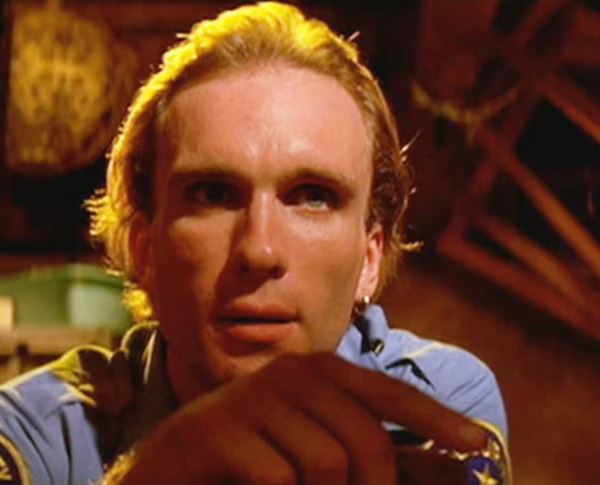
To think of Peter Greene is to think of shadows, tension, and menace. From Dorian Tyrell in The Mask to Zed in Pulp Fiction, he inhabited characters that radiated danger.
Yet, those who knew him personally emphasize a starkly different reality: Greene possessed a heart as large as it was genuine. Edwards recalled, “He was a terrific guy, truly one of the great actors of our generation.
His heart was as big as there was. I’m going to miss him. He was a great friend.” Greene’s duality—his ability to play fearsome villains while maintaining personal warmth—epitomized the paradox of the best character actors.
Defining the Nineties: The Rise of Dorian Tyrell
The early 1990s marked a transformative era in Hollywood. Independent grit was merging with blockbuster spectacle, and Greene emerged at this intersection.
In 1994, he starred in The Mask alongside Jim Carrey. While Carrey’s character exuded chaotic energy and comedy, Greene’s Dorian Tyrell offered the perfect counterbalance: slick, reptilian, and menacingly ambitious.
His portrayal elevated the stakes, proving that a character actor could hold his own against a star of Carrey’s caliber.
The role remains one of Greene’s most celebrated performances, demonstrating his uncanny ability to blend charisma with intimidation.

The Zed Controversy and the Genius of Pulp Fiction
The same year, Greene took on the role of Zed in Quentin Tarantino’s Pulp Fiction. Though brief in screen time, Zed’s character left an indelible mark on pop culture, particularly in the infamous basement scene.
Initially hesitant to accept the role due to its graphic and unsettling content, Greene was convinced by Tarantino to proceed, resulting in a portrayal that relied more on psychological terror than gratuitous violence.
The line “Zed’s dead, baby” became a cultural touchstone, illustrating Greene’s ability to leave a lasting impression through both presence and performance.
A Career Built on Complexity and Grit
Greene’s filmography is a testament to his range and dedication.
From The Usual Suspects to Judgment Night, The Rich Man’s Wife, and The Bounty Hunter, he consistently embodied characters who were morally complex, often menacing yet deeply human.
Critics frequently noted his “presence”—an ineffable quality that commanded attention. Greene’s performances were never one-dimensional; his villains were nuanced, reflecting desperation, ambition, and the human condition.
Even in smaller roles, he made a profound impact, ensuring that audiences remembered him long after the credits rolled.
The Tragedy of the Final Curtain Call
Perhaps the most poignant aspect of Greene’s death is the work left unfinished. He had recently signed on for an independent thriller titled Mascots, set to co-star alongside Mickey Rourke.
Production was scheduled for January, and Greene’s absence casts a shadow over the project. Edwards described the call to inform director Kerry Mondragón as devastating, with Mondragón breaking down upon hearing the news.
The film will likely proceed, but Greene’s presence, energy, and unique interpretation of the character will be irreplaceable.
Personal Struggles and Triumphs
Behind the public persona, Greene faced personal struggles with resilience and quiet courage. Reports indicate that he battled various demons, including issues with addiction and mental health.
Yet, those who knew him emphasize his perseverance and capacity for kindness. His life serves as a reminder that the humanity behind the persona often carries as much weight as the art itself.
Greene’s ability to channel his personal struggles into compelling performances is a testament to his skill and dedication to his craft.
Legacy and Cultural Impact
Greene’s influence on film and popular culture is enduring. He helped redefine the cinematic villain in the 1990s, showing that antagonists could be charismatic, psychologically complex, and utterly captivating.
His characters—particularly Dorian Tyrell and Zed—remain iconic, studied by actors, filmmakers, and scholars alike.
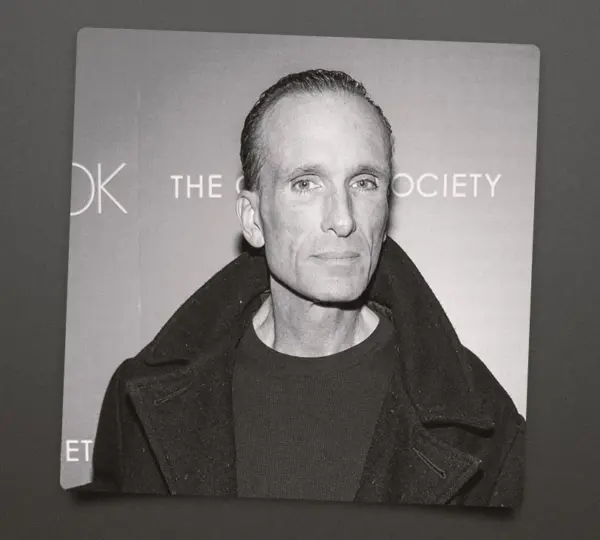
Social media has become a platform for collective mourning, with fans sharing clips, quotes, and memories that celebrate Greene’s indelible mark on cinema.
The Tribute of a Community
The response from both the film industry and the public underscores the impact of Greene’s career. Tributes have poured in, with fans recalling his scene-stealing charisma and critics highlighting his transformative performances.
Edwards emphasizes that Greene’s contributions were not limited to the screen; he was a mentor, friend, and source of inspiration for many emerging actors.
His life reminds us that the people behind the characters often carry a wealth of unseen depth, resilience, and kindness.
Conclusion: Shadows and Light
As the sun sets over the Lower East Side, Peter Greene leaves behind a cinematic legacy that will endure. He gave life to villains that were compelling, memorable, and frightening, yet off-screen, he embodied empathy, warmth, and generosity.
His performances continue to influence the portrayal of antagonists in modern cinema, and his story exemplifies the duality of human existence—the coexistence of shadows and light.

Peter Greene’s life and work offer lessons in resilience, artistry, and the enduring power of presence. From Dorian Tyrell to Zed and beyond, he transformed each role into an unforgettable experience.
His death at 60 is a profound loss, but his legacy endures through the films, performances, and memories he leaves behind.
For fans, filmmakers, and fellow actors, Peter Greene will forever represent the perfect balance of menace and humanity—a cinematic villain whose heart was truly golden.
Peter Greene: A Life of Shadows, Light, and Cinematic Impact
The Lower East Side of Manhattan has always possessed a unique rhythm—a mixture of grit, history, and the relentless, cinematic pulse of the city.
This neighborhood has been home to countless artists, actors, and dreamers, but few fit into its landscape quite like Peter Greene.
For Greene, the Lower East Side was not merely an address; it was an anchor, a grounding force amid the turbulence of Hollywood and personal life.
On a gray December afternoon, that rhythm faltered. Peter Greene, the actor whose angular features and piercing gaze defined a generation of American cinema, passed away at the age of 60.
The news, confirmed by his longtime agent and confidant Gregg Edwards, sent shockwaves through both the film community and the streets of New York.
For audiences worldwide, Greene was the archetypal screen villain—the man you couldn’t take your eyes off, even when he terrified you.
Yet behind the camera, he was Peter: a gentle soul, compassionate and fiercely loyal, whose kindness contrasted sharply with the darkness of his on-screen characters.
The Quiet Exit in the City That Never Sleeps
Greene’s passing was discovered at approximately 3:25 p.m. on December 12 in his Lower East Side apartment. Emergency services arrived promptly, and Edwards was tasked with confirming the news to the public.
“He was sadly confirmed dead at the scene,” Edwards stated, the weight of his words reflecting the magnitude of the loss.
Law enforcement sources indicated that there was no foul play, no intrusion—merely the quiet conclusion to a vibrant and tumultuous life.
The New York City Medical Examiner’s office will conduct a standard investigation to determine the official cause of death, but the immediate focus remains on the absence left by Greene’s passing.
A Heart of Gold Behind the Screen Villain
To think of Peter Greene is to think of shadows, tension, and menace. From Dorian Tyrell in The Mask to Zed in Pulp Fiction, he inhabited characters that radiated danger.
Yet, those who knew him personally emphasize a starkly different reality: Greene possessed a heart as large as it was genuine. Edwards recalled, “He was a terrific guy, truly one of the great actors of our generation.
His heart was as big as there was. I’m going to miss him. He was a great friend.” Greene’s duality—his ability to play fearsome villains while maintaining personal warmth—epitomized the paradox of the best character actors.
Defining the Nineties: The Rise of Dorian Tyrell
The early 1990s marked a transformative era in Hollywood. Independent grit was merging with blockbuster spectacle, and Greene emerged at this intersection.
In 1994, he starred in The Mask alongside Jim Carrey. While Carrey’s character exuded chaotic energy and comedy, Greene’s Dorian Tyrell offered the perfect counterbalance: slick, reptilian, and menacingly ambitious.
His portrayal elevated the stakes, proving that a character actor could hold his own against a star of Carrey’s caliber.
The role remains one of Greene’s most celebrated performances, demonstrating his uncanny ability to blend charisma with intimidation.
The Zed Controversy and the Genius of Pulp Fiction
The same year, Greene took on the role of Zed in Quentin Tarantino’s Pulp Fiction. Though brief in screen time, Zed’s character left an indelible mark on pop culture, particularly in the infamous basement scene.
Initially hesitant to accept the role due to its graphic and unsettling content, Greene was convinced by Tarantino to proceed, resulting in a portrayal that relied more on psychological terror than gratuitous violence.
The line “Zed’s dead, baby” became a cultural touchstone, illustrating Greene’s ability to leave a lasting impression through both presence and performance.
A Career Built on Complexity and Grit
Greene’s filmography is a testament to his range and dedication.
From The Usual Suspects to Judgment Night, The Rich Man’s Wife, and The Bounty Hunter, he consistently embodied characters who were morally complex, often menacing yet deeply human.
Critics frequently noted his “presence”—an ineffable quality that commanded attention. Greene’s performances were never one-dimensional; his villains were nuanced, reflecting desperation, ambition, and the human condition.
Even in smaller roles, he made a profound impact, ensuring that audiences remembered him long after the credits rolled.
The Tragedy of the Final Curtain Call
Perhaps the most poignant aspect of Greene’s death is the work left unfinished. He had recently signed on for an independent thriller titled Mascots, set to co-star alongside Mickey Rourke.
Production was scheduled for January, and Greene’s absence casts a shadow over the project. Edwards described the call to inform director Kerry Mondragón as devastating, with Mondragón breaking down upon hearing the news.
The film will likely proceed, but Greene’s presence, energy, and unique interpretation of the character will be irreplaceable.
Personal Struggles and Triumphs
Behind the public persona, Greene faced personal struggles with resilience and quiet courage. Reports indicate that he battled various demons, including issues with addiction and mental health.
Yet, those who knew him emphasize his perseverance and capacity for kindness. His life serves as a reminder that the humanity behind the persona often carries as much weight as the art itself.
Greene’s ability to channel his personal struggles into compelling performances is a testament to his skill and dedication to his craft.
Legacy and Cultural Impact
Greene’s influence on film and popular culture is enduring. He helped redefine the cinematic villain in the 1990s, showing that antagonists could be charismatic, psychologically complex, and utterly captivating.
His characters—particularly Dorian Tyrell and Zed—remain iconic, studied by actors, filmmakers, and scholars alike.
Social media has become a platform for collective mourning, with fans sharing clips, quotes, and memories that celebrate Greene’s indelible mark on cinema.
The Tribute of a Community
The response from both the film industry and the public underscores the impact of Greene’s career. Tributes have poured in, with fans recalling his scene-stealing charisma and critics highlighting his transformative performances.
Edwards emphasizes that Greene’s contributions were not limited to the screen; he was a mentor, friend, and source of inspiration for many emerging actors.
His life reminds us that the people behind the characters often carry a wealth of unseen depth, resilience, and kindness.
Conclusion: Shadows and Light
As the sun sets over the Lower East Side, Peter Greene leaves behind a cinematic legacy that will endure. He gave life to villains that were compelling, memorable, and frightening, yet off-screen, he embodied empathy, warmth, and generosity.
His performances continue to influence the portrayal of antagonists in modern cinema, and his story exemplifies the duality of human existence—the coexistence of shadows and light.
Peter Greene’s life and work offer lessons in resilience, artistry, and the enduring power of presence. From Dorian Tyrell to Zed and beyond, he transformed each role into an unforgettable experience.
His death at 60 is a profound loss, but his legacy endures through the films, performances, and memories he leaves behind.
For fans, filmmakers, and fellow actors, Peter Greene will forever represent the perfect balance of menace and humanity—a cinematic villain whose heart was truly golden.