A Familiar Sight on Country Roads
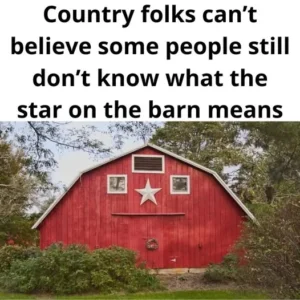
If you’ve ever driven through the quiet countryside—especially across Pennsylvania, Maryland, or the rural Midwest—you’ve likely noticed them. Large, five-pointed stars mounted proudly above barn doors, painted on wooden gables, or fixed to the sides of old farmhouses.
Some are rusty metal, others hand-painted wood. They fade in the sun and weather with time, yet they still seem to watch over the land with quiet purpose.
Most people call them barn stars, though they go by many names: Amish stars, hex signs, or barn quilts—depending on where you are. For generations, these stars have sparked curiosity. Are they just a bit of old-fashioned décor? Or do they carry a deeper meaning passed down through the years?
The answer, like much of American folk tradition, is both simple and profound.
Where Barn Stars Began
The story of barn stars reaches back to the 18th and 19th centuries, when German immigrants—later known as the Pennsylvania Dutch—settled across the rolling farmlands of eastern Pennsylvania. These farmers brought with them a blend of faith, superstition, and artistry that shaped their rural way of life.
For them, the stars weren’t mere decoration. They were symbols of luck, protection, and blessing. A painted star on the side of a barn was a way to invite good fortune, ward off evil, and honor the divine power believed to watch over their homes and animals.
Over time, the stars became so common that they evolved into a quiet language of their own—a kind of rural heraldry, telling passersby who lived there and what values they cherished.
The Power of Color
Each barn star was crafted with care, and its color carried specific meaning.
- Red symbolized energy, passion, and good luck.
- Blue represented peace, calm, and balance—a home at harmony with itself.
- Green signified growth, fertility, and renewal of the land.
- Black served as a guardian’s color, a visual shield against harm or misfortune.
- White stood for purity, hope, and a connection to the spiritual world.
Farmers believed these shades infused the property with the very qualities they symbolized. Just as prayer or hard work could nurture crops, the right star could help protect what the family had built.
More Than a Star: The Hex Sign Tradition
Not all stars were simple. Some took the form of hex signs, elaborate circular paintings filled with geometric designs, doves, hearts, tulips, or intertwining patterns. Though often mistaken for witchcraft, these hex signs weren’t “spells” in the dark sense—they were folk blessings, visual prayers for prosperity and protection.
In a community that blended faith and practicality, beauty and meaning intertwined naturally. The designs reflected not only religious belief but also artistry, craftsmanship, and the desire to create something enduring.
Family Pride and Identity
Beyond superstition, barn stars became a symbol of family identity. Each one marked a home as unique—like a signature carved in wood. A star could represent how long a family had owned the land, the skill of the builder, or even the character of the household.
When a passerby saw a red star above a weathered barn door, they might think: “That’s the Miller farm.” It wasn’t just art—it was heritage.
Generations later, these stars came to embody something even deeper: a testament to perseverance and pride in honest work.
From Rural Fields to Front Porches
Today, you’ll find barn stars far from the farmlands where they began. They decorate suburban porches, modern living rooms, and backyard patios.
For many homeowners, they serve as a nod to America’s rural past—a rustic charm that connects the present to simpler times. Others hang them simply because they bring warmth and balance to a space.
Even stripped of their original superstition, barn stars still radiate a sense of comfort and meaning. They remind us of endurance, hope, and the quiet dignity of generations who built their lives with their hands.
A Star With a Story
The next time you pass an old barn and see that familiar star catching the afternoon light, pause for a moment. Behind that piece of painted metal or carved wood lies centuries of belief, labor, and family history.
What began as a farmer’s symbol of protection has become a lasting emblem of American life—bridging faith, art, and resilience.
In its simplest form, a barn star says one timeless thing:
“We worked this land. We built this home. We were here.”