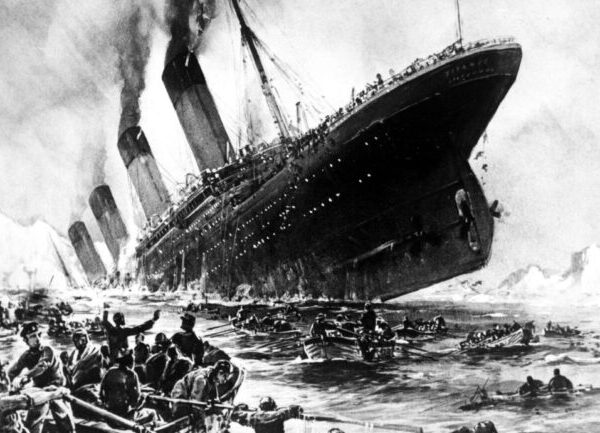
The sinking of the RMS Titanic on April 15, 1912, remains one of the most haunting and influential tragedies in modern history.
More than 1,500 passengers and crew died in the freezing waters of the North Atlantic after the “unsinkable” ship struck an iceberg during its maiden voyage from Southampton to New York.
The disaster reshaped maritime safety regulations forever, but it also left behind a heartbreaking mystery that continues to intrigue experts and the public more than 112 years later: If over 1,500 people died, why were so few bodies ever recovered — and why are none found at the wreck site today?
For decades, this question provoked speculation and theories. But thanks to oceanography, forensic science, and deep-sea missions, we now have clear, scientifically supported answers.
And they are even more tragic and compelling than one might expect.
The Discovery of the Titanic: A Breakthrough 73 Years in the Making
For decades, the Titanic’s precise location was unknown. Survivors had given approximate coordinates, but deep-sea technology in the early 20th century simply wasn’t capable of reaching the depths where the ship ultimately rested.
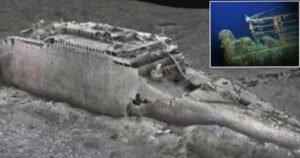
Everything changed on September 1, 1985, when oceanographer Dr. Robert Ballard and his team located the wreck nearly 12,500 feet below the surface, roughly 400 miles southeast of Newfoundland.
The details of the discovery shocked the world:
-
The bow was largely intact.
-
The stern was severely damaged, having imploded during the descent.
-
The two sections lay about 2,000 feet apart.
-
A sprawling debris field covered nearly 15 square miles of seafloor.
Ballard used a search technique he perfected while locating the USS Scorpion:
follow the debris trail until it leads to the ship.
When the Titanic finally appeared on the remote cameras, Ballard described a powerful mix of awe and sorrow.
He famously said:
“We made a promise to never take anything from that ship and to treat it with great respect.”
While Ballard’s team honored this promise, later expeditions did recover artifacts, further fueling global fascination with the Titanic.
But one thing was noticeably absent:
No human remains. Not a single bone.
The Question That Haunts History: Where Did the Bodies Go?
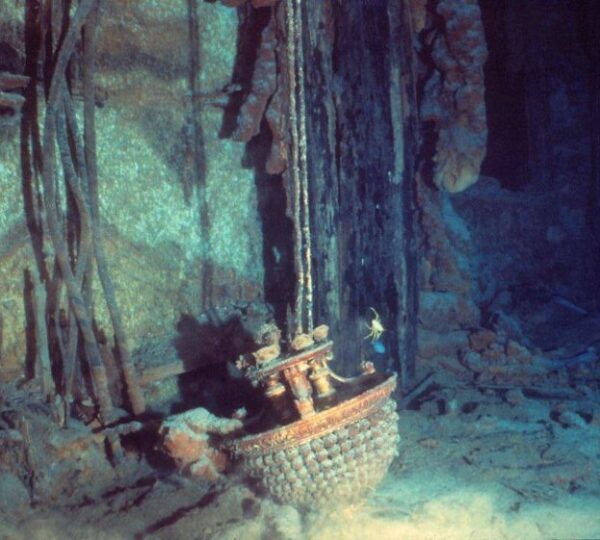
Following the sinking, rescue ships searched the ocean for nearly two weeks. They recovered 337 bodies, of which:
-
119 were buried at sea
-
209 were taken to Halifax, Nova Scotia
-
Only a small number were ultimately claimed by family
But this accounted for only a fraction of the more than 1,500 people who perished.
When the wreck was found in 1985, many assumed the deep sea would have preserved skeletons. After all, shipwrecks in shallower waters often contain long-lasting human remains.
Yet explorers saw nothing.
No bones.
No partial remains.
Only haunting pairs of shoes positioned side-by-side where bodies once rested.
Even James Cameron, who has visited the Titanic wreck over 30 times, stated:
“We have seen clothing and pairs of shoes, but never a single human bone.”
So what happened?
The Scientific Explanation: Why Bodies Disappeared Completely
1. Deep-Sea Scavengers Consumed All Soft Tissue
The Titanic rests in an environment unlike almost any other shipwreck:
-
Temperatures hover around 28°F (−2°C).
-
Sunlight never reaches the seabed.
-
Marine scavengers thrive in nutrient-poor extremes.
-
Anything organic becomes food.
Flesh would have decomposed rapidly — much more quickly than people imagine — due to:
-
Specialized worms
-
Amphipods
-
Bacteria
-
Crustaceans
These organisms exist even at extreme depths and are efficient at consuming soft tissue.
But still — what about the bones?
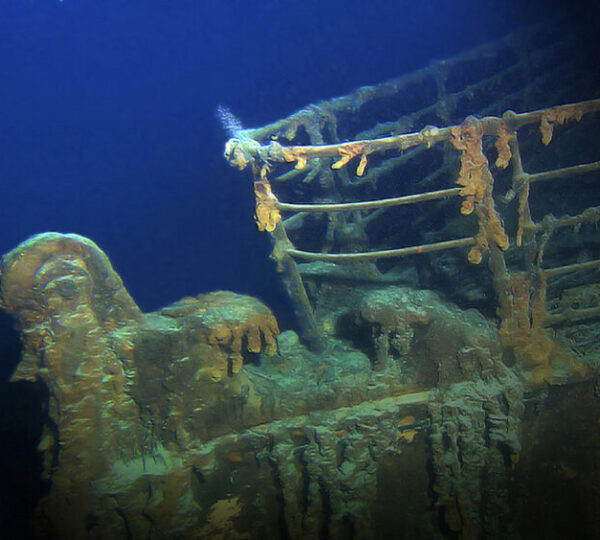
That answer is even more surprising.
2. Deep-Sea Chemistry Dissolves Bones
According to Dr. Robert Ballard, the Titanic lies well below the Calcium Carbonate Compensation Depth (CCD) — a critical scientific threshold.
Below about 3,000 meters (9,800 feet):
-
The ocean is undersaturated in calcium carbonate.
-
Bones cannot survive because they are composed largely of this mineral.
-
Once exposed, they begin to chemically dissolve.
Ballard explained:
“Below this depth, once marine life consumes the flesh and exposes the bones, the bones dissolve. The deep sea erases them.”
This means that even if complete skeletons initially settled on the seabed, they would not have lasted long.
Within decades, perhaps even years, they disappeared entirely.
3. Powerful Currents Scattered Remains Over Vast Distances
The Titanic lies in a region where:
-
Cold, dense Labrador currents move south.
-
Warmer Gulf Stream currents interact unpredictably.
-
Underwater storms and sediment flows shape the seabed.
Unweighted remains may have drifted miles from the sinking site before decomposition finished.
The Evidence We Do See: Shoe Pairs, Clothing, and Debris
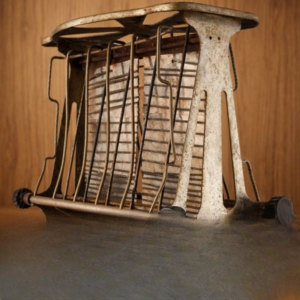
Although bodies are gone, divers have found:
-
Pairs of shoes placed side-by-side
-
Coats and clothing outlines
-
Unclaimed personal items
Shoe pairs are especially meaningful because:
-
Leather is not consumed by bacteria or deep-sea fauna.
-
Shoes often remain where a body once was, creating a ghostly silhouette of human presence.
These objects form silent memorials to the lives lost that night.
The Titanic Is Disappearing — Faster Than Expected
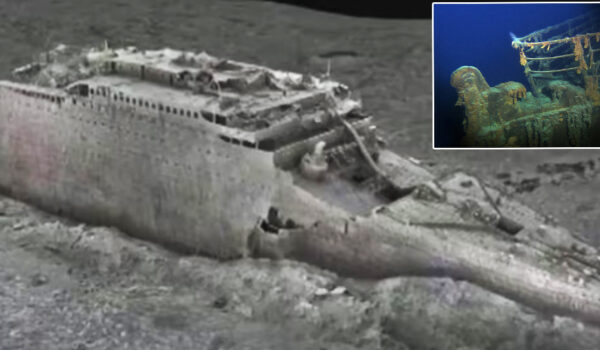
Since its discovery, the Titanic has undergone rapid deterioration.
The Main Culprit: Iron-Eating Bacteria
A species known as Halomonas titanicae consumes iron and converts it into brittle “rusticles.” These structures crumble when touched and contribute to the collapse of:
-
Decks
-
Walls
-
Railings
-
Structural supports
Experts predict that in 20 to 50 years, the Titanic may collapse into a soft pile of metal and mud, losing its shape entirely.
Every submersible landing, anchor drop, or collision accelerates this decay.
A Modern Tragedy: The Titan Submersible Implosion (2023)
In June 2023, fascination with the Titanic ended in disaster when the OceanGate Titan submersible imploded during its descent, killing all five aboard:
-
Stockton Rush
-
Paul-Henri Nargeolet
-
Hamish Harding
-
Shahzada Dawood and his son Suleman Dawood
The implosion occurred near the wreck site, highlighting the extreme dangers of deep-sea exploration and raising ethical concerns about “Titanic tourism.”
Public Reaction: A Mix of Horror, Compassion, and Reflection
Learning why no bodies remain brings many emotions:
-
Horror, imagining the fate of those who drowned
-
Sadness, knowing families never had closure
-
Curiosity, about the science behind decomposition
-
Comfort, that nature reclaimed victims peacefully
One viewer summarized the sentiment beautifully:
“The ocean took them — but perhaps it also protected them.”
The Titanic’s Enduring Legacy
The Titanic is more than a wreck. It remains a symbol of:
-
Human ambition and fallibility
-
Class inequality and injustice
-
Heroic sacrifice
-
Love and loss
-
The power — and danger — of nature
Even as the ship disappears into the ocean floor, its lessons endure.
The missing bodies are not a supernatural mystery. They are a tragic result of:
-
Deep-sea pressure
-
Chemistry
-
Marine life
-
Time
Yet the memory of the 1,500 souls lost remains alive in:
-
Museums
-
Books
-
Documentaries
-
Memorials
-
Generations of survivors’ families
The Titanic’s story is a permanent reminder of humanity’s vulnerability — and of the countless lives that forever changed the night the great ship sank into the Atlantic.
The sinking of the RMS Titanic on April 15, 1912, remains one of the most haunting and influential tragedies in modern history.
More than 1,500 passengers and crew died in the freezing waters of the North Atlantic after the “unsinkable” ship struck an iceberg during its maiden voyage from Southampton to New York.
The disaster reshaped maritime safety regulations forever, but it also left behind a heartbreaking mystery that continues to intrigue experts and the public more than 112 years later: If over 1,500 people died, why were so few bodies ever recovered — and why are none found at the wreck site today?
For decades, this question provoked speculation and theories. But thanks to oceanography, forensic science, and deep-sea missions, we now have clear, scientifically supported answers.
And they are even more tragic and compelling than one might expect.
The Discovery of the Titanic: A Breakthrough 73 Years in the Making
For decades, the Titanic’s precise location was unknown. Survivors had given approximate coordinates, but deep-sea technology in the early 20th century simply wasn’t capable of reaching the depths where the ship ultimately rested.
Everything changed on September 1, 1985, when oceanographer Dr. Robert Ballard and his team located the wreck nearly 12,500 feet below the surface, roughly 400 miles southeast of Newfoundland.
The details of the discovery shocked the world:
-
The bow was largely intact.
-
The stern was severely damaged, having imploded during the descent.
-
The two sections lay about 2,000 feet apart.
-
A sprawling debris field covered nearly 15 square miles of seafloor.
Ballard used a search technique he perfected while locating the USS Scorpion:
follow the debris trail until it leads to the ship.
When the Titanic finally appeared on the remote cameras, Ballard described a powerful mix of awe and sorrow.
He famously said:
“We made a promise to never take anything from that ship and to treat it with great respect.”
While Ballard’s team honored this promise, later expeditions did recover artifacts, further fueling global fascination with the Titanic.
But one thing was noticeably absent:
No human remains. Not a single bone.
The Question That Haunts History: Where Did the Bodies Go?
Following the sinking, rescue ships searched the ocean for nearly two weeks. They recovered 337 bodies, of which:
-
119 were buried at sea
-
209 were taken to Halifax, Nova Scotia
-
Only a small number were ultimately claimed by family
But this accounted for only a fraction of the more than 1,500 people who perished.
When the wreck was found in 1985, many assumed the deep sea would have preserved skeletons. After all, shipwrecks in shallower waters often contain long-lasting human remains.
Yet explorers saw nothing.
No bones.
No partial remains.
Only haunting pairs of shoes positioned side-by-side where bodies once rested.
Even James Cameron, who has visited the Titanic wreck over 30 times, stated:
“We have seen clothing and pairs of shoes, but never a single human bone.”
So what happened?
The Scientific Explanation: Why Bodies Disappeared Completely
1. Deep-Sea Scavengers Consumed All Soft Tissue
The Titanic rests in an environment unlike almost any other shipwreck:
-
Temperatures hover around 28°F (−2°C).
-
Sunlight never reaches the seabed.
-
Marine scavengers thrive in nutrient-poor extremes.
-
Anything organic becomes food.
Flesh would have decomposed rapidly — much more quickly than people imagine — due to:
-
Specialized worms
-
Amphipods
-
Bacteria
-
Crustaceans
These organisms exist even at extreme depths and are efficient at consuming soft tissue.
But still — what about the bones?
That answer is even more surprising.
2. Deep-Sea Chemistry Dissolves Bones
According to Dr. Robert Ballard, the Titanic lies well below the Calcium Carbonate Compensation Depth (CCD) — a critical scientific threshold.
Below about 3,000 meters (9,800 feet):
-
The ocean is undersaturated in calcium carbonate.
-
Bones cannot survive because they are composed largely of this mineral.
-
Once exposed, they begin to chemically dissolve.
Ballard explained:
“Below this depth, once marine life consumes the flesh and exposes the bones, the bones dissolve. The deep sea erases them.”
This means that even if complete skeletons initially settled on the seabed, they would not have lasted long.
Within decades, perhaps even years, they disappeared entirely.
3. Powerful Currents Scattered Remains Over Vast Distances
The Titanic lies in a region where:
-
Cold, dense Labrador currents move south.
-
Warmer Gulf Stream currents interact unpredictably.
-
Underwater storms and sediment flows shape the seabed.
Unweighted remains may have drifted miles from the sinking site before decomposition finished.
The Evidence We Do See: Shoe Pairs, Clothing, and Debris
Although bodies are gone, divers have found:
-
Pairs of shoes placed side-by-side
-
Coats and clothing outlines
-
Unclaimed personal items
Shoe pairs are especially meaningful because:
-
Leather is not consumed by bacteria or deep-sea fauna.
-
Shoes often remain where a body once was, creating a ghostly silhouette of human presence.
These objects form silent memorials to the lives lost that night.
The Titanic Is Disappearing — Faster Than Expected
Since its discovery, the Titanic has undergone rapid deterioration.
The Main Culprit: Iron-Eating Bacteria
A species known as Halomonas titanicae consumes iron and converts it into brittle “rusticles.” These structures crumble when touched and contribute to the collapse of:
-
Decks
-
Walls
-
Railings
-
Structural supports
Experts predict that in 20 to 50 years, the Titanic may collapse into a soft pile of metal and mud, losing its shape entirely.
Every submersible landing, anchor drop, or collision accelerates this decay.
A Modern Tragedy: The Titan Submersible Implosion (2023)
In June 2023, fascination with the Titanic ended in disaster when the OceanGate Titan submersible imploded during its descent, killing all five aboard:
-
Stockton Rush
-
Paul-Henri Nargeolet
-
Hamish Harding
-
Shahzada Dawood and his son Suleman Dawood
The implosion occurred near the wreck site, highlighting the extreme dangers of deep-sea exploration and raising ethical concerns about “Titanic tourism.”
Public Reaction: A Mix of Horror, Compassion, and Reflection
Learning why no bodies remain brings many emotions:
-
Horror, imagining the fate of those who drowned
-
Sadness, knowing families never had closure
-
Curiosity, about the science behind decomposition
-
Comfort, that nature reclaimed victims peacefully
One viewer summarized the sentiment beautifully:
“The ocean took them — but perhaps it also protected them.”
The Titanic’s Enduring Legacy
The Titanic is more than a wreck. It remains a symbol of:
-
Human ambition and fallibility
-
Class inequality and injustice
-
Heroic sacrifice
-
Love and loss
-
The power — and danger — of nature
Even as the ship disappears into the ocean floor, its lessons endure.
The missing bodies are not a supernatural mystery. They are a tragic result of:
-
Deep-sea pressure
-
Chemistry
-
Marine life
-
Time
Yet the memory of the 1,500 souls lost remains alive in:
-
Museums
-
Books
-
Documentaries
-
Memorials
-
Generations of survivors’ families
The Titanic’s story is a permanent reminder of humanity’s vulnerability — and of the countless lives that forever changed the night the great ship sank into the Atlantic.