There are moments in parenting that don’t arrive with warnings. They don’t announce themselves or give you time to prepare. They simply appear, and suddenly you’re standing in the middle of an emotional storm, forced to decide what kind of parent you are going to be in that moment.
This was one of those moments.
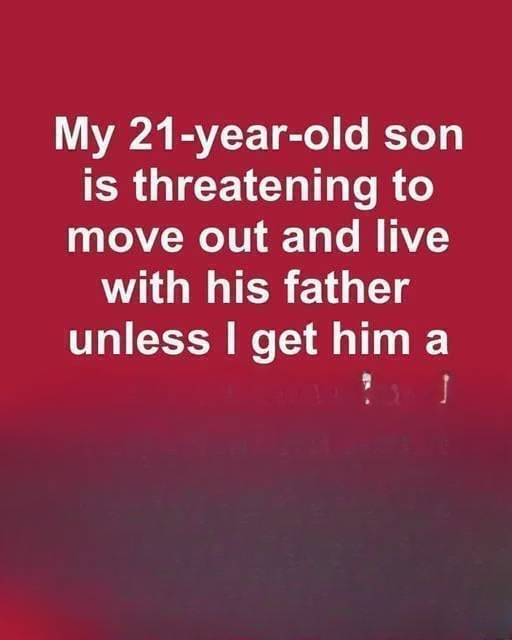
My son stood in front of me, frustration written all over his face, making a demand that felt less like a request and more like an ultimatum. He wanted a car. Not later. Not when it was financially possible. Now. And he made it clear that if I didn’t buy it for him, he would move out.
For a few seconds, I didn’t respond. Not because I didn’t hear him, but because I needed to separate emotion from reaction. Parenting in moments like this isn’t about winning an argument—it’s about not letting the situation control the outcome.
What he was doing, whether he realized it or not, was testing boundaries. Not just financial ones, but emotional ones too. He was trying to turn love into pressure, and responsibility into urgency. It’s a common dynamic between parents and teenagers or young adults, especially when independence starts to feel close but not yet reachable.
But love cannot be used as leverage.
And fear cannot be the foundation for decision-making.
So I told myself something simple before I said anything out loud: I will not be pushed into a decision made under pressure.
When I finally spoke, I didn’t raise my voice. I didn’t match his frustration. I stayed steady.
I told him I understood why a car mattered to him. For him, it wasn’t just about transportation. It represented freedom, status among peers, and the feeling of stepping into adulthood. That part was valid. His feelings weren’t the issue.
But wanting something doesn’t automatically make it the right time or the right responsibility for someone else to carry the cost.
I explained that I wasn’t refusing because I didn’t care about his future. I was refusing because I did.
There’s a difference between supporting someone and taking over the responsibilities they need to learn to handle themselves. A car isn’t just a gift—it comes with insurance, maintenance, fuel, accountability, and ongoing financial responsibility. Giving it without readiness doesn’t build independence; it can delay it.
He didn’t want to hear that. Most young people don’t in that moment. And I understood that too.
He repeated his position, more sharply this time. If I didn’t buy the car, he would leave.
That’s where the real shift happened—not in his words, but in my response to them.
Because this wasn’t really about transportation anymore. It had turned into a test of control, even if unintentionally. A belief that pressure could change a boundary.
So I stepped back emotionally from the threat.
I told him that I wasn’t going to make decisions based on ultimatums. If he chose to move out, that would be his decision, and I would still love him. But I would not turn financial responsibility into proof of care.
That wasn’t rejection. It was separation between love and obligation.
Then I offered alternatives. Not as a way to avoid responsibility, but to redirect the conversation toward reality. We could talk about saving together. We could look at more affordable options. We could explore part-time work, shared contributions, or delayed goals. There are many paths to independence, and most of them are slower than we want them to be.
What I didn’t do was promise something I couldn’t sustain just to keep the peace.
He was angry. That part was expected. He left the conversation before it was fully resolved. And that silence that followed was uncomfortable in the way only unresolved conflict between parent and child can be.
But something important had been established.
The boundary held.
Not harshly. Not with punishment. But with consistency.
And that matters more than it seems in the moment.
Because when a parent gives in to pressure like that, it teaches a lesson too. It teaches that emotional escalation leads to financial outcomes. That threats shift decisions. That love can be stretched until it breaks under demand.
Holding the line teaches something different.
It teaches that relationships can hold disagreement without collapsing. That frustration doesn’t automatically change limits. That independence is built through guidance, not entitlement.
Later, when things calmed down, the conversation could return in a different form. One less about demands and more about planning. That’s usually how these situations evolve—not in the heat of emotion, but in the quieter space afterward.
What stays important through all of it is consistency. Staying present without surrendering principles. Listening without being controlled by urgency. Caring without overfunctioning for someone else’s adulthood.
Because at the core of this moment wasn’t just a request for a car.
It was a turning point in how independence is learned.
And sometimes, the most meaningful support a parent can give isn’t a set of keys—it’s the ability to hear “no,” and still understand they are loved.
Uncategorized