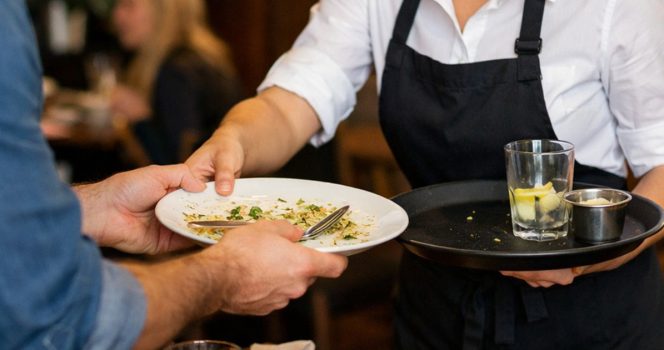
If you’ve ever quietly gathered the empty glasses and stacked the plates at a restaurant table before the server returns, you may not have realized that your simple gesture reveals far more than good manners.
While most might interpret such actions as just being polite, psychologists say they speak volumes about the empathetic wiring of the human brain.
Helping hand
In bustling restaurants, amid the symphony of clinking glasses, shouted orders, and hurrying footsteps, it’s not uncommon to witness a guest subtly stepping in to lighten a waiter’s load.
They don’t announce it, they don’t seek recognition, and often, they do it without even thinking.
Yet, this small act resonates deeply within the psychology of human behavior and altruism.

“When I see this gesture, it means the person truly worries about improving the day of the person they’re helping,” Dr. Martin L. Hoffman, a clinical psychologist and professor emeritus at New York University, said in a recent interview.
Hoffman, who spent much of his career studying empathy and moral development, describes micro-acts of kindness as quiet yet impactful demonstrations of social care.
Experience and awareness
Many of the people who reach for plates or straighten napkins before the server arrives are former restaurant workers, individuals who’ve endured the ache of long shifts and mastered the delicate art of juggling requests while hiding exhaustion behind professionalism.
“As a former server, my family and I do this every time we eat out. It’s a small gesture but a little kindness goes a long way. It helps them out, especially when they’re busy. I know when my patrons did this for me, I was so grateful,” writes one person on Facebook. “The people saying it’s not their job or it shows your social status, just goes to show you who they are and what they weren’t taught at home.”
For others, the gesture comes from a different place – a natural awareness, a heightened sensitivity to their environment that allows them to notice the unspoken signs of strain. Without calculation or fanfare, these people respond with simple, meaningful action – offering help not for recognition, but because they understand what it means to feel overwhelmed.
“It to me shows you have class, you’re not above getting your hands dirty to help someone,” a second user writes.
Prosocial behavior
Helping a waiter clear plates or pass along condiments might seem like a simple gesture, but it reflects something much deeper rooted in human psychology. These moments, often unnoticed by others at the table, are examples of what psychologists call prosocial behavior – actions that benefit another person without any expectation of reward.
People who engage in these small, unrequested acts tend to pick up on others’ nonverbal cues. Without needing to be asked, they step into the rhythm of the room and contribute in a way that subtly shifts the weight off someone else’s shoulders.
In psychological terms, these actions are considered low-cost, high-impact contributions to social harmony. They may not change the course of a day, but for the person on the receiving end, it can mean the difference between burnout and a moment of gratitude.
And according to research, people who engage in acts of kindness often experience better mental health and higher overall life satisfaction. This connection highlights how helping others can meaningfully contribute to emotional wellness and a stronger sense of purpose.
Reminder that kindness exists
While cultural norms vary – some countries view interfering with a server’s duties as impolite – there’s a universal thread here. When someone jumps in to help a server, they are responding to a perceived need. It’s not about impressing others at the table or speeding up the check. It’s a spontaneous choice rooted in attentiveness and compassion.
And that choice, however small, doesn’t go unnoticed. For the person working the floor, juggling drink orders and check requests, it can serve as a quiet reminder that kindness still threads its way through even the busiest corners of life. It breaks the monotony, eases the weight, and sometimes, recharges the spirit during a long shift.
In a time when so much of our social interaction happens behind screens, gestures like these stand out. They’re not filtered or curated and they reflect not just what we do, but who we are when no one’s watching.
Are you one of those people who helps tidy the table when you’re at a restaurant? Please let us know why you do, or do not!
READ MORE
- Expert explains why hairless toes can be a major indicator for dangerous condition
- Why night cramps strike without warning – and how to stop them