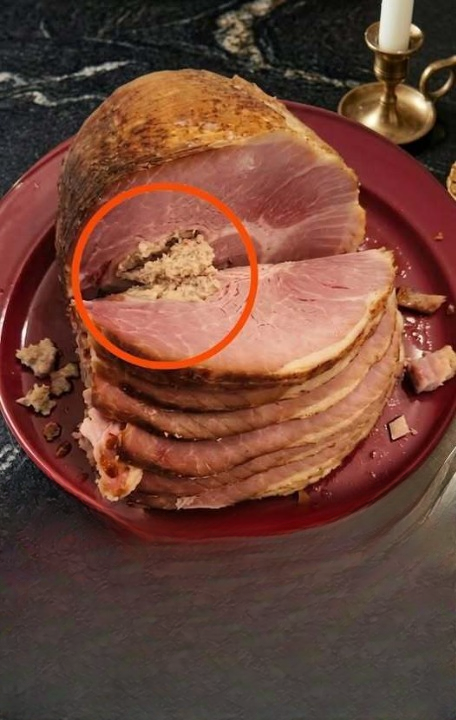
Cooking and preparing meals at home is often a routine activity. Many of us move through the process almost automatically, slicing, seasoning, and plating without a second thought. Yet, every so often, a small detail interrupts that flow—something that draws our attention and, sometimes, sparks a little concern. One common example occurs when slicing into a piece of ham and noticing that certain sections look slightly different. Perhaps part of the meat is darker, denser, or has a subtly uneven texture.
At first glance, these differences can be surprising or even concerning. A visual inconsistency in food can make us pause and question whether it is still safe to eat. This reaction is entirely natural. Humans rely heavily on sight when evaluating food; our eyes are often the first “sense of safety” we consult before taste or smell. But in most cases, these variations are entirely harmless, and understanding why they happen can make home cooking less stressful and more confident.
The Role of Visual Cues in Food
Humans are inherently visual creatures, especially when it comes to food. Before we take a bite, we assess freshness, quality, and even flavor based on appearance alone. With processed foods like ham, expectations are often particularly high. Many consumers anticipate uniformity—perfect slices that are consistent in color, texture, and shape. When this expectation isn’t met, it can feel like a warning sign.
However, natural ingredients are rarely perfectly consistent. Even with modern food production techniques, slight differences in texture or color are normal and often unavoidable. Recognizing this can help reduce unnecessary concern when something looks “different” in the kitchen.
Understanding How Ham Is Made
To understand why visual differences appear in ham, it helps to know a bit about the preparation process. Ham undergoes several stages before it reaches your plate, each of which can influence its final appearance.
- Curing: Salt, and sometimes additional ingredients such as sugar or nitrates, are applied to preserve the meat and enhance flavor.
- Resting or Aging: The meat is left to absorb the curing mixture, allowing the flavors to develop.
- Cooking or Smoking: Heat is applied, either through baking, boiling, or smoking, to achieve the desired texture and taste.
- Packaging and Storage: The finished product is sealed and distributed to stores or consumers.
Even in modern production facilities with strict quality controls, slight variations in each step are inevitable. The meat itself is not perfectly uniform, and the curing and cooking process can produce minor differences in color, texture, and firmness.
Common Causes of Visual Variations in Ham
If you notice a part of your ham looking different, several factors may explain it. Most are completely normal:
- Uneven Distribution of Ingredients
During curing, the salt and other seasonings may not penetrate evenly throughout the meat. This can create areas that appear slightly darker, firmer, or more compact. - Natural Muscle Structure
Meat consists of muscle fibers, and these fibers vary naturally in density and texture. Some sections may be denser, affecting both appearance and feel. - Differences in Heat Exposure
When ham is cooked or smoked, heat may reach parts of the meat unevenly. This can cause slight variations in color or firmness across the cut. - Moisture Variations
Some areas may retain more water than others during cooking or storage, creating subtle differences in texture. One section may feel tender, while another is slightly firmer.
In most cases, these differences are minor and do not affect the safety or taste of the ham.
When Ham Is Safe to Eat
Generally, a small difference in color or texture is not a cause for concern. If the ham smells normal, tastes as expected, and has a generally consistent texture, it is safe to consume.
That said, food safety always requires attention. Appearance alone cannot determine whether a product is safe. It is important to consider other factors such as smell, feel, and storage history.
Signs to Watch Out For
While minor visual variations are normal, certain signs may indicate spoilage or contamination. These include:
- A strong or unpleasant odor
- Sticky, slimy, or tacky surface texture
- Sour or unusual taste
- Extensive discoloration affecting large areas
If any of these signs are present, it is best not to consume the ham. When in doubt, throwing it out is safer than risking illness.
The Role of Food Processing
Even the most carefully controlled food production cannot eliminate natural variation. Ham is made from a living animal, and its muscle composition, moisture content, and fat distribution are inherently uneven.
Curing agents, cooking methods, and storage conditions all contribute to slight inconsistencies. Some sections of the meat may absorb more curing solution, while others retain more water or respond differently to heat. Even within the same package, slices can look and feel different. Understanding these natural variables helps explain why no two pieces of ham are exactly alike.
Building Confidence in Your Kitchen
When encountering unusual variations in food, it’s easy to jump to the worst-case scenario. But by pausing and evaluating, you can make more accurate decisions:
- Does the ham smell fresh and normal?
- Are the differences minor or widespread?
- Does the texture feel generally consistent?
Answering these questions will help you assess safety more accurately than relying on appearance alone.
Food Variation Is Normal
Variation is not unique to ham. Many foods naturally exhibit differences in appearance, texture, or size. Examples include:
- Fruits and vegetables with varying colors and shapes
- Baked goods with uneven textures or browning
- Meat products that differ slightly due to preparation or cooking methods
Recognizing that variation is normal allows us to appreciate the natural diversity of our food instead of worrying over minor inconsistencies.
Practical Tips for Safe Food Handling
To reduce risk and maintain freshness, follow a few simple practices:
- Store ham at recommended temperatures
- Keep it properly sealed to prevent contamination
- Consume it within the suggested timeframe
- Avoid leaving it at room temperature for extended periods
These precautions preserve quality and minimize the likelihood of spoilage.
Uncategorized