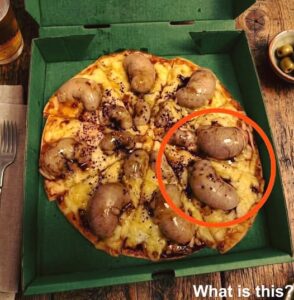
At first glance, the appearance of the pizza was so unusual that it immediately triggered a moment of hesitation and doubt. The surface did not look like the typical smooth and evenly distributed layer of melted cheese and toppings that people are used to seeing on a standard pizza. Instead, certain areas appeared raised, uneven, and slightly inflated, which made the entire food item seem unfamiliar and visually confusing at first sight. This unexpected appearance created a strong first impression, especially because people naturally expect consistency in baked foods like pizza.
When something deviates from that expectation, even in a small way, it can quickly feel strange or questionable. In this case, the irregular surface made the pizza look different enough to raise concern about whether it had been properly prepared or baked. At the initial moment of observation, the unusual bulges and uneven texture gave the impression that something might have gone wrong during the cooking process.
Without any additional context, it was difficult to immediately understand whether this was a sign of a cooking mistake, a quality issue, or simply a normal variation that occurs during baking. This uncertainty naturally led to curiosity and caution.
Because the appearance was so unexpected, the next logical step was to look for clarification. In situations involving food, especially when something looks unfamiliar, it is common to compare with similar examples or search for explanations. By reviewing similar images and general cooking references online, it became possible to better understand what might have caused the unusual texture.
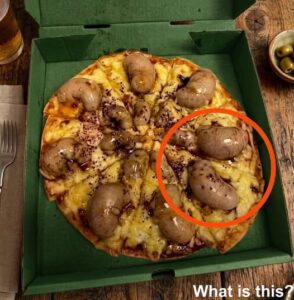
After comparing with similar cases and reading general explanations about how pizza behaves during baking, the situation became much clearer. The strange-looking bulges were not related to contamination, damage, or unsafe preparation. Instead, they were simply the result of natural baking processes that occur when dough and cheese are exposed to high oven temperatures.
During baking, the heat causes gases and moisture trapped inside the dough to expand. Pizza dough contains yeast, which produces small air pockets during fermentation. When placed in a hot oven, these air pockets expand rapidly, and this expansion can create raised or uneven sections on the surface of the pizza. These effects are completely normal and expected in many baked dough products.
In addition to the dough itself, melted cheese also contributes to this effect. As cheese heats up, it softens, melts, and can trap small amounts of air or steam underneath its surface. When this happens, it may form bubbles or raised areas that look unusual compared to a perfectly flat pizza surface. These visual changes are a natural part of the melting and baking process.
The combination of expanding dough and melting cheese often results in a textured surface that can vary from pizza to pizza. Factors such as oven temperature, baking time, dough thickness, and ingredient distribution can all influence how these bubbles and shapes appear. Even professionally made pizzas can show similar variations depending on these conditions.
Once this explanation was understood, the initial concern quickly disappeared. What first looked unusual or possibly problematic was revealed to be a completely normal and harmless outcome of baking physics and food chemistry. The visual irregularities did not indicate any issue with safety or quality, but rather a natural reaction of ingredients under heat.
This realization changed the entire perception of the situation. What initially seemed strange or even slightly concerning turned out to be nothing more than a standard result of how pizza is made. The appearance, although unexpected at first, was fully consistent with normal cooking behavior in oven-baked dough products.
The experience also highlights how easily visual perception can influence judgment, especially when it comes to food. People often rely on appearance to quickly assess whether something is normal or not. However, many cooking processes involve natural variations that can look unusual even though they are completely harmless and expected.
In this case, the irregular surface of the pizza was simply a visual effect created by heat, moisture, and fermentation processes working together during baking. These effects are common in many types of bread-based foods, not just pizza, and are part of what gives baked goods their natural texture and structure.
After understanding the science behind it, the pizza could be seen again for what it truly was: normal food prepared through a standard baking process. There were no signs of danger or quality issues, only natural variations that occur when ingredients react to high heat in an oven environment.
Ultimately, the initial fear or confusion was replaced by clarity and understanding. What first appeared unusual was explained by simple cooking principles, showing how quickly perception can change once accurate information is available. The pizza remained completely normal, safe, and unaffected in quality.