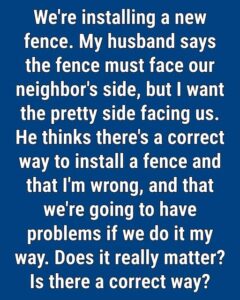
When planning a new backyard fence, one piece of advice seems to come up again and again: “Always make sure the finished side faces your neighbor.” It’s often presented as a universal rule—something homeowners simply accept without question.
But is this actually a legal requirement? Or is it just a long-standing tradition people follow out of courtesy?
If you’ve ever wondered which side of a fence should face your neighbor—or whether it even matters—you’re not alone. Many homeowners face confusion when deciding how to install a fence, especially when property lines and neighbor relationships are involved.
In this detailed guide, we’ll break down everything you need to know about fence orientation, including laws, etiquette, ownership, and practical considerations. By the end, you’ll have a clear understanding of what really matters when building a fence.
Understanding Fence Sides: Finished vs. Unfinished
Before diving into rules and regulations, it’s important to understand what people mean when they talk about the “finished” side of a fence.
The finished side is the visually appealing side. It typically features smooth, evenly spaced boards (often called pickets) with no visible support structures. This is the side most people consider more attractive.
On the other hand, the unfinished side exposes the structural components—posts, rails, and crossbeams that hold the fence together. While functional, it’s usually less visually appealing.
This difference is especially common with traditional wooden fences, where one side is designed for appearance and the other for structural support.
Why Fence Orientation Becomes a Concern
Fence placement may seem like a simple decision, but it can quickly become a source of tension between neighbors.
If one homeowner installs a fence with the unfinished side facing outward, the neighboring property ends up looking at the less attractive side. This can lead to disagreements, especially in suburban areas where homes are close together.
Because of this, many people assume there must be a rule about which side should face outward.
The Origin of the “Finished Side Faces the Neighbor” Rule
The idea that the finished side of a fence should face the neighbor didn’t originate from law—it developed as a social custom.
Historically, the homeowner who paid for the fence would place the more attractive side outward as a gesture of goodwill. It was seen as a respectful and neighborly act.
This practice served several purposes:
- It improved the overall appearance of the neighborhood
- It avoided unnecessary disputes between neighbors
- It reflected fairness and consideration
Over time, this custom became so common that many people began to assume it was an actual requirement.
Is It a Legal Requirement? The Reality Explained
Here’s where things get interesting: in most places, there is no universal law requiring the finished side of a fence to face your neighbor.
Many homeowners are surprised to learn that fence orientation is often not addressed in local building codes at all.
However, there are exceptions.
Some cities, counties, or homeowner associations (HOAs) may have specific regulations regarding fence placement and appearance. These rules can vary widely depending on location.
For example, certain areas may require:
- The finished side to face public spaces such as streets or sidewalks
- Specific fence heights
- Setback distances from property lines
- Approval from local authorities before installation
Because regulations differ so much, it’s essential to check local guidelines before building a fence.
Where to Check Fence Rules in Your Area
If you’re planning a fence installation, take the time to verify local requirements. The best sources of information include:
- Your city or county zoning department
- Local building codes and ordinances
- Homeowners association (HOA) guidelines
- Property surveys and boundary records
Doing this research upfront can prevent costly mistakes and disputes later.
Fence Ownership: Why It Matters
One of the most important factors in determining fence orientation is ownership.
Private Fence (Fully on Your Property)
If the fence is built entirely within your property line—even by a few inches—you typically have full control over its design and orientation.
This means you can decide which side faces outward.
Shared or Boundary Fence
If the fence sits directly on the property line, it may be considered a shared fence.
In these cases:
- Both neighbors may share responsibility
- Costs and maintenance may be split
- Decisions about design and orientation should be mutual
Shared fences can be more complicated, especially if expectations aren’t clearly communicated.
Why Communication With Neighbors Is Important
Even if you’re not legally required to face the finished side toward your neighbor, communication can go a long way.
Discussing your plans before installation can help:
- Avoid misunderstandings
- Build goodwill
- Prevent future conflicts
In many cases, a simple conversation can lead to an agreement that works for both parties.
Situations Where the Finished Side Doesn’t Face the Neighbor
While the “finished side outward” guideline is common, there are many valid reasons why it might not be followed.
1. Good Neighbor Fences
These fences are designed to look the same on both sides. This eliminates the issue entirely, as neither side is considered “unfinished.”
2. Structural Considerations
Sometimes, the placement of posts and supports is necessary for stability. In these cases, the structural side may need to face inward for reinforcement.
3. Sloped or Uneven Terrain
If the land isn’t level, fence orientation may need to adapt to the landscape.
4. Budget Constraints
Certain fence designs are more affordable but may only have one finished side. Homeowners working within a budget may prioritize cost over aesthetics.
5. Obstacles and Layout Challenges
Trees, sheds, and other structures can limit how a fence is installed.
6. Security Reasons
Some homeowners prefer the rails to face inward, making it harder for intruders to climb the fence.
Best Practices Before Installing a Fence
If you’re planning to install a fence, here are some practical tips to keep in mind:
1. Check Local Regulations
Always verify zoning laws and building codes before starting.
2. Confirm Property Lines
Make sure you know exactly where your property boundaries are. Hiring a surveyor can help avoid disputes.
3. Talk to Your Neighbor
Even if it’s not required, discussing your plans shows respect and can prevent future issues.
4. Consider Both Sides of the Fence
Think about how the fence will look from both perspectives—not just your own yard.
5. Document Agreements
If you’re sharing a fence, put any agreements in writing to avoid misunderstandings later.
Balancing Legal Rules and Social Etiquette
Fence installation often sits at the intersection of law and etiquette.
Legally, you may have the right to choose your fence orientation. But socially, certain expectations still exist.
Choosing to follow the “finished side outward” approach can:
- Improve neighbor relationships
- Enhance neighborhood appearance
- Reduce the likelihood of disputes
However, it’s not always required—or even practical.
Common Misconceptions About Fence Rules
Many homeowners believe:
- The finished side must always face the neighbor
- There is a universal law governing fence orientation
- Installing a fence automatically requires neighbor approval
In reality, these assumptions aren’t always true. Rules vary widely depending on location and specific circumstances.
Long-Term Considerations
A fence is a long-term investment. Once installed, it can remain in place for years—or even decades.
That’s why it’s important to think beyond the initial decision.
Consider:
- Maintenance responsibilities
- Future property changes
- Neighbor relationships over time
Making thoughtful decisions now can save you trouble later.
Final Answer: Which Side Should Face the Neighbor?
After researching laws, customs, and real-world situations, the answer is clear:
There is no universal rule requiring the finished side of a fence to face your neighbor.
In most cases, it comes down to:
- Local regulations
- Property ownership
- Personal preference
- Neighborly courtesy
Conclusion: Courtesy Matters, But So Does Context
While the tradition of facing the finished side outward is widely followed, it’s not always mandatory.
If you’re unsure, a balanced approach works best:
- Follow local rules
- Respect property boundaries
- Communicate openly with neighbors
A fence may define property lines, but good communication builds stronger relationships.