If you’ve looked closely at modern cars in the last decade or two, you’ve probably noticed a small, sleek object perched on the roof near the rear window. It’s shaped like a tiny dorsal fin — the kind you might see cutting through the ocean’s surface in a wildlife documentary.
This small piece of equipment is known as a shark fin antenna, and today it appears on millions of vehicles worldwide.
At first glance, it may seem like a purely stylistic design choice. Automakers are known for incorporating fashionable details into their vehicles, and the shark fin certainly contributes to a clean, modern appearance.
But that small aerodynamic bump is far more than a decorative flourish.
Hidden inside the smooth plastic housing is an advanced communications system responsible for connecting your vehicle to the outside world.
It handles radio reception, satellite signals, navigation data, Bluetooth connectivity, Wi-Fi communication, and vehicle telematics. In many modern vehicles, it also supports emergency communication systems and over-the-air software updates.
In other words, the shark fin antenna is a critical digital gateway for your car.
To understand why this tiny piece of hardware matters so much, we need to step back and explore how car antennas evolved — and why the automotive industry abandoned the long metal rods that once defined vehicle design.
The Era of the Classic Car Antenna
For much of automotive history, antennas were impossible to miss.
They were tall, thin metal rods — often mounted on the front fender or side pillar of a vehicle.
Sometimes they were rigid chrome masts.
Other times they were telescoping antennas that could be extended or retracted manually.
By the late 20th century, many cars used motorized antennas that automatically rose when the radio turned on and lowered when it turned off.
At the time, this design made sense.
Car radios primarily needed to capture AM and FM broadcast signals, which require a relatively long antenna to receive clearly. The metal rod acted as a conductor that intercepted electromagnetic waves from radio stations and sent them to the receiver inside the vehicle.
But while these antennas worked well for radio reception, they had several problems.
1. They Were Fragile
Long rod antennas were easy to bend or break.
Car washes, low garage ceilings, tree branches, and even vandals could damage them.
If the antenna bent too far, radio reception suffered.
2. They Created Wind Noise
At highway speeds, the thin metal rod would vibrate in the wind.
Drivers sometimes heard a faint whistling or humming sound caused by airflow around the antenna.
3. They Were Aerodynamically Inefficient
Although the effect was small, protruding rods slightly increased drag.
Automakers constantly search for ways to improve fuel efficiency, and eliminating unnecessary drag is part of that effort.
4. They Could Look Outdated
As vehicle design evolved toward sleek, aerodynamic shapes, long antennas began to look out of place.
Automakers wanted something that blended into the vehicle rather than sticking out awkwardly.
The solution would eventually come from an unexpected source: shark anatomy.
Why the “Shark Fin” Shape Works
The shark fin antenna’s distinctive shape wasn’t chosen randomly.
It was carefully designed to solve several engineering challenges at once.
Aerodynamic Efficiency
The curved, tapered shape allows air to flow smoothly around it as the vehicle moves.
Compared to a tall rod antenna, the fin produces far less turbulence, reducing wind noise and drag.
The difference may seem small, but in automotive engineering, even tiny aerodynamic improvements can contribute to better efficiency and performance.
Structural Durability
Because the antenna sits close to the roof, it’s far less vulnerable to damage.
It won’t bend in car washes, snap off in storms, or get caught on tree branches.
The plastic housing also protects delicate electronic components inside.
Space for Multiple Antennas
Perhaps the biggest advantage is the internal space.
Inside the shark fin housing, engineers can install multiple antennas and electronic modules.
Instead of using separate antennas for different signals, a single compact unit can handle many communication systems simultaneously.
This multifunctional capability is what truly transformed the shark fin antenna from a simple design tweak into an essential automotive technology.
The Hidden Technology Inside the Fin
From the outside, the shark fin antenna looks like a simple plastic cover.
Inside, however, it often contains several specialized antennas and signal processors.
These components work together to support a wide range of vehicle communication systems.
Let’s look at the most important ones.
Radio Reception (AM/FM)
Traditional radio broadcasts are still an important part of driving for many people.
Even though streaming audio is becoming more common, AM and FM radio remain widely used for:
-
Music stations
-
Traffic updates
-
Weather alerts
-
Local news broadcasts
The shark fin antenna typically contains elements designed to capture these signals effectively.
Modern electronics allow engineers to achieve excellent reception using shorter, more compact antenna structures than the long metal rods used decades ago.
GPS Navigation
Global Positioning System (GPS) technology relies on signals from satellites orbiting Earth.
Your car’s navigation system uses these signals to determine its precise location.
The shark fin antenna houses a GPS receiver antenna that captures satellite signals and sends them to the vehicle’s navigation computer.
This allows drivers to:
-
Follow turn-by-turn directions
-
Locate nearby services
-
Track routes in real time
Without a reliable GPS antenna, navigation systems would struggle to maintain accurate positioning.
Satellite Radio
Many vehicles support satellite radio services that broadcast hundreds of channels across large geographic areas.
Satellite radio requires a dedicated antenna capable of receiving signals from orbiting satellites.
The shark fin antenna provides the perfect place to house this receiver while protecting it from environmental damage.
Bluetooth Connectivity
Bluetooth allows smartphones and other devices to connect wirelessly to the vehicle.
While Bluetooth transmitters exist inside the cabin, the antenna system often integrates with the roof module to improve signal reliability and reduce interference.
This enables features like:
-
Hands-free phone calls
-
Wireless music streaming
-
Voice assistant integration
Wi-Fi Hotspots
Some vehicles can act as mobile Wi-Fi hotspots, allowing passengers to connect laptops, tablets, and phones to the internet.
The shark fin antenna can include Wi-Fi transmitters and receivers that maintain strong connections even while the vehicle is moving.
For families on long road trips, this feature can transform the car into a rolling connectivity hub.
Vehicle Telematics and Safety Systems


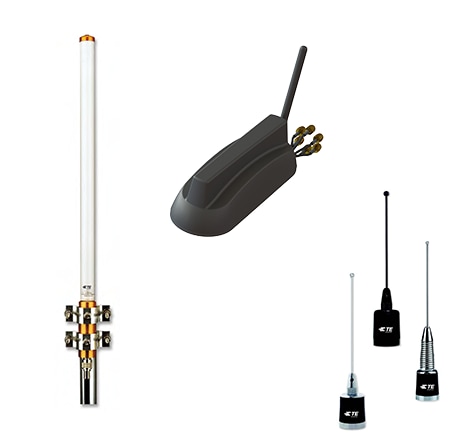
Beyond entertainment and navigation, the shark fin antenna plays an increasingly important role in vehicle safety and telematics systems.
Telematics refers to technology that collects and transmits data from the vehicle to external networks.
This capability supports several important features.
Emergency Assistance Systems
Many modern cars include automatic emergency response services.
If the vehicle detects a severe collision, it can automatically contact emergency responders and provide location data.
The shark fin antenna helps maintain the communication link needed for this life-saving feature.
Remote Vehicle Monitoring
Connected vehicle platforms allow owners to interact with their cars remotely using smartphone apps.
Depending on the vehicle, drivers may be able to:
-
Lock or unlock doors
-
Start the engine remotely
-
Check fuel levels or battery status
-
Locate the vehicle on a map
All of this relies on wireless communication systems supported by the roof antenna module.
Over-the-Air Software Updates
Cars today are increasingly similar to smartphones on wheels.
Manufacturers frequently release software updates that improve performance, fix bugs, or add new features.
Many of these updates are delivered wirelessly through the vehicle’s connectivity system.
Once again, the shark fin antenna plays a central role in maintaining the communication link needed to download those updates.
Why Automakers Prefer Roof-Mounted Antennas
The location of the shark fin antenna — near the rear center of the roof — is not accidental.
Engineers carefully selected this placement for several reasons.
1. Maximum Signal Exposure
Mounting the antenna on top of the vehicle gives it a clear view of the sky and surrounding radio signals.
Metal body panels can block electromagnetic waves, so placing the antenna above them improves reception.
2. Reduced Interference
The roof location helps minimize interference from other electronic systems inside the car.
It also allows signals to travel freely in all directions.
3. Improved Ground Plane Performance
The large metal roof of the car acts as a ground plane, which improves antenna performance by stabilizing signal reception.
This concept is well known in antenna engineering and significantly enhances signal clarity.
The Role of Design in Modern Vehicles
While functionality drove the development of the shark fin antenna, aesthetics played an important role in its widespread adoption.
Automotive designers strive to create vehicles that feel sleek, modern, and technologically advanced.
The shark fin antenna contributes to that image.
Compared to traditional rod antennas, it:
-
Looks more streamlined
-
Blends into the vehicle’s silhouette
-
Matches modern design language
Many manufacturers paint the antenna housing to match the car’s body color, making it appear like a natural extension of the roofline.
Others intentionally highlight it in contrasting black or metallic finishes to emphasize the car’s high-tech features.
In either case, the shark fin has become a recognizable design signature across the automotive industry.
How the Shark Fin Reflects the Rise of the Connected Car
The popularity of shark fin antennas reflects a much larger shift happening in the automotive world.
Cars are no longer isolated mechanical machines.
They are becoming fully connected digital platforms.
Modern vehicles communicate constantly with:
-
GPS satellites
-
Cellular networks
-
Smartphones
-
Manufacturer servers
-
Other vehicles
This network of communication allows for innovations such as:
-
Real-time traffic updates
-
Remote diagnostics
-
Predictive maintenance alerts
-
Connected navigation systems
The shark fin antenna acts as the central hub enabling these connections.
Without it, many of the features drivers now take for granted simply wouldn’t work.
Will Shark Fin Antennas Disappear in the Future?
Interestingly, automotive engineers are already exploring technologies that may eventually replace the visible shark fin.
Some future vehicles may use embedded antennas hidden inside body panels or glass.
These designs could further reduce drag and create an even cleaner appearance.
However, integrating multiple antennas into hidden locations presents technical challenges.
Signals must remain strong and reliable, and different communication frequencies require specific antenna designs.
For now, the shark fin remains one of the most effective ways to combine:
-
Strong signal reception
-
Protection from environmental damage
-
Space for multiple communication modules
Because of these advantages, it is likely to remain common on vehicles for many years.
A Small Detail With a Big Impact
It’s easy to overlook the tiny fin sitting quietly on a car roof.
Compared to engines, tires, or advanced driver-assistance systems, it may seem insignificant.
But in reality, the shark fin antenna is a crucial component of modern automotive technology.
Inside that compact housing lives a powerful network of communication tools that help your vehicle:
-
Navigate accurately
-
Stay connected to the internet
-
Receive emergency assistance
-
Stream entertainment
-
Communicate with external systems
It’s a perfect example of how modern engineering blends function, efficiency, and design into a single elegant solution.
So the next time you notice a shark fin glinting in the sunlight atop a car, remember:
That small piece of plastic isn’t just there for style.
It’s a sophisticated communications hub quietly keeping the vehicle connected to the world — guiding it, protecting it, and ensuring it stays ready for the road ahead.