There’s something quietly satisfying about a well-made bed. The smooth lines. The crisp corners. The layered pillows. For some households, bed-making is a rushed, five-minute task before heading out the door. For others, it’s a ritual — almost an art form passed down through generations.
If you grew up in a home where bed-making mattered, you probably learned a very specific method. Fitted sheet pulled tight. Top sheet aligned evenly. Comforter smoothed without wrinkles. Pillows fluffed and stacked just so.
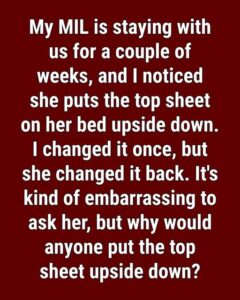
But here’s a detail that surprises many people: the “correct” way to put on a top sheet may look upside down at first glance.
Yes — the patterned or brighter side of the top sheet is often placed face down when making the bed.
To someone unfamiliar with the method, that can seem like a mistake. Why would you hide the prettier side of the sheet? Why would the finished bed look like the underside of the fabric is showing?
As it turns out, there’s a practical — and aesthetic — reason behind this technique. And once you understand it, you may never make a bed the same way again.
Let’s break down the reasoning, the history behind layered bedding, and why this small detail makes such a noticeable difference.
The Anatomy of a Traditionally Made Bed
Before diving into the “upside down” question, it helps to understand what most people mean by a fully dressed bed.
A standard layered bed typically includes:
-
A mattress protector
-
A fitted sheet
-
A flat (top) sheet
-
A quilt, comforter, or duvet
-
Pillows with coordinating pillowcases
-
Optional decorative pillows
-
Optional throw blankets
While styles vary by region and personal preference, this layered approach is common in many homes and hotels.
The fitted sheet hugs the mattress tightly. Its elastic edges secure it in place, preventing shifting during sleep.
The top sheet sits between the sleeper and the heavier blanket or comforter. Its purpose is both hygienic and practical — it creates a washable barrier between your body and bulkier bedding that may not be cleaned as frequently.
Then comes the quilt, comforter, or duvet — the main insulating layer.
But here’s where the top-sheet technique matters.
Why the Patterned Side Goes Face Down
When placing a top sheet on the bed, many assume the “right side” — the more colorful or patterned side — should face up.
Logically, it seems that way. After all, you want the visible side to look nice.
However, professional bed-making guidance often recommends placing the patterned or finished side face down onto the mattress.
Why?
Because when you fold the top portion of the sheet over the blanket or comforter, the decorative side becomes visible.
If the sheet were placed “right side up” initially, the fold-over would reveal the less decorative underside.
This fold is what gives beds in hotels and magazines their polished, layered appearance.
The result is a clean reveal: a coordinated strip of color or pattern peeking out neatly at the top of the bed.
It’s a small detail — but visually, it elevates the entire presentation.
The Hotel-Inspired Fold
Many hospitality professionals follow a similar finishing technique:
-
Lay the fitted sheet tightly over the mattress.
-
Place the top sheet face down (patterned side touching the mattress).
-
Align the sheet evenly on both sides.
-
Place the comforter or duvet on top.
-
Fold the top 1–2 inches of the sheet over the blanket.
-
Fold both layers over together once more for a layered effect.
This creates a crisp border at the head of the bed — a hallmark of hotel styling.
The fold also keeps the sheet securely tucked while offering a refined appearance.
What looks “upside down” during setup makes perfect sense once the bed is fully dressed.
Why This Small Detail Matters
You might wonder: does it really make a difference?
In terms of function, perhaps not drastically. The bed will still work as a place to sleep either way.
But visually, the impact is noticeable.
That folded strip:
-
Adds contrast
-
Highlights fabric color or pattern
-
Creates a tailored appearance
-
Signals attention to detail
For guest rooms especially, these subtle touches can make a space feel more intentional and welcoming.
It’s less about perfection and more about presentation.
The Psychology of a Made Bed
Beyond aesthetics, making a bed properly has psychological benefits.
Research on daily routines often emphasizes the power of small accomplishments. Making your bed each morning can:
-
Establish structure
-
Promote tidiness
-
Improve room ambiance
-
Encourage overall organization
When the bed looks polished, the entire bedroom feels more put together.
And when guests see a thoughtfully arranged bed, it conveys care and hospitality.
That “upside down” sheet trick becomes part of a larger experience.
The History of the Top Sheet
Interestingly, not all cultures use top sheets.
In many European households, duvets with removable covers are standard. The duvet cover acts as the washable layer, eliminating the need for a separate flat sheet.
In the United States, however, the top sheet remains common. Historically, it served as a protective barrier at a time when washing large blankets was more labor-intensive.
Before modern washing machines, laundering bulky bedding was difficult. The top sheet allowed households to clean frequently used layers without disturbing the heavier quilt or blanket.
Over time, this practice became tradition.
Why Some People Skip the Top Sheet Entirely
While the “correct” folding technique enhances presentation, some people choose not to use top sheets at all.
Reasons include:
-
Simplified bed-making
-
Preference for minimal layers
-
Duvet covers replacing the sheet’s function
-
Personal comfort preferences
Minimalist trends have influenced bedding choices in recent years. Fewer layers mean fewer steps in the morning.
For some, that simplicity outweighs aesthetic layering.
Still, for those who appreciate a tailored look, the top sheet remains essential.
Coordinating Pillowcases and Layers
The “upside down” sheet technique works best when coordinated with the rest of the bedding.
Many households use:
-
Two sleeping pillows with sheet-matching pillowcases
-
Two decorative pillows matching the quilt or duvet
-
One or more accent pillows
-
A throw blanket at the foot of the bed
Layering textures and colors adds depth without overwhelming the room.
The folded top sheet becomes part of that layered visual story.
Why Guests Notice the Difference
When preparing a guest room, details matter.
Guests may not consciously analyze bed-making technique, but they notice when a room feels welcoming.
A neatly folded top sheet:
-
Signals cleanliness
-
Suggests preparation
-
Adds visual polish
It communicates effort without excess.
Even subtle touches can elevate comfort perception.
Common Bed-Making Mistakes
Many people unknowingly skip steps that affect the final look.
Common mistakes include:
-
Uneven sheet alignment
-
Skipping the fold-over detail
-
Wrinkled fabric left unsmoothed
-
Pillowcases misaligned
None of these are serious issues — but small refinements create noticeable improvements.
The upside-down sheet placement is simply one of those refinements.
Is There a “Right” Way?
Ultimately, bed-making is personal.
There’s no universal rule that everyone must follow. Some prefer crisp hospital corners. Others opt for casual draping.
The upside-down sheet method isn’t about strict correctness — it’s about achieving a specific visual outcome.
If you enjoy a hotel-inspired finish, the technique helps you achieve it.
If you prefer simplicity, skipping it won’t ruin your sleep.
The Cultural Influence of Hospitality Design
Interior design magazines, home shows, and hospitality standards have shaped expectations for what a “well-made” bed looks like.
Clean folds and visible sheet borders appear frequently in styled photography.
Over time, those images influence everyday practices.
The upside-down sheet technique is common in hospitality because presentation matters in guest-facing environments.
When homeowners adopt the same approach, they borrow that professional polish.
The Sensory Experience of Layered Bedding
Layered bedding isn’t just visual — it’s tactile.
A properly positioned top sheet:
-
Feels smooth against the skin
-
Protects heavier blankets
-
Offers adjustable warmth
In cooler months, layering allows temperature flexibility. In warmer months, the sheet alone may be sufficient.
Placement affects both comfort and appearance.
Why This Detail Sparks Debate
It’s interesting how such a small detail generates discussion.
When someone sees a sheet placed face down, it looks wrong — until the fold reveals the pattern.
The confusion arises because the technique only makes sense once completed.
It’s a reminder that process and outcome aren’t always aligned visually at every step.
Sometimes, what appears incorrect mid-task is necessary for the final result.
Practical Tips for Trying the Technique
If you’d like to try the method:
-
Start with wrinkle-free sheets.
-
Place the finished side down evenly.
-
Ensure equal overhang on both sides.
-
Smooth out air pockets before adding the comforter.
-
Fold deliberately for clean lines.
Take a step back and assess the look. Small adjustments can refine symmetry.
A Reflection on Everyday Rituals
Making a bed may seem mundane, but small rituals shape daily environments.
Attention to detail reflects mindfulness.
The upside-down sheet trick represents something larger than fabric orientation — it represents intention.
Whether preparing your own bedroom or welcoming guests, thoughtful touches create warmth.
Final Thoughts
At first glance, placing a top sheet “upside down” seems counterintuitive. But the logic becomes clear once the bed is fully assembled.
By positioning the decorative side face down, the fold-over reveals the intended design — creating a crisp, polished look reminiscent of professionally styled spaces.
It’s a subtle but effective detail.
And while bed-making ultimately comes down to personal preference, understanding the reasoning behind this technique allows you to choose intentionally rather than accidentally.
Whether you embrace layered presentation or prefer minimalist simplicity, the goal remains the same: creating a comfortable space that feels inviting at the end of the day.
Sometimes, the smallest adjustments make the biggest visual difference.