A Familiar Sight That Feels Instantly Meaningful
You’ve probably seen it more times than you can count.
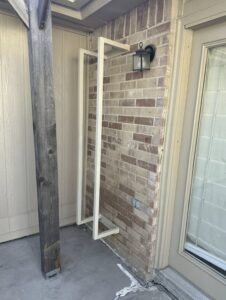
A neat, vertical stack of firewood mounted along the exterior wall of a house. Clean lines. Perfectly arranged logs. Sometimes framed in dark metal, sometimes tucked beside a patio or near a back door. It’s one of those details that feels intentional—even comforting—yet also raises a quiet question:
Why is this on so many homes?
At first glance, it seems obvious. It’s firewood storage. Simple enough. But the more you notice it, the more it stands out—not just as a practical feature, but as something that carries a certain aesthetic, a mood, even a memory.
Because this isn’t just about stacking logs.
It’s about how design, function, and nostalgia come together in a way that still makes sense today.
The Appeal of Stacked Wood
There’s something deeply satisfying about a stack of firewood.
It’s orderly. Grounded. Honest.
Even if you’ve never chopped wood yourself, the image alone can trigger a kind of sensory memory—the imagined scent of oak or cedar, the crackle of a fire, the quiet stillness of a cold evening. It’s a visual shorthand for warmth, preparation, and self-sufficiency.
That’s part of why wall-mounted firewood racks have become so common. They take something purely functional and turn it into something visually meaningful.
Instead of hiding the wood away, they display it.
And in doing so, they transform it.
A Design Rooted in History
Long before modern heating systems, firewood wasn’t decorative—it was essential.
Homes depended on it for warmth, cooking, and survival during colder months. And because of that, storing wood properly mattered.
People stacked logs wherever they could:
- Along exterior walls
- Inside barns or sheds
- Under covered porches
- Even on rooftops in some regions
The goal was simple: keep the wood dry, accessible, and ready to use.
Over time, stacking techniques became more refined. People learned how to arrange logs to allow airflow, prevent rot, and maximize space. What started as necessity slowly evolved into a kind of craft.
The modern wall-mounted firewood rack is, in many ways, a continuation of that tradition—just adapted for contemporary living.
Why Wall-Mounted Racks Became Popular
So why this specific design? Why mount firewood vertically on a wall instead of stacking it on the ground?
The answer comes down to a combination of practicality and efficiency.
1. Protection from Moisture
Keeping firewood off the ground helps prevent it from absorbing moisture, which can lead to rot and make it harder to burn.
2. Improved Airflow
Elevating the wood allows air to circulate more freely, helping it stay dry and properly seasoned.
3. Space Efficiency
Vertical storage uses less floor space, making it ideal for patios, small yards, or urban homes.
4. Easy Access
Mounted racks are often placed near doors or entry points, making it convenient to grab logs when needed.
5. Cleaner Appearance
Instead of a messy pile, the wood becomes a structured, intentional feature.
It’s a simple solution—but one that solves multiple problems at once.
When Function Becomes Aesthetic
What makes wall-mounted firewood racks especially interesting is how they blur the line between utility and design.
Originally, they existed purely for function.
Now, they’re often chosen just as much for how they look.
The contrast between natural wood and metal framing creates a striking visual effect. The repetition of log shapes adds texture. The vertical arrangement draws the eye upward, making even small spaces feel more dynamic.
In many homes, the rack becomes part of the overall design language:
- Rustic homes use them to emphasize warmth and tradition
- Modern homes use them as a minimalist, geometric feature
- Farmhouse styles blend them into cozy, lived-in aesthetics
It’s no longer just storage.
It’s a statement.
A Touch of Nostalgia in Modern Living
There’s also something emotional at play here.
Wall-mounted firewood racks tap into a sense of nostalgia—whether or not you’ve personally lived that experience.
They evoke images of:
- Families gathering around a fireplace
- Quiet winter nights
- The rhythm of seasonal living
- A slower, more intentional way of life
Even in homes that rarely use a fireplace, the presence of stacked wood suggests preparedness. It hints at tradition. It creates a connection to something older and more grounded.
In a world that often feels fast and digital, that kind of visual anchor can be surprisingly powerful.
More Than Just Firewood Storage
One of the reasons these racks have remained popular is their versatility.
While they’re designed for firewood, many homeowners have found creative ways to repurpose them.
Decorative Displays
Some people use them as vertical shelving for plants, lanterns, or seasonal decor.
Outdoor Styling
String lights or garlands can transform the rack into a focal point for patios or gatherings.
Hybrid Use
A mix of logs and decorative elements creates a balance between function and style.
Indoor Adaptations
Smaller versions are sometimes used inside homes for kindling or as design accents near fireplaces.
This adaptability keeps the concept relevant, even as lifestyles change.
Materials and Construction
Modern wall-mounted firewood racks are typically made from durable materials designed to withstand outdoor conditions.
Common features include:
- Powder-coated steel or iron for weather resistance
- Matte black or bronze finishes for a clean, modern look
- Heavy-duty brackets or masonry bolts for secure installation
- Designs that support significant weight without bending
Installation is usually straightforward, requiring only basic tools and a solid mounting surface.
Despite their simplicity, these racks are built to last—often becoming a permanent part of the home’s exterior.
Why They’re Still Everywhere
If fireplaces are less common in modern homes, why do we still see these racks so often?
Because their appeal goes beyond necessity.
They represent a blend of qualities that are increasingly valued:
- Simplicity
- Functionality
- Visual order
- Connection to tradition
Even in homes without a working fireplace, a stack of logs can serve as a design element that feels authentic and grounded.
It’s not about needing the wood.
It’s about what the wood represents.
The Psychology of Order and Structure
There’s also a subtle psychological reason behind the appeal.
Humans are naturally drawn to patterns and organization. A neatly stacked arrangement of logs satisfies that instinct. It creates a sense of control and calm.
In contrast to clutter or randomness, a structured display feels intentional.
That’s part of why these racks are so visually pleasing—they turn something potentially messy into something precise.
And in doing so, they make the space feel more complete.
A Symbol of Preparedness
Firewood, even when unused, carries a symbolic weight.
It suggests readiness.
Preparation for colder days. For gatherings. For moments that haven’t happened yet but might.
That symbolism resonates, even subconsciously.
A wall-mounted rack full of logs doesn’t just say, “This home has firewood.”
It says, “This home is ready.”
Blending Old and New
One of the most compelling aspects of wall-mounted firewood racks is how they bridge different eras of design.
They take a traditional element—stacked wood—and present it in a modern format.
Clean lines. Minimal structure. Efficient use of space.
It’s a perfect example of how older ideas can be reinterpreted without losing their essence.
And that balance is what keeps them relevant.
Should You Add One to Your Home?
If you’re considering installing a wall-mounted firewood rack, there are a few things to think about:
- Do you have a fireplace or fire pit?
- Is your outdoor space limited?
- Are you looking for a functional design feature?
- Do you like the aesthetic of natural materials?
If the answer to any of these is yes, a rack could be a great addition.
Even if you don’t rely on firewood regularly, it can still enhance the look and feel of your space.
Final Thoughts: A Small Feature With Lasting Impact
At the end of the day, wall-mounted firewood racks are a perfect example of how simple design can endure.
They solve a practical problem.
They look good doing it.
And they carry a quiet sense of history with them.
That’s why they’re on so many homes.
Not because they’re trendy.
Not because they’re complicated.
But because they work—on every level.
And sometimes, the best design isn’t the most innovative or the most eye-catching.
It’s the kind that feels so natural, you barely question it… until you finally do.