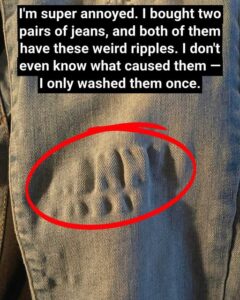
I don’t know about you, but there’s nothing more annoying to me than pulling my favorite pair of jeans out of the wash and finding strange ripples all over them. Like, what happened in there? Were they battling for their lives in the spin cycle? It’s the annoying part because they fit perfectly one moment, and in the blink of an eye, they’re knotted on your body like some washing machine was chewing you up and spitting you out. If you’ve ever had questions about jeans, funny wrinkles, and ripples, this article is for you.
And this isn’t any old fabric malfunction. There’s a reason why it happens—several, actually. Almost all popular jeans today are woven with some stretch, which helps with comfort but also makes them easier to damage. The biggest culprit? Heat. But the dryer is not solely to blame. How you wash, dry, and even store your jeans can be a game-changer.
So, if you’ve ever stood there, staring at your formerly smooth jeans and asking yourself where did things go wrong, you’re in the right spot. Let’s break it all down.
The Mystery of the Rippled Jeans
After ruining more than one pair of jeans, I did some digging to find out what’s really going on. It turns out, those fibers are doing a lot when they go for a spin in the washer and dryer. If you’re like me, you’ve probably asked yourself, “Why does this happen to my jeans in the wash/dryer? What can I do to stop it?” Let’s get into the science behind it and explore what happens to your jeans when they go through the washing and drying process.

Why Do Jeans Ripple, Pucker, or Wrinkle in the Wash?
1. Heat Deteriorates the Lycra in Your Jeans
In today’s world, jeans aren’t typically 100% cotton. Most jeans are made with a blend of cotton and stretchy fibers like Lycra or elastane, designed to provide that perfect balance between comfort and fit. These added stretch fibers allow jeans to hug the body more closely and retain their shape better over time. However, there’s a downside to the stretch—Lycra and similar fibers are highly sensitive to heat.
When exposed to high temperatures in the washer or dryer, Lycra begins to degrade. This degradation causes the denim surrounding it to warp, and that’s when you see the infamous ripples or puckering in random spots. Unlike cotton, which shrinks evenly due to heat, Lycra loses its elasticity and cannot return to its original shape, leaving behind distorted fabric. This is why you might notice the fabric rippling in specific areas rather than shrinking uniformly.
2. Washing Jeans Excessively Deteriorates the Fibers Over Time
Another common mistake is washing your jeans more often than necessary. Over-washing jeans can be detrimental because it not only causes the stretch fibers to degrade faster but also wears down the cotton fabric. Jeans are designed to be worn multiple times between washes, so excessive washing accelerates the breakdown of both the cotton and the stretchy fibers. Experts recommend washing jeans far less frequently than most of us might think. By washing them less often, you can prolong their life and keep them from getting all bent out of shape. In fact, unless there’s visible dirt or a strong odor, many jeans can go several wears without needing a wash.
How Does the Washer Cause Wrinkles and Ripples?
Even if heat isn’t the only culprit, the way jeans move around inside the washer can play a significant role in the weird wrinkles and ripples. The washer isn’t just a soak-and-rinse system. It agitates the fabric, which causes it to twist and stretch in every direction. The aggressive spinning and tumbling of the washer can distort the fabric. If you overload the washer, your jeans won’t have enough room to move freely, which increases the chances of the fabric becoming twisted or tangled. This agitation forces the jeans into all kinds of shapes that they weren’t designed to take.
3. Stretch Denim is Particularly Prone to Distortion
Stretch denim, which is made with a higher percentage of synthetic fibers like Lycra, is more likely to get messed up during this process. When the fabric is damp, it’s more susceptible to being stretched in different directions. Some areas of the fabric might stay taut, while others get pulled in. The uneven tension leads to a wavy or puckered look when the jeans dry. This can age your jeans by making them look worn out or misshapen almost immediately after washing.
The Role of Water Absorption in the Wrinkling Process
Jeans, by nature, are made of heavy fabric, and when combined with water, they become even heavier. Denim tends to absorb water unevenly, which means that different areas of the fabric will swell and shrink at different rates during the washing process.
4. Jeans Absorb Water Unevenly
The uneven absorption of water is another reason why jeans get those annoying ripples. The areas that absorb more water swell up, and when they dry, they shrink back unevenly, leaving behind creases and ripples. This happens even more frequently with jeggings or super-stretchy denim, where the fabric has a much higher percentage of elastic fibers. Super-stretch jeans are more prone to looking funky after they’ve been washed because the elasticity causes them to behave in unpredictable ways.
5. Overloading the Washer or Dryer Causes Jeans to Get Stuck in Weird Placements
If you’re trying to get all of your laundry done in one go (because who doesn’t want to avoid another load of laundry later?), overloading the washer or dryer can cause jeans to get stuck in awkward positions. When the dryer is packed full of clothes, your jeans don’t have enough space to move around, which results in uneven drying and often warped fabric. Similarly, if jeans are packed tightly in the washer, they may twist and contort in strange ways, making it harder to get rid of the wrinkles or ripples once they’re dry.
How to Stop Jeans from Developing Ripples or Puckering After Laundering
The good news: You don’t have to live with those wavy jeans forever. There are several simple steps you can take to minimize the risk of wrinkles and ripples, and keep your jeans looking fresh after every wash.
1. Wash in Cold Water Only
Lycra and other stretch fibers are highly sensitive to heat. To prevent deterioration and preserve the elasticity of your jeans, always wash them in cold water. This will keep the fibers sturdy and prevent shrinkage while protecting their stretch. Cold water also helps to minimize color fading, which keeps your jeans looking vibrant for longer.
2. Skip the Dryer (Or Use the Lowest Heat Setting)
If you want to extend the life of your jeans and keep them looking like new, air-drying is the best option. But if you must use the dryer, be sure to run it on the lowest heat setting. You should also remove the jeans while they’re still a little damp. This allows you to reshape them as they dry, preventing any major wrinkles or distortions.
3. Wash Jeans Inside Out
One of the easiest ways to protect your jeans from wear and tear is to wash them inside out. This simple step helps to reduce friction on the outer surface, which minimizes fading and stretching. It also helps to preserve the integrity of the fibers, which means you won’t have to deal with as many wrinkles or ripples after washing.
4. Use a Gentle Cycle/Hand Wash
For jeans made from stretch denim, a gentle cycle is your friend. The gentle agitation of the cycle helps preserve the fabric while still cleaning your jeans effectively. If you’re working with a pair of jeans that you really love, hand washing them is even better. It’s gentler on the fabric and ensures that your jeans are treated with the utmost care.
5. Don’t Overload the Machine
Your jeans need space to move around in the washer. When the washer is overcrowded, clothes become twisted and tangled, making it harder to remove wrinkles and ripples. Aim to wash fewer items at once so your jeans can have room to move freely. This helps them dry more evenly and prevents the fabric from getting warped.
6. Reshape Jeans Before Drying
After you remove your jeans from the wash, don’t just throw them in the dryer. If your jeans have already developed wrinkles, take a moment to lay them flat and smooth out any bunching by hand. If you’re air-drying, hang them by the waistband to prevent creases from forming.
7. Don’t Overdo the Fabric Softener
Fabric softener may make your clothes feel soft, but it can actually harm your jeans over time. Fabric softener can apply a coating to the stretch fibers, making them lose their elasticity as they age. Using too much softener or using it frequently can cause your jeans to lose their fit and stretch. Try to limit fabric softener usage, or avoid it altogether when washing stretch denim.