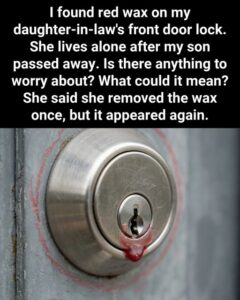
You’ve just returned home after a long day, looking forward to a quiet evening. But then something catches your eye as you approach your front door. There, on your lock, is a small, seemingly innocuous smear of red wax. You pause, frowning. At first, you think it’s just some stray wax from a candle or maybe even an accident. But as you look closer, you realize this isn’t an ordinary stain—it looks deliberate. Is it a prank? Or worse, is it a sign that your home has been targeted by criminals?
While it may seem like something out of a mystery novel, red wax on a house lock can indeed be a sign of criminal activity—specifically, it could be a warning or a signal used by burglars. This quiet marker has been reported by homeowners in various parts of the country, and while it’s not something that happens every day, it’s worth knowing what it could mean and how you should respond.
So, what does red wax on your house lock really signify? Should you be concerned, and what steps should you take if you find it? Let’s break down the meaning behind this eerie sign, understand why it’s used, and explore the precautions you should take to protect your home.
Red Wax: A Warning or a Mark?
In many cases, red wax on your lock is not a random occurrence. It’s a deliberate marking that criminals may use to communicate with each other. It’s part of a silent signaling system that is often used by burglars and other criminals to indicate something about the property in question. Just like spies use secret codes or symbols to communicate covertly, burglars often leave subtle clues to coordinate their activities.
In particular, red wax might indicate that someone has been watching your house and has marked it as a potential target. It’s a signal to others that your home is worth investigating or even burglarizing. While it’s not an official “burglar code,” it’s widely believed that marks like these are part of a criminal communication system, where each symbol or color might mean something different.
One of the reasons red wax (or other similar markings) is used is because it’s subtle and easily overlooked by an untrained eye. It’s not obvious to the average person, so burglars can mark homes without drawing too much attention. To the criminal who knows what to look for, though, red wax is like a neon sign signaling, “Take a closer look at this place.”
Why Use Red Wax?
So, why exactly is red wax the chosen medium for these markings? The answer lies in its visibility and discreetness. Red is a color that stands out but doesn’t scream for attention in the way something like neon yellow or bright orange might. It’s noticeable enough that those in the know will recognize it as a signal, but it blends easily into the surroundings. A passerby might not even notice it, especially if it’s placed on a lock where the metal already has a reddish tint, but someone who understands what to look for will see it immediately.
Wax is also incredibly easy to apply and remove. Criminals want to leave a mark, but they also want to make sure that if they get caught, they won’t leave behind permanent evidence. Wax is easy to wipe off, leaving no long-lasting trace. This makes it an ideal material for leaving a quiet mark that will disappear without a trace once the job is done.
What Should You Do If You Spot Red Wax?
First, let’s emphasize that you should not panic if you find red wax on your house lock. While it’s important to take it seriously, it doesn’t necessarily mean that an intruder is about to break into your home. However, it is worth investigating, as it could be a sign that your property is under surveillance or has been marked as a potential target.
Here’s a step-by-step plan of action if you notice red wax on your door lock:
1. Inspect Your Property
Don’t just focus on the lock. Walk around your house and check for any other strange marks or signs of tampering. Look at your windows, doors, and other entry points. Burglars often test a home’s security before attempting a break-in, and these marks could be part of a pattern. You might find other suspicious signs, like scratched paint, broken security lights, or damaged door frames. Criminals tend to check for weaknesses and vulnerabilities before they strike, so paying close attention to other areas of your home can give you a better idea of whether your house is being targeted.
2. Replace or Upgrade Your Lock
If you find red wax or notice other signs of tampering, one of the best things you can do is to replace or upgrade your locks. Consider investing in high-security locks or even a smart lock system. Modern security systems are much harder to bypass than older locks, and adding features like keyless entry, biometric security, or remote monitoring can significantly increase the difficulty for a potential intruder to break in. The more secure you make your home, the more likely criminals will move on to a softer target.
3. Install Security Cameras
One of the most effective deterrents for burglars is the visibility of a security camera. A visible camera on your front door or near entry points signals to potential intruders that they are being watched. Criminals are far less likely to attempt a break-in if they know they’ll be caught on camera. If you don’t have a camera, it’s worth considering installing one. Many affordable, easy-to-install cameras are available today, and they can be a lifesaver in terms of deterring crime or providing evidence if a break-in occurs.
4. Talk to Your Neighbors
Neighbors can be an invaluable resource when it comes to spotting suspicious activity. Don’t keep your concerns to yourself—let your neighbors know about the red wax you found, and ask if they’ve noticed anything strange in the area. It’s possible that others in the neighborhood have seen similar markings or noticed unusual activity that could help piece together what’s going on. A neighborhood watch system can be an excellent way to stay alert and help protect each other from potential threats.
5. Notify the Police
Even if you’re unsure about the meaning of the red wax, it’s always a good idea to contact the police and let them know about your findings. It’s better to be safe than sorry. Law enforcement can take the necessary steps to investigate the situation and may be able to alert other residents in the area if they discover a pattern of suspicious behavior. Often, local authorities track criminal patterns and could use your report to help prevent future incidents. Having a formal report filed will also make it easier to follow up with law enforcement if things escalate.
Staying One Step Ahead: Additional Precautions
Red wax on your house lock is just one small clue in a larger puzzle, but it’s important to always stay one step ahead when it comes to securing your home. Here are a few other things to consider:
1. Evaluate Your Daily Routine
Many burglars target homes based on predictable routines. Do you leave for work at the same time every day? Do you have a pattern of leaving your house empty at certain hours? Burglars often watch for routines so they can pick the most opportune time to strike. Consider mixing up your schedule, if possible, to make it harder for criminals to predict when your home will be empty. Even small changes, like having someone pick up your mail or park a car in your driveway when you’re away, can send a message that your home is occupied.
2. Don’t Advertise Your Absence
One of the easiest ways for burglars to know when a house is unoccupied is by watching for signs of absence. For instance, an overflowing mailbox or an overgrown lawn can signal that no one is home. If you’re going on vacation, consider asking a neighbor or friend to collect your mail, mow your lawn, and generally make the house look lived-in. Criminals are much less likely to target a home that appears regularly maintained and occupied.
3. Secure Your Windows and Doors
Locks are one of the first things burglars target when attempting to break into a home, but windows and sliding glass doors are also vulnerable. Make sure your windows are locked and that any sliding doors are secured with a bar or dowel to prevent them from being easily opened. Burglars are often looking for an easy entry point, and if they can’t find one, they may move on to a less secure property.
A Personal Story: Red Wax and a Close Call
When I first learned about the significance of red wax on locks, I was a bit skeptical. However, I had a close friend who had a similar experience that made me rethink everything. Last year, she found a strange marking on her front door’s lock, but she shrugged it off as a random accident. A few days later, someone tried to break into her house while she was away at work.
Fortunately, she had recently invested in a motion-sensor camera that recorded the entire incident. The camera footage helped the police identify a suspicious individual in the neighborhood and provided critical evidence that helped stop future break-ins. That small investment in security paid off in a big way, and it made her realize how crucial it is to stay vigilant, even when things seem small or insignificant.
Conclusion: Protect Your Home
Red wax on your house lock might seem like a random inconvenience, but it’s worth paying attention to. Whether it’s a signal from criminals or just a harmless marking, taking steps to protect your home is essential. By staying vigilant, upgrading your security, and working with your neighbors, you can