Many people have experienced that brief moment of confusion—or even concern—when opening a can of Spam and noticing small white bits scattered throughout the meat. At first glance, these pale spots can look unusual, especially if you’re not familiar with how processed meats are made.
For some, the immediate thought is that something might be wrong with the food. Questions like “Is this mold?” or “Is it safe to eat?” often come to mind right away.
If you’ve ever had that reaction, you’re definitely not alone.
The good news is that in most cases, those white bits are completely normal and harmless. In this detailed guide, we’ll break down exactly what they are, why they appear, how Spam is made, and how to tell the difference between normal food characteristics and signs of spoilage.
What Is Spam Made Of?
To understand the white bits, it helps to first understand what Spam actually contains.
Spam is a pre-cooked canned meat product that has been around for decades. It’s made primarily from pork and ham, combined with a few additional ingredients that help preserve the product and maintain its texture.
Typical ingredients include:
- Pork (including both lean meat and fat)
- Ham
- Salt
- Water
- Modified potato starch
- Sugar
- Sodium nitrite (used as a preservative)
That’s the complete formula—no mysterious additives or unusual substances.
Because Spam uses a blend of meat that includes both lean and fatty portions, it naturally contains fat throughout the product. This is an important detail when trying to understand the appearance of white spots.
Why Fat Is an Important Part of Processed Meat
Fat often gets misunderstood, especially in processed foods. However, in products like Spam, fat plays a key role.
It contributes to:
- Flavor
- Moisture
- Texture
- Structure
Without fat, Spam would be dry, crumbly, and difficult to slice. The smooth, cohesive texture that people recognize comes from the balance between lean meat and fat.
This means that seeing fat within the product is not only normal—it’s expected.
How Spam Is Manufactured
The process used to create Spam also helps explain why the white bits appear.
Here’s a simplified breakdown of how it’s made:
- Pork and ham are ground together
- Seasonings and preservatives are added
- The mixture is blended into a uniform texture
- It is packed into cans
- The cans are sealed tightly
- The product is cooked inside the sealed can
This final step—cooking the meat inside a sealed container—is essential. It sterilizes the contents and allows the product to be stored safely for long periods without refrigeration.
Because everything is sealed and cooked together, all components—including fat—become evenly distributed throughout the meat.
What Are the White Bits in Spam?
Now to answer the main question.
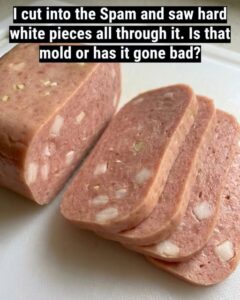
The white bits you see inside Spam are typically solidified fat.
When pork fat cools, it turns from a soft or liquid state into a firm, white or off-white substance. This is completely natural and happens in many types of meat, not just Spam.
In some cases, you may also notice tiny pieces of connective tissue mixed in with the fat. These are also normal parts of meat and do not indicate any issue with the product.
Why the White Bits Look More Noticeable
There are a few reasons why these fat deposits can stand out visually:
- The contrast between white fat and pink meat
- The firm texture of fat when cold
- The way light reflects off solid fat
If the Spam has been refrigerated, the fat becomes even more solid, making the white bits more prominent.
This can make them appear unusual if you’re not expecting them, even though they are a standard part of the product.
Are the White Bits Mold?
This is the most common concern—and an important one to address clearly.
In the vast majority of cases, the white bits in Spam are not mold.
There are key differences between fat and mold that can help you identify what you’re seeing.
How to Tell the Difference Between Fat and Mold
Characteristics of Fat:
- Smooth and firm texture
- White or slightly creamy color
- Evenly distributed throughout the meat
- Blends naturally with the product
Characteristics of Mold:
- Fuzzy, powdery, or patchy appearance
- Colors such as green, blue, black, or gray
- Typically forms on the surface
- Often accompanied by an unusual or unpleasant odor
Because Spam is sealed and heat-processed, mold growth inside an unopened can is extremely unlikely.
Why Mold Is Rare in Canned Foods
Canned foods like Spam are designed to be shelf-stable.
The sealed cooking process eliminates harmful microorganisms and prevents new ones from entering as long as the can remains intact.
This means that mold can only develop if:
- The can has been damaged
- The seal has been compromised
- The product has been improperly stored after opening
Otherwise, the environment inside the can does not support mold growth.
Signs That Spam May Not Be Safe to Eat
Even though the white bits are usually harmless, it’s still important to check for other warning signs.
You should avoid eating the product if you notice:
- A bulging or swollen can
- Leaks or moisture escaping before opening
- Severe dents along the seams
- Strong or unpleasant odors after opening
- Slimy texture or unusual discoloration
These signs may indicate that the seal has been compromised or that spoilage has occurred.
The Importance of Checking the Packaging
Food safety often depends more on the condition of the packaging than the appearance of the food itself.
With Spam, the sealed can is what protects the contents.
If the can is intact and shows no signs of damage, the product inside is typically safe.
What Happens to the White Bits When You Cook Spam
One of the easiest ways to confirm that the white bits are fat is to cook the Spam.
When heated, fat undergoes a transformation:
- Solid fat melts into liquid
- The white color becomes translucent
- The fat blends into the meat
As you cook Spam—especially when frying—you’ll notice that the white bits disappear. They melt into the surrounding meat, enhancing flavor and texture.
Why Melted Fat Improves Taste and Texture
When the fat melts, it:
- Adds moisture to the meat
- Creates a crispy exterior when frying
- Enhances overall flavor
This is why Spam develops a golden, slightly crispy surface when cooked properly.
The fat is not just present—it actively contributes to the eating experience.
Common Misconceptions About Spam
There are several myths about Spam that can cause confusion:
Myth 1: White spots mean contamination
Reality: They are usually just fat.
Myth 2: Processed meat contains unknown substances
Reality: The ingredient list is straightforward and clearly labeled.
Myth 3: Any unusual appearance means the food is unsafe
Reality: Many natural components of food can vary in appearance.
Understanding these facts can help reduce unnecessary worry.
Tips for Storing Spam Safely
To ensure the best quality and safety:
- Store unopened cans in a cool, dry place
- Avoid denting or damaging the can
- Refrigerate leftovers after opening
- Consume opened Spam within a few days
Proper storage helps maintain both safety and flavor.
Why Visual Appearance Can Be Misleading
Food doesn’t always look perfect, especially when it contains natural ingredients like fat.
The appearance of white bits in Spam may seem unusual at first, but it’s simply part of how the product is made.
Learning to recognize normal variations can make a big difference in how we interpret what we see.
Final Thoughts: No Need to Worry About White Bits in Spam
If you open a can of Spam and notice white bits, there’s usually no reason for concern.
In most cases, those spots are simply solidified fat—a natural and essential component of the product.
As long as:
- The can is undamaged
- There’s no unusual odor
- The texture and color appear normal
…you can feel confident that the product is safe to eat.
Key Takeaway
The next time you see white specks in Spam, you’ll know exactly what they are.
Not mold.
Not contamination.
Just a natural part of the meat that helps give Spam its flavor, texture, and consistency.
Understanding this can turn a moment of uncertainty into one of confidence—and maybe even appreciation for how food is made.