I didn’t go to the shelter looking for a miracle—I went looking for a goodbye. The kind of goodbye you choose on purpose, knowing it will hurt, because leaving love unused hurts even more. When the volunteer told me the dog I was asking about likely had only a few weeks left, I nodded like I was prepared. But the truth is, I didn’t fully understand what I was walking into. My husband, Daniel, and I had built a life that looked “fine” from the outside: steady jobs, a modest home, neat routines. Yet inside our walls, something had been missing for so long that silence started to feel like a permanent resident.
For years, we carried the same dream—having a child—until it slowly became too painful to even mention. At first we talked about it constantly, tracking hope like it was a schedule we could control. But after disappointment piled onto disappointment, our words began to disappear. We stopped bringing it up at dinner. We stopped looking at baby aisles in stores. We became experts at filling empty spaces with chores, errands, and work. One quiet night at the kitchen table, I finally said it out loud: maybe we should get a dog. Something alive to care for, something to bring warmth back into the house. Daniel hesitated, saying he didn’t want something loud or chaotic, but after a long pause, he agreed to “just look.”
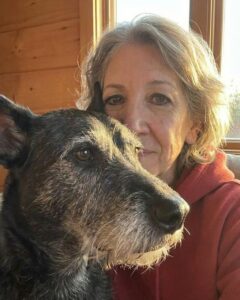
That Saturday, the shelter was full of noise—barking, jumping, wagging tails, hopeful eyes. But in the far corner, away from the commotion, was Daisy. She was small, old, and so still she almost blended into the shadows. Her muzzle was silver, her body thin, and her eyes looked like they had seen too many endings. When I knelt beside her, she didn’t rush forward like the others. She simply lifted her head, watched me carefully, and tapped her tail once… then again, as if she was quietly choosing me too. The staff told us she was twelve, sick, and only eligible for hospice adoption. Daniel immediately pulled back. “We can’t do that,” he said, his voice sharp with fear. “We’re not bringing home heartbreak.” But I wasn’t looking for a dog to save—I was looking for one to love.
And somehow, Daisy did save something anyway. In the weeks that followed, our home began to change, not with noise, but with gentle routines: slow morning walks, soft paws across the hallway, warm naps beside our feet. Daniel started refilling her water bowl without being asked. I found him talking to her in the evenings, like she could understand every word. The silence between us didn’t vanish overnight, but it softened—like a room finally letting in air after years of closed windows. Even as Daisy grew weaker, she brought warmth back into places that had been cold for too long. And when her time came, she left us with something we didn’t expect from a dog we thought we were only helping: a reminder that love doesn’t need years to matter… and that sometimes the smallest companion can bring a broken home back to life.