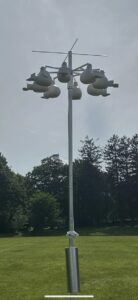
Have you recently taken a stroll through your local park and spotted tall poles dotted with what look like white surveillance pods or curious weather instruments? These towering structures, standing over 12 feet high, may have caught your attention. At first glance, they might seem like high-tech devices designed for monitoring weather conditions or surveilling the park. However, if you’ve been wondering what those odd-looking objects are, the truth may surprise you. They aren’t cameras or weather sensors at all—they’re purple martin gourd houses, designed to help one of North America’s most beloved migratory birds thrive.
These unusual-looking structures are more than just decorative poles. They serve a vital role in supporting the purple martin, the largest swallow in North America. For those unfamiliar with this fascinating bird and its unique nesting habits, these gourd houses represent a commitment to wildlife conservation and a glimpse into the harmonious relationship between humans and birds. Let’s dive deeper into the intriguing world of purple martins, their reliance on artificial nesting structures, and the role parks and other open spaces play in their survival.
What Are Purple Martins?
Before understanding why these curious “pods” exist, it’s important to learn about the bird they aim to serve. Purple martins are not your average backyard birds. Known for their impressive aerial acrobatics and glossy, dark-blue feathers, purple martins are a joy to observe as they swoop and dive in pursuit of flying insects. From a distance, these birds may appear almost black, but upon closer inspection, their feathers shine with a deep, iridescent purple hue.
Characteristics of the Purple Martin
-
Size: Purple martins are the largest species of swallow in North America, measuring around 7 to 8 inches in length. Their wingspan stretches up to 16 inches, allowing them to soar gracefully through the air.
-
Feeding Habits: These birds primarily feed on insects, especially flying ones like dragonflies, moths, beetles, and mosquitoes. A single purple martin can consume hundreds of insects in a day, helping control bug populations in their territory.
-
Migration: Purple martins are migratory birds, traveling thousands of miles each year. They spend their winters in the warm climates of South America, particularly in countries like Brazil, Argentina, and Bolivia, before returning to North America in the spring.
-
Social Behavior: Unlike other birds that prefer solitary nesting, purple martins are highly social and prefer to nest in colonies. They thrive in environments where multiple families can coexist close together. This social nature is one of the reasons why they’ve become so reliant on man-made nesting sites.
Purple martins are a joy for bird watchers and are often seen performing incredible aerial maneuvers, making them a favorite subject for those who love observing wildlife in motion. Their role in maintaining the balance of insect populations also adds to their ecological importance. However, despite their popularity and their benefits to ecosystems, purple martins face a significant challenge: finding suitable places to nest.
Why Do Purple Martins Need Human-Made Housing?
Unlike many birds that build their own nests in trees, purple martins have a unique dependency on man-made housing. This dependency has deep roots in history and a longstanding relationship with humans.
Loss of Natural Nesting Sites
Historically, purple martins would nest in the cavities of dead trees, particularly those of large hardwoods. However, over time, as human development spread and the natural landscape changed, these once-abundant tree cavities became less common. As forests were cleared for agriculture, construction, and urban development, the availability of these nesting sites drastically decreased.
In the Eastern United States, where purple martins are most common, the problem was particularly severe. Urbanization and deforestation took a heavy toll on natural purple martin nesting sites, and the birds were forced to adapt. To survive, they began to rely on artificial structures, such as man-made nesting boxes and gourds, to create their homes.
Why the Relationship with Humans?
Early settlers and Native Americans had already recognized the purple martin’s need for housing. As a result, they started hollowing out gourds and hanging them on poles to provide a safe, dry, and suitable space for the birds to nest. This practice was not only beneficial to the birds but also served as a way for humans to attract the beneficial martins, which helped keep insect populations in check.
The relationship between purple martins and humans has evolved over the centuries, and it remains strong today. Many birders, conservationists, and even park authorities now continue this practice of providing safe nesting spaces for these birds, fostering the continued success of the purple martin population.
Why the Gourd Shape?
You might wonder, why are these modern birdhouses shaped like gourds? The answer lies in tradition and functionality. The shape of the housing mimics the original gourd nests used by Native Americans and early settlers. These gourd-style nesting boxes have a number of advantages for the purple martin:
Protection from Predators
Gourds are designed to offer the birds protection, especially from predators. The bulbous, round shape of the gourd makes it difficult for climbing predators—such as snakes, raccoons, or squirrels—to reach the eggs or chicks inside. Many of these gourd houses are mounted on tall poles, further elevating them beyond the reach of most ground-based threats.
Ample Space for Nesting
Gourds provide a comfortable amount of space for purple martins to build their nests. The hollow interior is ideal for the birds to construct their nests out of twigs, grasses, and other materials, offering enough room for the female to lay her eggs and for the chicks to grow.
Ventilation and Drainage
Ventilation and drainage are essential for keeping the birds and their eggs healthy. Gourd-style houses typically have small holes or openings that allow for airflow, preventing the buildup of heat and moisture. This is especially important in warmer months when excessive heat could harm the eggs or chicks.
What Do These Gourd Houses Do for Purple Martins?
If you’ve spotted a tall pole with a set of gourd-like structures in a local park, it’s part of a greater effort to support purple martin populations and their continued survival.
Creating Safe Nesting Sites
The primary goal of these gourd houses is to provide safe, suitable spaces for purple martins to nest. In the wild, the lack of natural tree cavities can make it extremely difficult for martins to find a secure place to raise their young. By providing artificial nesting sites, park authorities and birding organizations ensure that these birds have a safe and comfortable environment in which to raise their offspring.
Supporting Bird Conservation
Purple martins, like many migratory species, are facing challenges due to habitat loss, climate change, and predation. By installing gourd houses in public parks and open spaces, conservationists aim to support bird populations and encourage successful breeding. These efforts are vital to ensuring that purple martins can continue their journey each year without facing further threats to their survival.
Controlling Insect Populations
Purple martins play an important role in natural insect control. These birds are voracious consumers of flying insects, including mosquitoes, flies, and moths. In fact, a single purple martin can eat hundreds of insects each day. By encouraging the presence of purple martins in parks and other open spaces, municipalities and parks are helping control local insect populations without the use of harmful pesticides. This creates a more natural and eco-friendly solution to pest control.
What You’re Likely Seeing in the Park
If you’re walking through a park and notice one of these tall poles with hanging white, gourd-shaped containers, you’re likely witnessing an intentional setup for purple martins. Here’s what you might observe:
Multiple Gourd Units
A typical purple martin setup consists of several gourd-like units, each of which serves as an individual nesting chamber. These units are often arranged around the pole in a circular or clustered formation, mimicking the communal nesting behavior of purple martins in the wild. The clustering of multiple gourds ensures that the martins can live in close proximity to one another, which is essential for their social behavior.
Telescoping or Pulley Systems
Many purple martin setups are equipped with telescoping poles or pulley systems, which allow park caretakers to safely lower and inspect the gourds. This makes it easier to check on the health of the nests and monitor the success of the colony. Additionally, the ability to lower the gourds ensures that any necessary maintenance—such as cleaning out old nests or removing damaged gourds—can be done without disturbing the birds.
Smooth Pole Guards
At the base of the pole, you’ll often see a smooth, metallic guard. This guard is designed to deter predators like snakes or raccoons from climbing the pole to reach the nests. The smooth surface makes it difficult for these animals to gain a foothold, offering the martins added protection from threats.