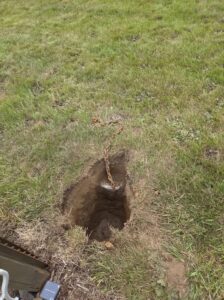
I recently found myself confronting a stubborn relic of the past while replacing the weathered, leaning mailbox at the end of my driveway. As I dug into the earth to remove the cracked wooden post, my shovel struck something unexpectedly solid, sending a jolt through my arms and a brief, thrilling thought of buried treasure through my mind. However, as the dirt cleared, I realized I hadn’t found gold, but rather a thick, rusted metal chain buried eight inches beneath the surface. It was a rural mailbox anchor—an ingenious, low-tech solution born from the absolute necessity of protecting property in an environment where the isolation of country roads often invites mindless destruction.
Growing up in the countryside, I witnessed firsthand how mailbox vandalism was often treated as a rite of passage for restless teenagers. It was a costly and exhausting cycle for homeowners, who frequently woke up to find their essential fixtures obliterated after a weekend of revelry. In response to this financial burden, rural residents began to prioritize self-defense and physical resilience, turning their mailboxes into formidable opponents. We saw posts filled with concrete, reinforced with heavy steel pipes, or, as in the case of my own yard, anchored deep into the ground with heavy-duty chains. This wasn’t just a maintenance task; it was a cultural statement of grit against the anonymity of rural mischief.
As I tugged on the chain and felt it firmly resist my efforts, I realized that I was touching the legacy of the person who lived here before me—someone who had clearly faced the same frustrations and responded with grassroots ingenuity. I ultimately decided to leave the anchor buried, acknowledging that physics remains a far more unwavering ally in these parts than modern technology. While a speeding truck might not be deterred by a camera or a motion sensor—especially in areas where cellular signals are a luxury—it can certainly be halted by the sheer, immovable physicality of a well-anchored post. It is a pragmatic balance between security and the law, proving that sometimes the oldest methods are the most reliable.
This hidden piece of history is a silent testament to the tenacity that defines rural life, where neighbors share resources and ideas to solve common problems collaboratively. The chain represents a broader narrative of community spirit, a reminder of a time when people protected their shared spaces without the need for elaborate high-tech systems. As I stand by my new mailbox, I feel a profound connection to the generations of residents who understood that resilience comes from being grounded. It is a link between our past and our future, reminding us that while the complexity of modern life grows, the fundamental values of resourcefulness and shared responsibility remain the most enduring answers of all.