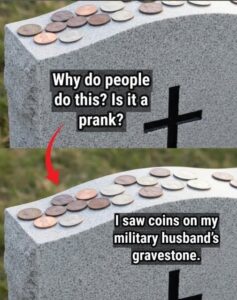
On a quiet morning in a cemetery, you might notice something small but deeply meaningful resting atop a gravestone — a single coin. To the casual passerby, it may seem like a simple gesture, but to many, especially within the military community, it carries a profound message of remembrance and honor. The act of leaving coins on gravestones isn’t about money; it’s about connection — a silent conversation between the living and the departed, expressing gratitude, respect, and shared experience in a way that words often cannot.
The tradition’s origins reach far back in time. Some trace it to ancient Rome, where mourners placed coins with the dead to pay Charon, the mythological ferryman who guided souls across the River Styx. Centuries later, the gesture reemerged during the Vietnam War — a time of deep political and emotional division. Soldiers and friends began leaving coins on the graves of fallen comrades as a quiet form of acknowledgment. It was a way to say, “I remember you,” without stirring painful debate or demanding conversation — a humble symbol of unity when words could so easily divide.
Each coin left behind carries a distinct meaning. A penny simply says, “I visited,” a small act of remembrance. A nickel means the visitor trained with the deceased in boot camp, a nod to shared beginnings. A dime signifies they served together — brothers or sisters in arms who faced the same battles. The most powerful token, a quarter, speaks volumes: it means the visitor was there when the soldier fell. These coins become more than metal; they tell silent stories of loyalty, sacrifice, and enduring brotherhood.
Today, the tradition continues to evolve, extending beyond military graves to anyone wishing to honor the memory of a loved one. In every culture, coins symbolize something lasting — gratitude, remembrance, even a wish for peace. Each small piece left behind serves as a reminder that memory doesn’t fade when life ends; it simply changes form. Whether in a quiet cemetery or on a weathered headstone halfway around the world, these simple coins speak a universal truth — that love, respect, and remembrance never truly die.