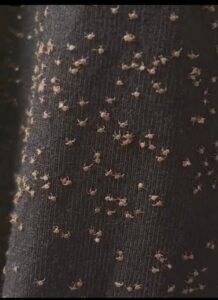
A leisurely walk through a park, a trail, or a sun-dappled field often feels like a simple escape—a chance to breathe, stretch your legs, and let your mind wander. Yet, for those who pause to examine the aftermath of such outings, nature is always quietly leaving its mark. A common experience, often overlooked, is returning home only to notice small, stubborn specks clinging to your pant legs, socks, or shoes. At first glance, these tiny hitchhikers can spark curiosity or even mild alarm. Are they insects? Pieces of dirt? Something hazardous?
The truth is far more fascinating: what you are seeing are usually plant seeds designed to attach themselves to moving animals and humans. This simple encounter offers a window into an ancient and highly effective survival strategy, showing how plants without the ability to move can nonetheless travel great distances, colonize new habitats, and maintain ecological balance—all by leveraging unsuspecting passersby as carriers.
The Hidden World of Hitchhiking Seeds
How Plants Travel Without Legs
Plants lack the ability to move across landscapes, but they have developed ingenious strategies to ensure their offspring reach suitable locations. One of the most effective methods is external dispersal, known scientifically as epizoochory, where seeds attach to the outside of animals—or humans—to reach new territory. Unlike seeds that rely on ingestion and excretion (endozoochory), these hitchhiking seeds need only momentary contact to begin their journey.
The evolutionary logic is simple: seedlings growing too close to their parent face intense competition for sunlight, nutrients, and water. By spreading seeds to distant areas, plants enhance survival rates and genetic diversity. Through thousands of years of natural selection, plants have refined their methods, creating seeds that cling securely but not permanently—allowing transport without losing the ability to germinate.
The Mechanics Behind Sticky Seeds
Many of these seeds seem almost engineered for maximum efficiency. Burdock burrs, for instance, have tiny hooks that latch onto fabric fibers and animal fur with remarkable tenacity. This precise design inspired Velcro, one of the most ubiquitous inventions of the twentieth century. Other seeds, like those of beggar’s lice or cleavers, feature fine bristles or sticky coatings that grip even smooth surfaces. The materials and shapes of these seeds are far from random; they are the result of millennia of adaptation, ensuring the plant’s survival and proliferation.
Common Hitchhikers and Where You’ll Find Them
Different environments host different species of clinging seeds, each with unique strategies for attachment.
Meadows, Fields, and Forest Edges
-
Beggar’s lice (tick trefoil): Known for flat, segmented seeds that cling in clusters, often attaching to jeans or jackets.
-
Burdock: Produces larger, rounded burrs with stiff hooks, almost impossible to remove without brushing or picking.
-
Cleavers (goosegrass): Possess soft, fuzzy stems and seeds that adhere gently but persistently.
Drier or Sandy Areas
-
Sandburs: Small, spiny seeds that can puncture socks or embed painfully in shoes.
-
Needle grasses: Sharp-pointed seeds that attach to fabric or fur and can travel surprisingly long distances.
Each plant species occupies a niche within its ecosystem. They rely on movement—often generated by humans, pets, or wildlife—to spread their seeds efficiently. Trails, paths, and frequented fields serve as natural highways for dispersal, illustrating how human activity inadvertently shapes plant distribution patterns.
Why Clinging Seeds Matter for Ecosystems
Though these hitchhikers can be a nuisance on clothing, they play a vital ecological role. By distributing seeds across diverse areas, they:
-
Promote biodiversity: Allowing a variety of plants to grow in new areas helps maintain balanced ecosystems.
-
Prevent soil erosion: Pioneer plants like sandburs or cleavers often stabilize loose soil along trails or disturbed land.
-
Provide habitat: Clinging seeds grow into plants that offer shelter and food for insects, birds, and small mammals.
Interestingly, some of these species are classified as pioneer plants, meaning they are among the first to colonize disturbed soil. Their presence prepares the environment for other species, supporting ecosystem recovery after construction, natural disasters, or seasonal disturbances.
Practical Considerations for Humans and Pets
While fascinating from a biological perspective, clinging seeds can pose practical challenges. Left unchecked, they can spread invasive species or irritate animals and humans.
Removing Seeds from Clothing
-
Lint rollers and adhesive tape: Highly effective for clusters of small seeds.
-
Tweezers or combs: Useful for stubborn burrs embedded in fabric.
-
Outdoor brushing: Always remove seeds outside to prevent indoor contamination.
-
Washing: Helps remove microscopic hooks or sticky coatings that persist on clothing fibers.
Caring for Pets
Pets often serve as unintentional seed carriers. Burrs and sticky seeds can mat fur, irritate skin, or even cause minor infections if left untreated. Regular grooming and inspection after outdoor walks help reduce risks while keeping your pets comfortable.
The Science and Innovation Inspired by Hitchhiking Seeds
Nature’s ingenuity is not limited to survival in the wild—it has inspired human innovation. Swiss engineer George de Mestral famously invented Velcro in 1941 after examining how burdock burrs clung to his clothing and his dog’s fur. By replicating the tiny hooks on the burrs, he created a fastening system that is now used in countless applications, from fashion to aerospace. This simple observation demonstrates how studying natural adaptations can lead to technological breakthroughs.
How Ordinary Walks Connect Us to Nature
Every time you brush past tall grass, weeds, or trail-edge plants, you become part of a vast, interconnected network of movement. Human and animal activity helps seeds find new soil, promoting plant survival and sustaining ecosystems.
Rather than viewing sticky seeds solely as annoyances, it can be enlightening to see them as evidence of life persisting and adapting. Each clinging seed tells a story of survival, clever engineering, and the subtle ways plants interact with the world around them.
Tips for Enjoying Nature Without Unwanted Guests
For those who love outdoor walks but want to minimize seed attachment, a few preventive strategies can help:
-
Choose clothing wisely: Smooth fabrics attract fewer seeds than textured or velvety materials.
-
Stick to cleared paths: Walking through open trails reduces contact with seed-producing plants.
-
Check yourself and pets: Make it routine to inspect clothing and fur after every walk.
-
Educate children: Teach them why seeds cling and how to remove them safely.
-
Spread awareness: Understanding seed dispersal helps hikers, gardeners, and pet owners make informed decisions about where they walk and how seeds might be spread inadvertently.
These simple steps balance appreciation of nature with practical hygiene, demonstrating that curiosity and caution can coexist.
The Larger Ecological Message
Finding clingy seeds on your pant legs may seem trivial, but it’s an entry point to understanding broader ecological dynamics:
-
Connectivity of ecosystems: Seeds traveling on animals link distant habitats, creating corridors for plant species.
-
Co-evolution: Many plant species evolved specifically to exploit animal movement, showing the deep interdependence of species.
-
Human impact: Hikers, pets, and even city walkers unintentionally shape plant communities through dispersal.
In essence, the humble clinging seed reminds us that even the smallest natural interactions can have profound effects on ecosystems. It emphasizes that humans are not separate from the environment—we are part of it, whether we realize it or not.
Observing Nature’s Ingenious Survival Strategies
The next time you notice your pant leg dotted with tiny seeds, take a moment to consider the complexity behind the simple act of attachment:
-
Each hook, bristle, or sticky patch evolved for efficiency.
-
Every interaction with a passerby is part of a life-or-death strategy for plants.
-
Even brief contact—just brushing against a human leg or a dog’s fur—can mean the difference between thriving and perishing.
These observations highlight the remarkable intelligence of natural systems. Evolution, while not conscious, produces outcomes that seem almost purposeful. For millions of years, plants have honed these techniques, ensuring their survival through meticulous adaptation. In this way, your walk becomes a lesson in biology, engineering, and ecological stewardship.
A Walk Is Never Just a Walk
On one level, clinging seeds are minor inconveniences—small, stubborn reminders of the outdoors. Yet, they also illustrate nature’s resilience, creativity, and interconnectedness. Every burr, every fuzzy seed, and every tiny hitchhiker represents a story of adaptation, a survival tactic perfected over millennia.
By observing these seeds, we gain insight into:
-
Evolutionary design: How physical traits evolve for specific purposes.
-
Ecosystem function: How plants contribute to soil stabilization, biodiversity, and habitat formation.
-
Human influence: How everyday movement unintentionally affects the environment.
These simple moments, often overlooked, remind us that even mundane activities—like walking to the park—participate in a grand, living system. Your clothing, your pets, and your movements all become part of nature’s web, helping to maintain and expand ecosystems. In essence, every step taken outside contributes to the ongoing story of life.
The Takeaway
Next time you notice stubborn seeds clinging to your pants or your dog’s fur, resist the urge to brush them off immediately in frustration. Instead, consider the incredible strategies behind their design. Recognize that these tiny hitchhikers are both survivors and teachers, connecting you to the natural world in subtle but meaningful ways.
A simple walk can reveal:
-
The ingenuity of plant adaptations.
-
The interconnectedness of species across landscapes.
-
The hidden ways humans contribute to ecological networks.
What might initially seem like an inconvenience is, in fact, a lesson in resilience, creativity, and interdependence. By understanding the story behind each clinging seed, you gain appreciation not just for plants, but for the larger systems of life that surround and include us.