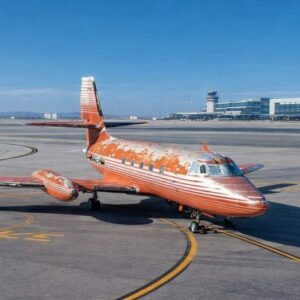
The 1962 Lockheed JetStar, once a centerpiece of Elvis Presley’s lavish lifestyle, has surfaced for auction, though its current state is a far cry from its former glory. Co-owned by Elvis and his father, Vernon Presley, this aircraft served as a testament to the King’s cultural dominance during the 1960s and 70s. However, after languishing on a New Mexico runway for more than thirty years, the jet has become a skeletal remains of a bygone era. Stripped of its engines and battered by the elements, the rusted fuselage now serves as a poignant reminder of the impermanence of fame and the material markers of success.
During the peak of Elvis’s career, this JetStar was a high-speed sanctuary designed to ferry him between sold-out performances at 500 mph. The interior was a masterpiece of mid-century celebrity extravagance, featuring custom furnishings, plush seating, a private lounge, and a fully equipped bar. It was more than just a mode of transportation; it was an extension of his larger-than-life persona, offering a safe haven from the chaotic adoration of his fans. For aviation enthusiasts, the plane represents the “golden age” of private flight, where the skies were a playground for the world’s most elite icons.
The aircraft is now being offered for sale “as is” for the second time in less than two years, presenting a complex dilemma for potential collectors and historians. While the jet’s vibrant colors and polished exterior have long since faded into a dull, corroded shell, its connection to the Presley legacy keeps its market value a topic of intense debate. Investors must weigh the jet’s historical significance against the monumental effort required to preserve it. The decline of the JetStar mirrors the fleeting nature of rock ‘n’ roll royalty, standing as a tangible link to a time when electric guitar riffs and screaming crowds ruled the American cultural landscape.
Prospective buyers face a massive restoration project that involves replacing missing engines, refurbishing the custom interior, and addressing decades of severe structural corrosion. Whether the JetStar is eventually restored to flying condition or preserved as a static museum exhibit, its value lies in its ability to bridge the gap to an electrifying era of music history. It remains a coveted artifact that captures the essence of a transformative period in American culture, inviting us to reflect on the dreams that drive us toward the skies. Ultimately, the jet serves as a timeless legacy, ensuring that the spirit of the King continues to echo long after his final flight.