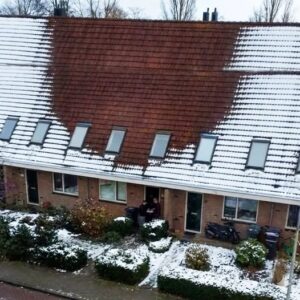
The snow was falling thick and fast over a quiet Dutch neighborhood, coating cars, trees, and rooftops in a soft white blanket. But one house on the street stood out in a way no one could ignore. While every other roof slowly disappeared under layers of snow, this one remained completely bare—no frost, no slush, not even a thin dusting of white. At first, the neighbors thought it was a coincidence or some odd quirk of the wind, but as the snowfall continued and the roof stayed strangely clear, concern slowly replaced curiosity.
Whispers started to spread. Residents knew that in winter, a warm roof can sometimes mean something more than good insulation. Eventually, several neighbors decided the situation was suspicious enough to report. When authorities arrived and inspected the property, they uncovered an illegal indoor cannabis cultivation setup hidden inside. The powerful lighting and heating systems used to keep the plants growing had warmed the roof so much that the snow melted as soon as it landed—turning the house’s strange lack of snow into a telltale sign something was wrong.
The discovery was part of a wider pattern local police had begun to notice during cold spells. In some areas, melting snow on specific rooftops has helped law enforcement locate unlawful grow operations that might otherwise have gone undetected. Although the Netherlands is known for its relatively tolerant attitude toward recreational cannabis use, the law still places clear limits on what is allowed. Individuals may have only a small number of plants for personal use, and large-scale, unlicensed cultivation remains strictly prohibited.
Because of that, the owner of the property now faces serious legal consequences. The case serves as a reminder that even in countries with more relaxed policies, there is a clear line between personal use and illegal production. It also highlights how small details—a warm roof on a snowy day, a pattern that does not fit—can help communities and authorities work together to protect safety and uphold the law, without glamorizing or encouraging any form of illegal drug activity.