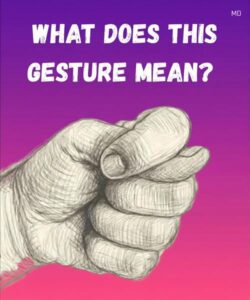
At first glance, it appears to be nothing more than a closed fist. But on closer inspection, the thumb is tucked between the fingers, creating what many cultures have long recognized as the “fig” hand gesture. This small adjustment completely changes the meaning of the motion. Historically, the gesture carried messages that words sometimes could not express. Depending on the context, it could signal refusal, playful defiance, or even protection. Though it may seem unfamiliar today, it once served as a quiet way for people to communicate boundaries or disagreement without confrontation.
In earlier communities, gestures often replaced spoken words, especially when people wanted to avoid conflict. Rather than engage in arguments, individuals sometimes used subtle signs to express refusal or resistance. The fig gesture became a discreet way of saying “no,” allowing people to make their stance clear without raising tensions. Its simplicity made it effective, helping individuals maintain dignity and calm in situations where direct confrontation might have caused problems.
The gesture also carried protective meanings in several regions. In parts of Eastern Europe and beyond, some believed the sign could ward off misfortune or negative intentions. Over time, the gesture found its way into childhood play, becoming more playful than serious. Children often used it jokingly among friends, turning it into a lighthearted symbol rather than a harsh message.
Today, the fig gesture is rarely seen in everyday conversation, replaced by digital communication and more direct expression. Still, for many, it remains a nostalgic reminder of simpler ways people shared humor, boundaries, and resilience. Its history shows that communication does not always need to be loud; sometimes, a small gesture can speak clearly enough.